
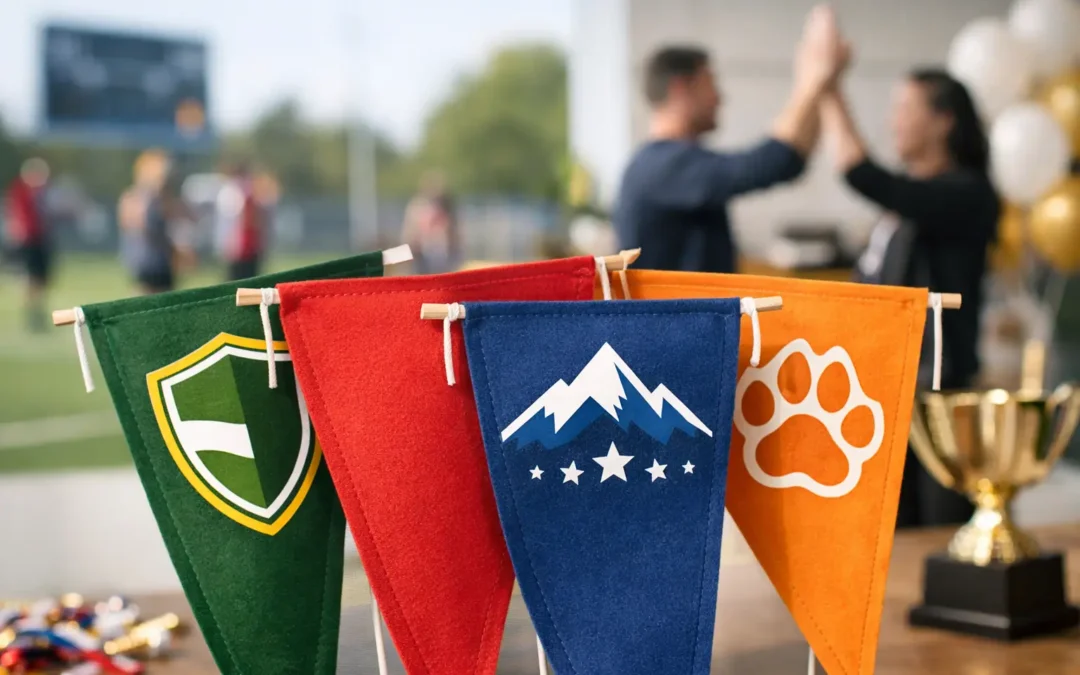
Some branded products do their job for a week and disappear. Custom printed pennants tend to stay up longer. In clubs, bars, breweries, sports venues, trade displays and event spaces, they keep working well after the first campaign push – adding colour, filling blank walls and reinforcing a brand in a way that feels built for the venue.
For business buyers, that matters. If you are ordering for a national promotion, a club fit-out, a sponsored event or a hospitality venue refresh, pennants sit in a useful middle ground. They are more decorative than a flyer, more affordable than major signage, and more lasting than many short-term promotional items. When ordered well, they support both presentation and practicality.
Why custom printed pennants still work
Pennants have been around for a long time because they solve a simple branding problem. A business or venue often needs visual impact without committing to expensive permanent signage in every position. A pennant gives you a lightweight, easy-to-display branded piece that can suit walls, bars, booths, grandstands, clubrooms and retail-style displays.
They also carry a different feel from standard posters or pull-up banners. Pennants can look commemorative, collectible or venue-specific, depending on the shape, material and print style. That makes them particularly useful for organisations that want branding to feel embedded in the environment rather than added as an afterthought.
For sporting clubs, schools, breweries and hospitality groups, this is often the appeal. A pennant can mark an anniversary, support a sponsorship, promote a seasonal campaign or reinforce house branding across multiple sites. It is promotional, but it does not always read as hard-sell advertising.
Where custom printed pennants make commercial sense
The best use case depends on what the product needs to do. If the goal is high-volume giveaway merchandise, a pennant may not be the first choice. If the goal is display impact, venue character or branded decoration at scale, they become much more compelling.
Clubs, sporting organisations and community venues
Pennants are a natural fit for clubs because they already carry a sense of tradition. They work well for presentation pieces, membership campaigns, tournament branding, sponsor recognition and clubhouse décor. In these settings, the product adds visual identity while also feeling familiar to members and supporters.
Hospitality groups, bars and breweries
In hospitality, branding needs to look deliberate rather than temporary. Pennants can help fill overhead space, back-bar areas, feature walls and event zones without the cost of heavier fabricated signage. For breweries and drinks brands, they also suit launches, taproom promotions and branded event styling where a softer display element is useful.
Events, expos and activations
At events, portable branding matters. Pennants are easy to transport, straightforward to install and useful for themed displays, sponsor zones and booth dressing. They are not a replacement for large-format signage, but they can support it well, especially where you want layered branding rather than a single dominant sign.
Choosing the right style for custom printed pennants
Not all pennants do the same job. Shape, material and finishing all affect how the final product looks in use.
Traditional triangular pennants are the most recognisable and often suit sports, club and commemorative applications. Shield or swallowtail shapes can feel slightly more premium or heritage-driven, which can work well for breweries, venues and hospitality brands. Rectangular flag-style pennants may suit retail promotions or event wayfinding better, particularly if logo legibility is the priority.
Material choice matters just as much. Felt-style pennants can deliver a classic look, but they will not suit every brand. Fabric and synthetic options can produce sharper print results and a more contemporary finish. If a pennant is meant to stay on display for an extended period, the material needs to match the environment. Indoor clubrooms, busy bars and temporary outdoor event areas all place different demands on the product.
Finishing details also affect presentation. Tassels, stitching, edging, hanging cords and reinforced headers can shift a pennant from simple promo item to something that feels more permanent. That is not always necessary. For some campaigns, a cleaner and more economical finish is the right call. The key is matching the production spec to the intended use rather than overbuilding every order.
Artwork and branding considerations
A pennant is not a standard rectangular print space, so artwork needs some thought. Logos with too much small detail can lose clarity, especially on smaller formats or textured materials. Text-heavy designs can also become hard to read when the pennant is viewed from a distance or displayed at an angle.
In most cases, simpler branding works better. A strong logo, a short message, a date, a venue name or a campaign mark will usually outperform a crowded layout. If the pennant is for display rather than close inspection, readability should come first.
Colour is another practical consideration. Bold contrast tends to perform well in darker interiors such as bars, clubrooms and event halls. Lighter brand palettes can still work, but they may need a darker base or stronger outlining to maintain visibility. This is where artwork support becomes useful, especially for buyers managing multiple branded products across one campaign.
Bulk ordering and production timing
For commercial buyers, the product is only part of the decision. The process matters just as much. Custom printed pennants are usually ordered in volume for a reason – venue rollouts, event deadlines, seasonal promotions or multi-site branding. That means timing, consistency and packaging all need to be considered early.
Lead times can vary depending on quantity, print method, finishing details and whether artwork is already production-ready. A simple bulk order with straightforward branding will generally move faster than a heavily customised commemorative pennant with multiple finishing features. If your deadline is fixed, it is best to build in approval time for artwork, sampling if required, and freight.
There is also a pricing balance to weigh up. Higher quantities often improve unit cost, but only if the full volume is genuinely needed. Ordering too conservatively can create repeat setup costs later. Ordering too aggressively can leave you holding stock that no longer fits the campaign. For venues and organisations with ongoing promotional use, a larger run often makes sense. For one-off events, a tighter quantity may be more practical.
When pennants outperform other promotional display products
Pennants are not always the first item buyers think of, but they can outperform more common display products in the right setting. Posters can crease, peel or look disposable. Corflute and rigid signage can be effective but may feel too temporary or too industrial for hospitality spaces. Banners offer scale, but not always the character or flexibility needed in tighter display zones.
Pennants bring a different visual texture. They help make a space feel branded without turning every surface into a billboard. That is particularly useful where customer experience matters, such as bars, breweries, licensed clubs and event hospitality areas. A good display setup often uses a mix of products, and pennants can be one of the pieces that softens the overall look while still carrying the brand clearly.
Getting a better result from your supplier
A strong outcome usually comes from clear briefing rather than complex briefing. Start with the purpose. Is the pennant for décor, promotion, sponsorship, membership, retail display or event dressing? Then define where it will be used, how long it needs to last and how many locations it needs to cover.
It also helps to share realistic artwork files and brand standards upfront. If there are specific colours, placement rules or co-branding requirements, those should be addressed before production starts. For larger buyers, this reduces rework and helps maintain consistency across broader merchandise and display programs.
An experienced supplier should also be able to advise on the trade-offs. A cheaper material may be perfectly suitable for a short event run. A more durable construction may be worth it for permanent clubhouse display. There is rarely one best option across every order. The right choice depends on visibility goals, budget and operational timing.
For businesses that already source branded merchandise, signage and event materials in bulk, working with one supplier can simplify approvals and keep visual presentation aligned. That is often where custom production becomes less about a single item and more about supporting the full brand environment.
Custom printed pennants are a straightforward product, but they earn their place when they are specified properly. If you need something that can add brand presence, suit bulk ordering and work across venues or events without overcomplicating the rollout, they are well worth considering. The best results usually come from treating them not as filler, but as part of the bigger display plan.