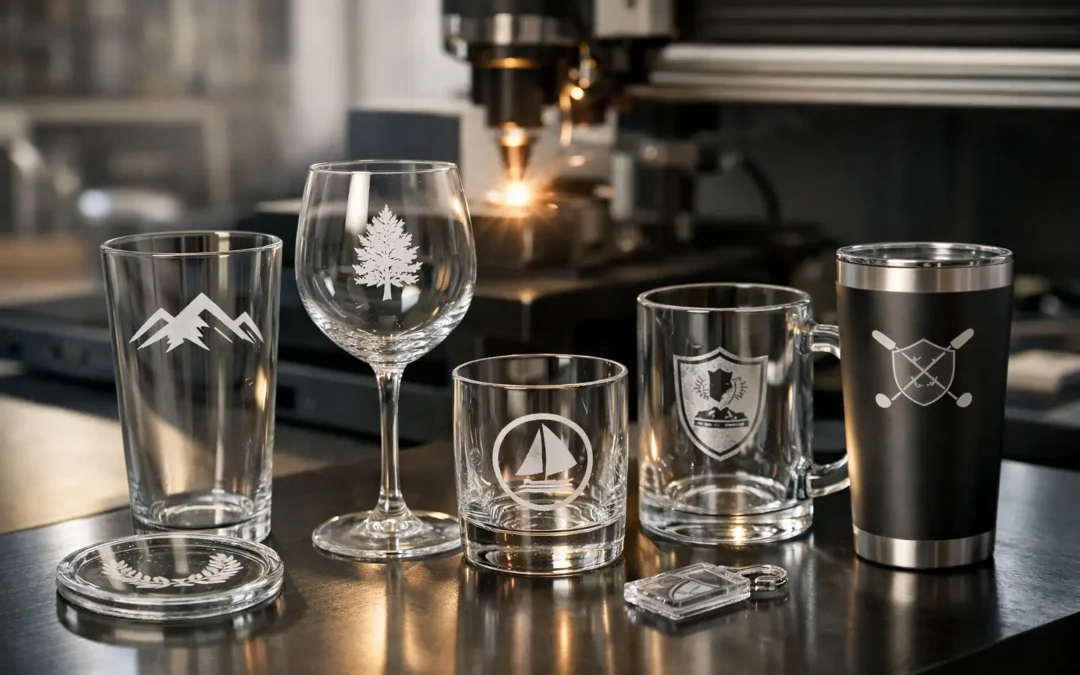
If you are ordering branded drinkware for a venue launch, brewery rollout or national promotion, the finish on the glass matters as much as the glass itself. Laser etched glassware wholesale is a popular choice for businesses that want a clean, permanent mark, especially when presentation, repeat ordering and consistent brand application all need to line up.
For trade buyers, the appeal is straightforward. Laser etching creates a refined look that suits hospitality, corporate gifting, club merchandise and event serviceware, while also reducing some of the wear concerns that come with printed decoration. That said, the right result depends on the glass style, the artwork, the order quantity and the timeframe. Bulk procurement works best when those factors are considered early.
Why laser etched glassware works in bulk orders
In a wholesale environment, decoration methods need to do more than look good in a sample photo. They need to perform across large production runs, remain consistent from carton to carton and suit the commercial use of the product. Laser etching stands out because it produces a sharp, understated finish that feels premium without relying on added ink or applied transfers.
For venues, breweries and hospitality groups, this matters because branded glassware is often part of daily service. Glasses are handled constantly, washed repeatedly and used in busy front-of-house conditions. A laser etched design becomes part of the surface rather than sitting on top of it, which gives buyers more confidence when they are planning stock for regular use.
There is also a branding advantage. Not every logo needs to be loud. Many businesses want glassware that supports the venue image without looking overly promotional. Etching gives a subtle, high-end result that works particularly well for wine glasses, beer glasses, tumblers, stemless options and premium gift sets.
Where laser etched glassware wholesale makes the most sense
This decoration method suits a wide range of commercial uses, but it is especially effective when durability and presentation need to carry equal weight. Hospitality operators often choose etched glassware for bars, restaurants, clubs and function spaces where branded stock is part of service presentation. Event organisers use it for corporate functions, sponsor activations and premium ticketing packages. Marketing teams often specify it for client gifts or campaign merchandise where they want a product with stronger perceived value.
It also makes sense for businesses managing repeat orders. If you need the same branded glassware supplied across multiple events, venues or ordering cycles, consistency becomes a procurement issue, not just a design preference. Wholesale supply paired with controlled artwork handling makes that process far easier.
Choosing the right glass for laser etching
Not every piece of glassware delivers the same visual result. The shape, wall thickness and surface area all affect how the etched artwork appears. A straight-sided tumbler gives a different branding outcome to a stemmed wine glass or a curved beer glass, even when the same logo is used.
This is where practical product selection matters. If your logo contains fine detail, very small text or tight line spacing, a larger printable area will usually produce a better result. If your brand mark is bold and simple, you have more flexibility across different glass shapes. Buyers ordering for hospitality service should also think beyond the decoration itself. Stackability, handling comfort, serving purpose and replacement planning all matter in a commercial setting.
A good wholesale process should help you match the branding method to the product rather than forcing one decoration style across every glass. That saves problems later, especially on larger runs.
Artwork considerations that affect the finish
Laser etching rewards clean artwork. Strong linework, clear contrast and sensible scaling tend to produce the best outcome. Highly complex gradients, photographic effects and extremely fine detail are less suited to the process. In most cases, the strongest result comes from simplifying the branding rather than trying to replicate every element of a full-colour identity.
That does not mean the etched finish is limiting. It simply means the artwork should be prepared with the production method in mind. For trade buyers, this is one of the main reasons to work with a supplier that understands both decoration capability and artwork setup. It reduces delays in proofing and improves consistency across the full order.
Laser etched glassware wholesale versus printed branding
For some projects, etching is clearly the better fit. For others, printing may still be the practical choice. The decision usually comes down to brand style, intended use and budget.
Laser etching is ideal when you want a premium, permanent-looking finish with a subtle visual effect. It suits logos that do not rely on colour to be recognised. It is also a strong option for glassware that will be used repeatedly in service environments.
Printed branding has its own advantages. If your campaign depends on exact brand colours, multi-colour artwork or high-impact promotional visibility, print can be the better solution. It can also open up decoration possibilities for designs that are not suitable for a frosted etched look.
From a buying perspective, the question is not which method is universally better. It is which method best supports the purpose of the order. A brewery launching branded schooners for venue service may prefer etching for its longevity and polished look. A short-term event sponsor wanting louder visual impact may opt for print instead.
Bulk ordering considerations buyers should get right early
Large-volume glassware orders can run very smoothly, but only if the operational details are addressed from the start. Quantities, artwork approval, decoration position, packaging requirements and delivery timing all need to be clear before production begins.
Lead times are one of the biggest issues. Glassware for events is often ordered later than it should be, and custom branding adds production steps that cannot be rushed without consequence. If stock needs to be sourced, artwork needs adjusting or freight needs to reach multiple locations, the timeline can tighten quickly. Early planning gives you more choice in product range and usually a better production pathway.
Carton quantities and breakage planning also matter. Wholesale buyers should order with some contingency, particularly for hospitality and event use. Glassware is a working product. Replacements and overages are part of sensible procurement, especially when the stock is going into active service rather than sitting in a gift pack.
Packaging, freight and fulfilment matter more than most buyers expect
Glassware is not like ordering pens or stubby holders. It is heavier, more fragile and more sensitive to packing quality. For that reason, supplier capability around packing and dispatch matters almost as much as decoration quality.
If your order is being delivered across Australia, you need confidence that the product will be packed for commercial freight and scheduled realistically. This is especially relevant for multi-site rollouts, venue groups and event programs with fixed dates. Delays or damage can have a direct operational cost.
A supplier that handles sourcing, branding and fulfilment in one process can remove a lot of friction here. It means fewer handovers, clearer accountability and better visibility across the job.
What business buyers should expect from a supplier
When you are sourcing laser etched glassware wholesale, price matters, but procurement confidence matters just as much. A capable supplier should be able to guide product selection, confirm branding suitability, manage artwork correctly and provide realistic timing. That is the difference between buying a commodity item and running a successful branded merchandise order.
Support is particularly valuable for buyers who do not order glassware every week. Marketing managers, venue operators and business owners often know what outcome they want, but not which glass style or branding method will achieve it best. The right supplier helps close that gap quickly and practically.
For experienced trade buyers, the expectation is slightly different. They want accurate quoting, dependable timelines and consistent repeat supply. Both types of customers benefit from the same thing – a process built for bulk orders, not one-off novelty jobs.
ABC2000 works with this kind of brief every day, which is why the conversation usually starts with use case, quantity and timeline rather than just unit price.
Getting better value from your order
Wholesale value is not only about the cheapest unit cost. It is about buying the right product, with the right decoration, in the right quantity, so it performs properly once it arrives. A lower-priced glass that does not suit service conditions or branding requirements can become the more expensive option very quickly.
Better value often comes from standardising where possible. If your business can align glass styles across venues or consolidate an event run into one production order, the job is generally easier to manage and more efficient to procure. Clear artwork files and early approvals also help avoid rework and production delays.
If you are weighing up options, the most useful next step is usually not asking which glass is cheapest. It is asking which combination of glass, branding method and delivery plan best fits the job at hand. That is where a wholesale order stops being a product purchase and starts becoming a reliable business solution.
Well-chosen etched glassware tends to do its job quietly – it supports the brand, stands up in service and keeps looking the part long after the event has finished.