
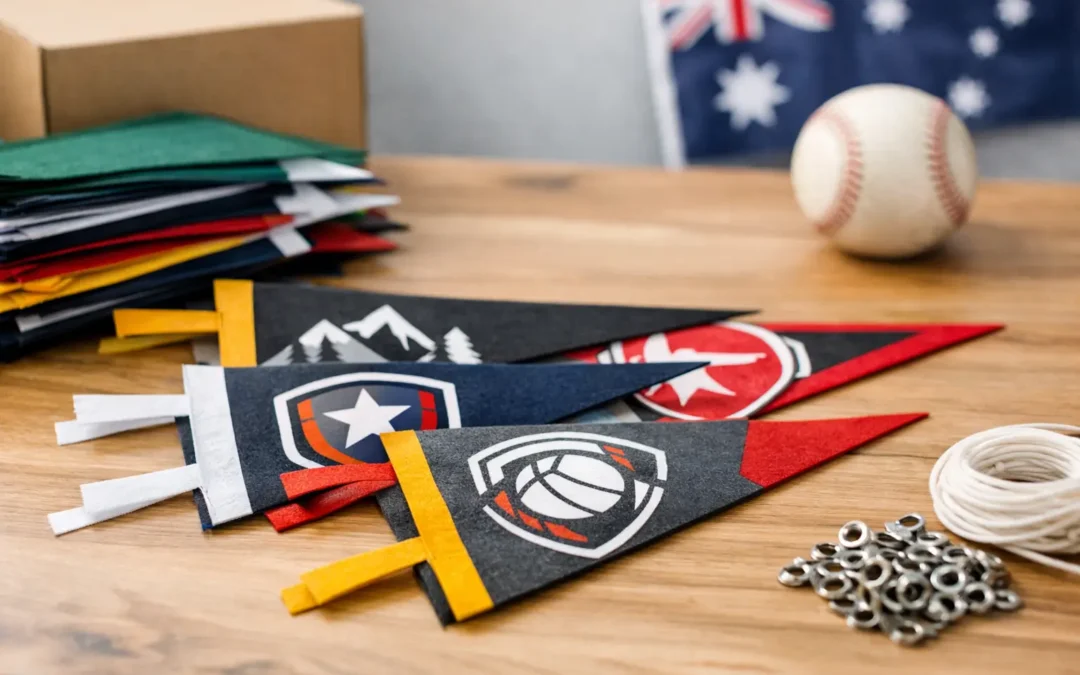
When a venue launch, club season opener or national event needs branding that feels more permanent than a flyer and more distinctive than generic signage, custom felt pennants that Australian buyers still turn to are a smart option. They carry a classic look, they photograph well, and they suit everything from hospitality walls to sponsor packs and commemorative event merchandise.
For business buyers, the appeal is not nostalgic for the sake of it. Felt pennants are compact, cost-effective in volume, and easy to tailor to specific campaigns, venues and audiences. If you are ordering for a brewery, sports club, school, festival, tourism operator or promotional rollout, the real question is not whether pennants work. It is how to specify them properly so they arrive on brand, on time and ready for use.
Why custom felt pennants still work
A good pennant does two jobs at once. First, it acts as display material. Second, it becomes merchandise people keep. That matters when you are buying in bulk and need each item to support visibility beyond the day of the event.
Unlike disposable print pieces, felt pennants have texture and presence. They hang well behind bars, in clubrooms, at cellar doors, in reception areas and across event activations. They also feel more considered than short-life collateral. For organisations trying to present a stronger brand image without moving into high-cost display builds, that is a practical middle ground.
There is also flexibility in where they fit. A pennant can be part of a membership drive, a hospitality fit-out, a sponsor giveaway, a commemorative tournament pack or an internal brand program. That range makes them useful for procurement teams looking for one item that can serve display, retail and promotional needs.
Choosing custom felt pennants Australia businesses can use properly
Not all pennants are ordered for the same purpose, and that affects the right spec. A wall display piece for a venue has different requirements from a giveaway at a trade event. A supporter pennant for a club differs again from a premium commemorative item sold through merchandise channels.
Size is usually the first decision. Smaller pennants suit handouts, gift bags and direct mail campaigns because they are easier to pack and distribute. Medium to large formats tend to suit venue presentation, sponsor recognition and club displays where visibility matters more than portability. If you need your branding to read clearly from a distance, pushing too small can save a little on unit cost but weaken impact.
Shape matters as well. The traditional triangle remains popular because it is recognisable and efficient to produce, but swallowtail and shield-inspired shapes can look stronger for heritage brands, sporting organisations and hospitality spaces. The trade-off is that more custom finishing can affect lead times and setup.
Material quality is another decision that should match use. If the pennants are purely promotional and tied to a short campaign, a standard felt construction may be enough. If they are intended for long-term display in a licensed venue, clubhouse or reception area, it makes sense to choose a finish that presents well over time. Business buyers usually benefit from asking not just what is cheapest, but what will still look right after months on display.
Artwork and branding considerations
The most effective custom felt pennants Australia campaigns use are usually the simplest. Felt is not the place to cram in every brand message, social handle and sponsor logo. Clear logos, bold typography and limited colours tend to perform better because they remain legible and visually balanced on the material.
If your existing artwork was created for brochures or digital ads, it may need adjustment before production. Fine lines, tiny text and complex gradients can lose clarity depending on the branding method. This is where experienced artwork handling makes a real difference. A supplier who understands production can flag issues early rather than letting them become disappointing finished stock.
Colour matching deserves attention too. Brand consistency matters, especially for multi-site businesses, sports organisations and event programs with sponsor obligations. Felt and print methods can influence how colours appear, so expectations should be set properly from the start. In some cases, a close visual match is realistic. In others, exact replication may depend on material and print constraints. The right approach is to confirm what matters most – logo clarity, overall brand feel or precise colour priority.
Best uses for bulk felt pennants
Pennants make commercial sense when they are integrated into a broader branding plan rather than treated as a novelty line item. Venues use them to add character to walls and service areas without the higher cost of permanent fabrication. Clubs and associations use them for milestone events, tours, premiership recognition and membership merchandise. Event organisers include them in VIP packs, exhibitor gifts and sponsor activations because they are easy to brand and easy to display later.
Breweries and hospitality groups can also use felt pennants to reinforce venue identity. A branded pennant near taps, bar backs or merchandise corners helps create a more layered visual environment. It is a small detail, but those details add up, particularly in spaces where customers take photos and share them.
For corporate promotions, pennants work best where the brand wants something less disposable than a flyer and less expected than standard stationery. They can suit conference packs, distributor incentives, internal award programs and commemorative campaigns. The key is matching the item to an audience likely to keep it.
What business buyers should confirm before ordering
Bulk buying always comes back to process. A product can look good in theory and still create headaches if the order details are not clear. With custom felt pennants, the basics are straightforward, but they need to be locked in early.
Start with quantity and delivery timing. Production planning depends on order volume, branding requirements and finishing details. If the pennants are tied to an event date, leaving artwork approvals too late can narrow your options. Rush jobs are sometimes possible, but they usually reduce flexibility.
You should also confirm how the branding will be applied, what the finished presentation includes and whether any accessories are supplied. Hanging cords, edging, tassels and packaging can all affect the final look. A simple pennant with clean branding may suit a modern campaign. A more detailed finish may better suit commemorative, club or presentation use. Neither is automatically better. It depends on where the stock is going and what role it needs to play.
Freight planning matters too, especially for national rollouts or multi-site delivery. Compact products are easier to distribute than bulky display items, but quantities add up quickly. If stock needs to be split across venues, branches or event locations, it helps to plan fulfilment before production is complete.
Why supplier experience matters
On paper, felt pennants are a simple item. In practice, business buyers know simple products can still go wrong through poor artwork setup, unclear production specs or missed deadlines. That is why supplier capability matters more than the item itself.
A supplier with experience in bulk branded merchandise can help you choose the right size, branding method and finish without overcomplicating the job. They can also guide practical decisions around artwork, unit pricing, lead times and delivery coordination. That is especially useful for buyers managing multiple branded items across the same campaign.
For many organisations, pennants are not a standalone purchase. They sit alongside drinkware, event merchandise, printed material, display items and promotional stock. Working with a supplier that understands those wider requirements makes ordering more efficient and helps keep branding consistent across the full program. That is where a trade-focused business like ABC2000 adds value – not just by supplying the product, but by supporting a more workable procurement process.
Getting better value from your order
Value is not only about the lowest unit price. It comes from ordering a product that suits the application, presents well and arrives when needed. A cheaper pennant that misses the event window or fails to reflect the brand properly is not good buying.
The strongest orders usually start with a clear brief. Know your quantity, intended use, preferred size, branding priority and deadline. If you have flexibility on exact finish or shape, say so early. That gives more room to balance presentation, production timing and budget.
It also helps to think beyond the event itself. If the pennants can move from giveaway stock to venue display, or from campaign merchandise to ongoing clubroom branding, the return on the order improves. A well-specified item lasts longer in both physical use and brand visibility.
If you are sourcing custom felt pennants for an Australian business, club or event, the best results come from treating them like any other serious branded product. Be clear on purpose, practical on spec, and realistic on timing. Get those parts right, and a simple felt pennant can do a very solid job for your brand long after the event pack has been opened.