
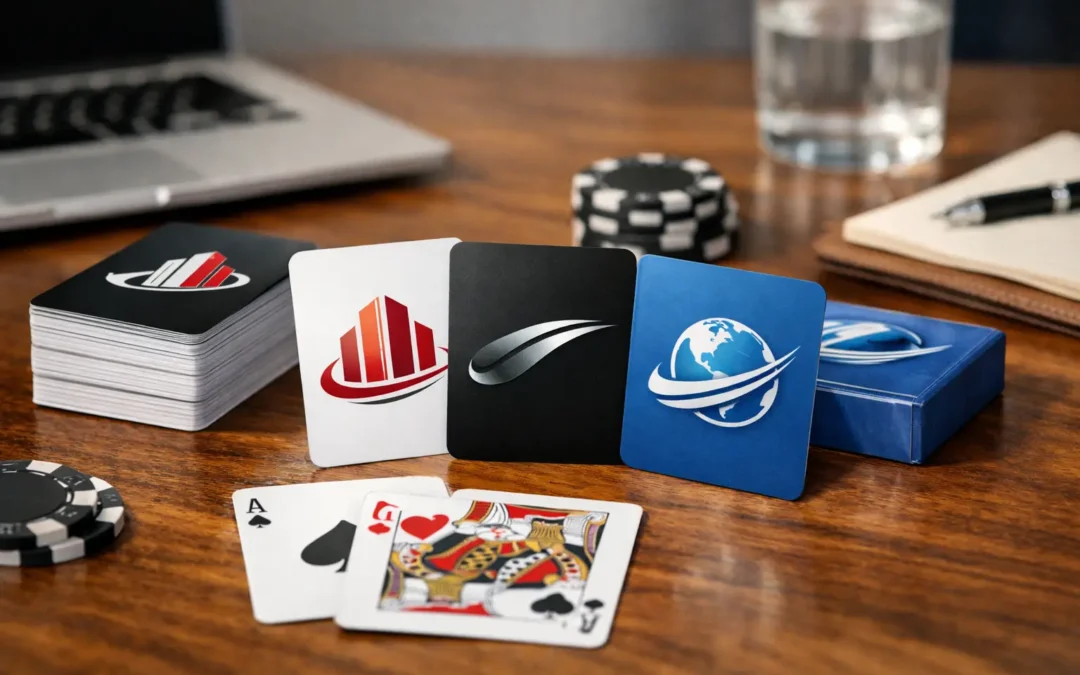
A deck of cards tends to stay on the table longer than most promo items. In a bar, club, brewery, hotel or event space, personalised playing cards are handled repeatedly, shared between groups and often taken home. That makes them a practical branding tool for businesses that want more than a quick logo impression.
For commercial buyers, the value is not just novelty. It is repeat visibility, useful shelf life and a format that suits hospitality, gaming environments, promotions and branded merchandise programs. When ordered properly, custom card decks can work as a giveaway, a retail item, a room inclusion, a membership reward or part of a larger campaign pack.
Why personalised playing cards work in bulk promotions
Some branded products are all about reach. Others are about staying power. Personalised playing cards do both reasonably well, which is why they suit business use better than many one-off novelty items.
A branded deck gives people a reason to keep the product. Unlike disposable handouts, cards have a clear use case. They come out at pubs, caravan parks, hotel rooms, staff functions, community events and private gatherings. Every use puts your brand back in front of the customer without feeling forced.
That matters for venues and operators working hard to stay top of mind. A brewery might use branded cards in merchandise packs. A club might include them in a member reward campaign. A tourism operator might place them in accommodation rooms or reception gift packs. In each case, the product supports the brand while still being useful.
There is also a presentation advantage. A well-produced card deck in a printed tuck box feels more substantial than many low-cost giveaways. If your campaign needs to look polished but still stay within a volume budget, cards can strike that balance.
Where personalised playing cards make the most sense
Not every branded item suits every campaign. Playing cards are strongest where there is downtime, social interaction or a hospitality setting that encourages shared use.
Venues, clubs and pubs
Cards are a natural fit for clubs, pubs and gaming-adjacent spaces because they already belong in that environment. They can be sold at the bar, used in promotions, included in member packs or placed in VIP areas. If the brand identity is tied to entertainment, leisure or social time, the product feels relevant rather than bolted on.
Hotels and accommodation
For hotels, resorts and serviced apartments, a custom deck can be a simple in-room item that lifts the guest experience. It is compact, easy to store and more memorable than many room collateral pieces. It also works well for family-friendly accommodation where practical entertainment adds value.
Events and sponsorship campaigns
At festivals, conferences and promotional activations, cards can be handed out as branded merchandise or included in event packs. They are easy to distribute and easier to carry than bulkier promo products. For sponsors, they offer more room for creative branding than something like a keyring or stubby holder alone.
Breweries and beverage brands
For breweries and drinks brands, cards fit neatly into cellar door merchandising, limited-edition packs and hospitality promotions. They pair well with other branded items and can be produced to support seasonal campaigns, collaborations or venue partnerships.
What to consider before placing a bulk order
A deck of cards may look straightforward, but commercial orders still need proper planning. The product itself is simple. The difference between a smooth order and a frustrating one usually comes down to artwork, print decisions and timeline management.
Card backs, faces and tuck box design
The first decision is how far the customisation goes. Some buyers only want a branded card back and printed box. That is often the most efficient option for broad promotional use, especially when gameplay familiarity matters.
Others want custom face cards, jokers or even a fully themed deck. That can create a stronger brand piece, but it adds complexity. If the cards need to remain easy to use in a standard game setting, heavy redesign on the number cards may not be the best choice. It depends on whether the goal is functional play, collectible appeal or campaign theatre.
Print quality and colour accuracy
If your brand has specific colours, especially in hospitality or franchise environments, consistency matters. A muddy black, weak metallic effect or poorly reproduced logo can make the whole deck feel cheap. For procurement teams managing broader brand standards, this is one of the key areas to check early.
The tuck box matters too. It is often the first surface customers see, and in retail or giveaway settings it carries much of the presentation weight. Strong print quality on the packaging can lift the perceived value of the whole item.
Finish and handling
Cards need to feel right in the hand. If they are too flimsy, they wear out quickly. If the finish is poor, they stick or shuffle badly. For a business order, this is not just a product issue. It affects how people judge your brand quality.
That does not always mean choosing the highest specification available. For a short-term campaign giveaway, a standard finish may be perfectly suitable. For venue use, resale or premium hospitality packs, a stronger stock and better coating may be worth the extra spend.
Quantities and storage
Personalised playing cards are generally best suited to volume purchasing. Unit pricing improves as quantities rise, which makes sense for clubs, venues, event organisers and brand campaigns running at scale. But buyers still need to be realistic about storage, distribution and timing.
If the decks are for multiple locations, consider whether they need to be packed by venue, by state or by event date. That kind of fulfilment planning can save time later, especially when other promotional items are involved.
Branding choices that actually improve the result
The most effective decks are usually the ones that keep branding clear and commercially practical. There is a temptation to overdesign playing cards because there are so many surfaces available. In bulk production, that can create visual clutter or slow down approvals.
A cleaner approach often works better. Strong logo placement on the back, a well-designed tuck box and maybe a few custom court cards or jokers can give the product enough brand personality without compromising usability. If the cards are meant to be used regularly, that balance matters.
It also helps to think about where the product sits in your wider merchandise mix. Cards pair well with glassware, bar mats, coasters, lighters, bottle openers and event collateral because they live in the same social setting. For hospitality and beverage businesses, that consistency can strengthen campaign presentation.
Timelines, artwork and supplier support
Lead time is often the deciding factor in promotional procurement. A great product is not much help if it arrives after the event, the venue opening or the seasonal push it was meant to support.
That is why buyers should confirm artwork requirements, proofing process, production timing and delivery windows before approval. The practical questions matter. Is the artwork print-ready? Does the supplier handle adjustments? Are there clear sign-off stages? Can the order be split for different locations? Those details are what keep a branded merchandise project on track.
For less experienced buyers, supplier guidance is especially useful here. A dependable trade supplier should be able to flag issues early, explain customisation limits and keep the order moving without unnecessary back-and-forth. That is where working with an experienced Australian wholesale team like ABC2000 can make the process easier for business customers managing deadlines and volume.
Are personalised playing cards right for every campaign?
Not always. If the brand message needs immediate utility in a workplace setting, another product may perform better. If your campaign audience is highly specific, the novelty factor may not land. And if turnaround is extremely tight, more standard stocked promotional items may be quicker to produce.
But when the setting is social, the brand is experience-led and the goal is repeat exposure, cards are a strong option. They are compact, practical and capable of carrying real visual impact when produced well. For venues, events and hospitality brands in particular, they offer a solid mix of usability and brand presence.
A good promotional product should earn its place, not just fill a carton. Personalised playing cards do that best when the design is clear, the production is handled properly and the order is built around real business use rather than just novelty.