
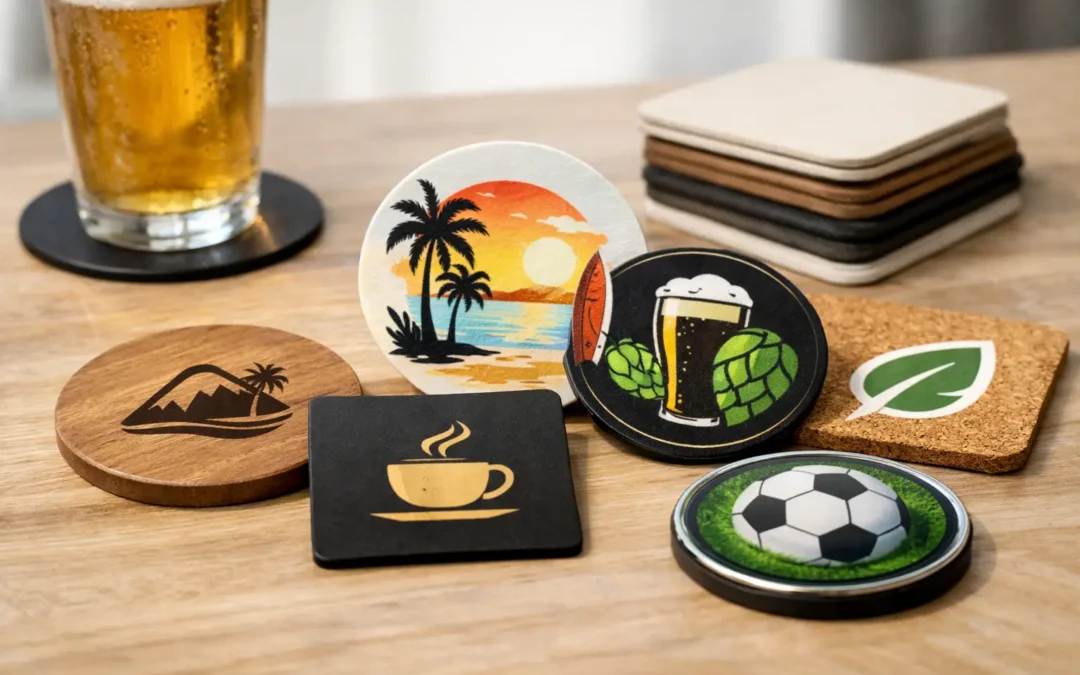
A carton of printed coasters can do more work than many higher-cost promo items. In bars, breweries, clubs, hotels and event spaces, coasters sit exactly where you want attention – under every drink, in every photo, and across every table. For buyers sourcing custom coasters wholesale Australia wide, the real question is not whether they work. It is which style, material and branding method will hold up in your environment, fit your budget and arrive on time.
Coasters are often treated as a simple add-on, but in volume purchasing they are a presentation tool, a brand marker and, in hospitality, a practical operational item. That means the buying decision needs to balance appearance with production realities. A coaster that looks sharp in artwork proof may behave very differently once it meets condensation, spills and weekend trade.
What buyers need from custom coasters wholesale Australia suppliers
Wholesale buyers are rarely looking for a novelty item. They usually need one of three things: a cost-effective branded giveaway, a venue-use product that supports presentation during service, or event merchandise that helps create a consistent visual setup. Each use case changes what matters most.
For a national promotion or campaign handout, unit price and volume efficiency tend to lead the conversation. For a brewery or hospitality group, durability, absorbency and branding consistency usually matter more. For conferences, festivals and corporate functions, lead times and artwork handling can become the deciding factors because event dates do not move.
This is why wholesale supply is different from ordering a few personalised coasters online. Business buyers need dependable stock access, practical advice on branding methods, realistic turnaround guidance and fulfilment that works at scale. If the order is tied to an opening date, product launch or venue rollout, there is very little room for guesswork.
Choosing the right coaster material for the job
Material selection is where many coaster orders are won or lost. The best option depends on how the coaster will be used, how long it needs to last and how the branding needs to present.
Pulpboard and paper coasters
These are a strong fit for hospitality promotions, bars, breweries and events where coasters will be used in high volumes and replaced regularly. They are absorbent, cost-effective in bulk and well suited to printed branding. If the goal is widespread brand exposure at an accessible unit price, this category often makes the most sense.
The trade-off is durability. Paper-based coasters are designed for service use, not long-term retention. If they are exposed to heavy moisture for extended periods, they will wear accordingly. For many venues that is perfectly acceptable because the coaster is meant to perform during service, carry the brand clearly and then be replenished.
Cork coasters
Cork gives a more natural, slightly premium look and can suit corporate gifting, cellar doors, clubs and branded merchandise packs. It offers decent grip and a warmer aesthetic than standard pulpboard. Branding can be effective here, particularly when the artwork is simple and the buyer wants a more tactile finish.
Cork is not always the cheapest option in volume, and fine-detail artwork may need careful review depending on the branding method. It works best when the brand style is clean and the presentation needs to feel a step above a disposable coaster.
MDF, bamboo and harder-wearing coaster styles
For businesses wanting a reusable product, harder coaster materials can be a better fit. These are often chosen for hospitality fit-outs, corporate packs, club merchandise or promotional use where the coaster is expected to stay in use beyond a single event.
The advantage is longevity and perceived value. The consideration is cost, along with the fact that not every branding technique suits every substrate equally well. Laser etching can be ideal for some harder materials, especially if the goal is a refined finish rather than a full-colour print.
Branding methods that affect both appearance and cost
Not all coaster branding is created equal, and the right method depends on material, artwork and quantity.
Full-colour printing is popular for logos, campaign graphics and detailed designs because it gives flexibility across more complex artwork. This is often the best route when brand guidelines are strict or the design includes gradients, multiple colours or promotional messaging.
Screen printing can be a practical option for simpler artwork with solid colours, especially where large runs are involved and the design does not require photographic detail. It can deliver a clean, bold result, but it is less forgiving with highly intricate layouts.
Laser etching suits selected materials and tends to appeal to buyers after a more permanent, premium finish. It does not produce the same visual effect as print, so it is a style choice as much as a branding decision. If the logo relies heavily on colour, etching may not be the right fit. If the brand works well in a single-tone presentation, it can look excellent.
For procurement teams, the key point is simple: the cheapest branding option on paper is not always the most suitable one once artwork, material and use case are considered together.
Lead times, proofs and volume planning
A coaster order is usually tied to a date. That could be a venue launch, a campaign rollout, a seasonal promotion or a major event. Because of that, buyers should assess suppliers on process as much as product.
Artwork proofing matters. A reliable wholesale process should account for logo positioning, print area, material compatibility and production approval before the job moves ahead. This reduces rework and lowers the risk of surprises when the order lands.
Lead time also needs a practical conversation, not a best-case estimate. Production timing can vary depending on quantity, branding method and stock availability. Large-volume jobs or custom specifications may require more planning than standard runs. If delivery is needed across multiple sites in Australia, that should be factored in early rather than added at the end.
The most efficient buyers usually brief their supplier with quantity, branding requirements, delivery postcode, required date and intended use from the start. That gives the supplier enough information to recommend the right product rather than just the fastest quote.
Where custom coasters make the strongest commercial impact
In hospitality, coasters help create a more finished table presentation while reinforcing house branding during every service period. In breweries and clubs, they support brand recall in a setting where customers are already engaging directly with the product. For events, they are a useful way to extend sponsor branding or unify table styling without pushing the budget too far.
They also work well in mixed merchandise programs. A buyer may pair coasters with branded glassware, stubby holders or drinkware to create a more cohesive promotional package. That is often more effective than sourcing single items in isolation because the overall presentation feels planned rather than pieced together.
This is where an experienced supplier adds value. If the coaster needs to match other branded products in the order, consistency across print quality, logo treatment and production timing becomes much easier to manage through one trade-focused process.
How to compare wholesale quotes properly
Price per unit matters, but it should not be reviewed on its own. Buyers should compare material quality, branding method, setup inclusions, proofing support, estimated production time and freight arrangements. A lower unit rate can quickly lose its advantage if the product is lighter-grade than expected or the branding method does not suit the artwork.
It is also worth checking whether the quoted option matches the actual usage environment. A budget paper coaster for a one-night event is a very different purchase from a reusable branded coaster for ongoing venue service. Both can be good value, but only if the specification matches the job.
For many business buyers, the best wholesale outcome is not the absolute cheapest line item. It is the order that arrives correctly branded, in the required timeframe, and performs as expected once it is on tables.
Why supplier experience matters in bulk coaster orders
Coasters may be a small-format product, but bulk custom production still requires care. Print placement, colour consistency, substrate choice and freight coordination all affect the final result. That is why buyers tend to favour suppliers who understand event merchandise, branded drinkware and hospitality presentation, not just general promo products.
A supplier with practical production knowledge can steer buyers away from choices that look fine in theory but do not suit service conditions or campaign timing. That advice saves time, protects budget and makes the finished product easier to deploy with confidence.
For businesses ordering custom coasters wholesale Australia wide, the strongest results usually come from getting the specification right at the start. When product choice, branding method and timeline are aligned, coasters become a straightforward, effective piece of the broader brand presentation – and that is exactly what a commercial order should deliver.