
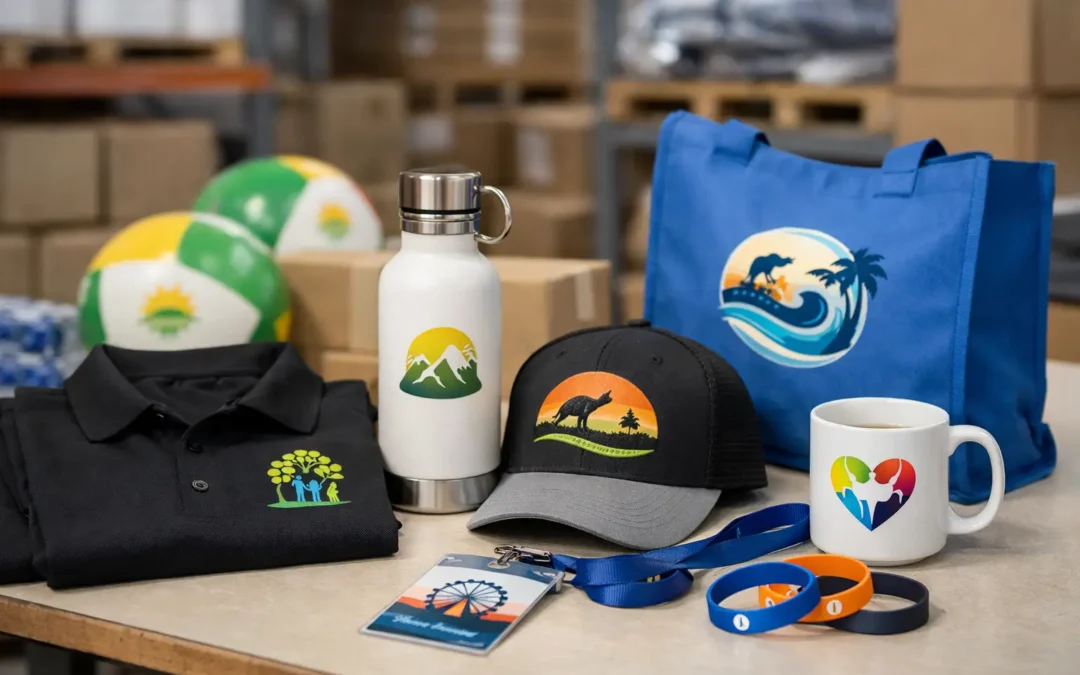
A carton of branded cups arriving the day after a festival, conference or club presentation is not a small inconvenience. It can leave a bar understocked, a sponsor package incomplete and an event team scrambling. Knowing how to source event merchandise properly means working backwards from the event date, choosing products people will use and allowing enough time for branding, packing and freight.
For Australian event buyers, the best result is rarely the cheapest item on a screen. It is the product that suits the audience, carries your branding clearly, arrives in the right quantity and performs as expected once the doors open.
Start with the job the merchandise needs to do
Event merchandise can be a giveaway, a retail item, a sponsor inclusion, staff uniform accessory or a practical operational product. Those are different jobs, and they should not be sourced in the same way.
A reusable drink bottle may be a strong delegate gift at a corporate conference, while branded plastic cups or glassware may be the better choice for a brewery launch, club event or hospitality activation. For an outdoor community event, caps, tote bags and insulated drinkware can offer useful exposure well beyond the event itself. At a trade show, smaller items that are easy to carry may make more sense than a premium product that adds weight to a visitor’s bag.
Before requesting prices, define who will receive the item, where it will be used and what you need it to achieve. Consider whether it should feel premium, be practical for one day, create retail value or support a sponsor’s visibility. This brief gives your supplier a useful starting point and prevents unsuitable products being quoted simply because they fit a budget.
Quantity matters just as much. Order for realistic attendance, then allow a sensible buffer for staff, VIPs, sponsors, breakages and late registrations. A low unit price can quickly lose its appeal if you run out halfway through the event.
How to source event merchandise around a real deadline
The event date is not the production deadline. Your required delivery date needs to account for artwork approval, sample checks where required, decoration, quality control, packing, freight and a buffer for unexpected changes.
Start the sourcing process as early as possible, particularly for large quantities, imported lines, custom moulded products or items with multiple print locations. Standard stock products with straightforward screen printing, digital printing or laser etching may move more quickly, but timing still depends on stock availability, branding method and order size.
Provide your supplier with the actual in-hands date, delivery suburb and event type from the first enquiry. A supplier can then recommend products and decoration methods that are achievable rather than quoting an option that later proves too slow.
It also helps to nominate one person to approve artwork and production details. Delays often occur when artwork moves between marketing, procurement, sponsors and venue staff without a clear final decision-maker. Fast approval protects the production slot and reduces the risk of costly express freight.
Build in time for approvals and freight
Artwork approval is a production milestone, not an administrative detail. Once artwork is approved, check the spelling, colours, print position, quantity and product selection carefully. If the event includes sponsor logos, confirm that each logo has been supplied in the correct format and approved for use.
Freight should be planned as part of the order, not added at the end. Deliveries to metropolitan business addresses are generally more straightforward than deliveries to remote venues, parks, showgrounds or sites with limited receiving hours. If cartons need to arrive at a venue before a bump-in period, confirm the venue’s delivery instructions, contact details and storage arrangements.
Choose products that suit the audience and setting
The most effective event merchandise is useful enough to keep. That does not always mean expensive. A well-made branded coffee cup, water bottle, beer glass, stubby holder, lanyard or tote can deliver ongoing brand exposure when it has a clear purpose for the recipient.
Drinkware deserves particular attention because it is visible, practical and frequently reused. Consider the service environment before selecting it. Plastic cups can suit high-volume outdoor events and licensed venues where glass is unsuitable. Branded glassware may be better for brewery taprooms, corporate hospitality and retail merchandise. Vacuum bottles and insulated tumblers are suited to premium delegate packs, staff rewards and sponsor gifts.
Material, capacity and finish affect both perceived value and branding results. A dark powder-coated bottle may suit laser etching, while a smooth white cup can offer strong digital print reproduction. For cups used at events, check whether they are reusable, dishwasher safe where relevant, food-safe and appropriate for the venue’s requirements.
Do not overlook logistics. Bulky products take more storage space, can cost more to freight and may be less convenient for guests to carry. Fragile glassware requires suitable packing and should be delivered with enough time for a count and damage check before the event.
Match the branding method to the product
A logo should look deliberate, not merely applied. The right decoration method depends on the product material, shape, artwork detail, print colours and intended use.
Screen printing can be an efficient option for simple, bold designs on suitable products and higher quantities. Digital printing is useful where artwork includes fine detail, tonal variation or multiple colours. Pad printing can suit smaller curved print areas. Laser etching creates a durable, refined finish on selected metal drinkware and glassware, but it will not reproduce colour artwork in the same way as print.
Ask to see the available print area and request an artwork proof before production. A logo that looks balanced on a flat document can appear too small, distorted or too close to a seam when placed on a curved bottle or glass. If your brand guidelines specify Pantone colours, provide them early. Exact colour matching can vary by material and decoration process, so discuss what is achievable rather than assuming every surface will reproduce colour identically.
For premium orders, a pre-production sample or physical sample can be worthwhile. It adds time and cost, but it is often sensible when the item will be sold, presented to key clients or used as a major sponsor asset.
Compare quotes on total value, not unit price alone
A useful quote should make it easy to compare like with like. Check the product specification, quantity breaks, branding method, number of colours or print locations, artwork setup, packing, freight and GST. A lower product price may exclude decoration, have a longer lead time or be based on a different material or capacity.
When reviewing suppliers, ask clear commercial questions:
- Is the product in stock in the required quantity, or is it subject to incoming supply?
- What branding method is included, and are there setup or repeat-order costs?
- When is final artwork approval required to meet the delivery date?
- How will the order be packed, shipped and delivered to the nominated location?
For repeat events, keep records of approved artwork, product codes, decoration details and order quantities. This makes reordering simpler and helps maintain a consistent event presentation from year to year.
Keep artwork and brand assets production-ready
A supplier can assist with artwork handling, but supplying clean files early will keep the process moving. Vector artwork such as AI, EPS or print-ready PDF is generally preferred for logos because it scales cleanly for printing and etching. High-resolution files may work for photographic digital prints, but small web images are rarely suitable for quality branded merchandise.
Make sure your artwork pack includes the correct logo version, colour references, required clear space and any sponsor lock-ups. If several logos are going onto one item, decide their hierarchy before the proof stage. Trying to give every logo equal prominence can result in an overcrowded design that is difficult to read from a distance.
Where event merchandise forms part of a wider campaign, coordinate it with banners, signage, menus, point-of-sale material and staff presentation. ABC2000 approaches this as a total image requirement, helping business buyers bring products and printed display materials together rather than treating each item as an isolated purchase.
Plan delivery, receiving and event-day distribution
Once the order is dispatched, the work is not finished. Arrange for someone to receive the cartons, count them and check a sample of products against the approved proof. Report any issue promptly, before goods are distributed across multiple locations or packed into delegate bags.
Think through where merchandise will sit on event day. Giveaway stock needs a secure, accessible location near the activation point. Retail merchandise needs clear pricing and a simple stock count. Drinkware for bars or hospitality areas should be unpacked and ready before service begins. If individual items are going into gift packs, allow labour and space for assembly.
For large events, it can be sensible to hold a small reserve quantity offsite or in a separate carton. This protects against misplaced stock, a surprise VIP requirement or higher-than-expected attendance.
The strongest event merchandise program is built on practical choices and clear production control. Select an item people will value, approve it early and give your supplier the information needed to deliver with confidence. That preparation leaves your team free to focus on the event, not chase cartons.