
A branded pint glass that arrives after the brewery launch, or event lanyards that do not match the approved logo colour, are not minor procurement issues. They affect how your business is seen. Knowing how to order branded merchandise properly means treating product choice, artwork, production and freight as one coordinated job, especially when you are buying at volume.
For Australian businesses, the most efficient orders begin well before a logo is sent to a supplier. A clear brief helps secure the right product, branding method and delivery date without expensive last-minute changes.
Start with the job the merchandise needs to do
Branded merchandise is most effective when it has a practical purpose. A café or brewery may need branded glassware that works reliably through regular service. An event organiser may need merchandise that is easy to distribute at registration and useful after the event. A corporate team may be building staff packs, client gifts or campaign stock that needs to look consistent across several items.
Before selecting products, define who will receive them, where they will be used and what you need them to achieve. Consider whether the item is intended for daily use, a one-off promotion, retail sale, venue service or a high-value client gift. This determines the right balance between unit price, durability and perceived value.
Quantity is equally important. Bulk ordering generally improves unit pricing, but ordering too much can create storage problems and tie up budget in dated campaign stock. Where demand is uncertain, it may be more practical to order a core quantity first, then plan a repeat supply run using the same approved artwork.
Choose products that suit your brand and environment
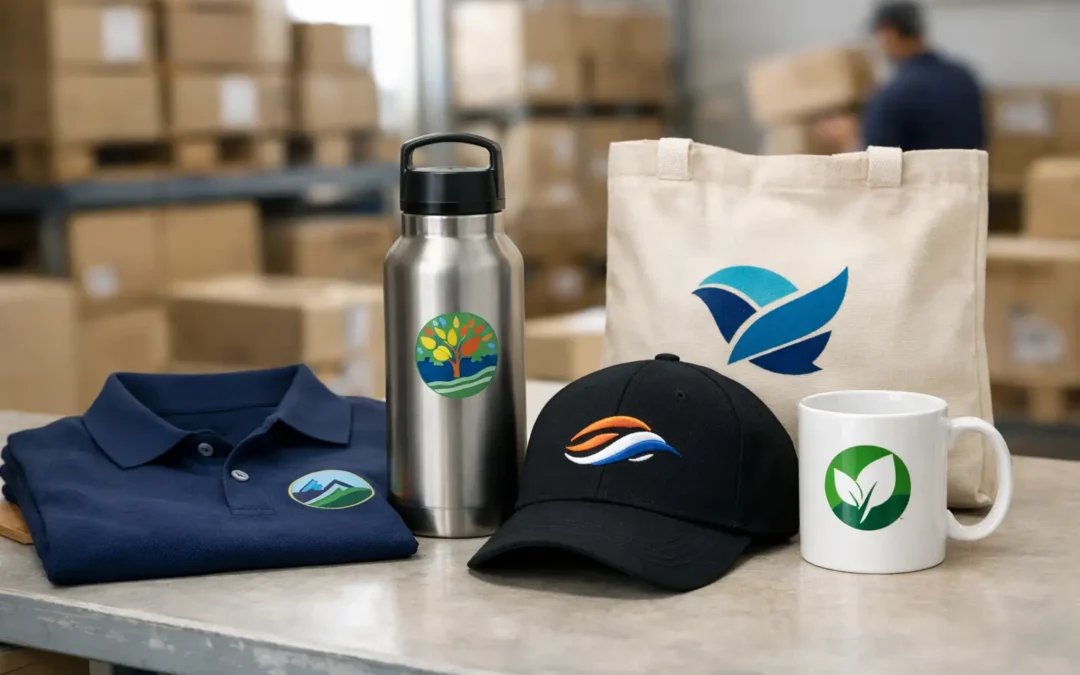
The best promotional item is not always the cheapest one. It is the product people are likely to keep, use and associate with your business. Drink bottles, coffee cups, bar runners, pens, tote bags, apparel, glassware and display materials all have a place, but the product needs to make sense for the audience.
For hospitality venues, custom glassware should be selected around actual service conditions. Think about capacity, glass profile, stacking requirements, dishwasher use and whether the branding needs to remain visible when the glass is filled. For outdoor events, durable drinkware and easy-to-carry items may be more suitable than fragile products. For corporate promotions, presentation, packaging and colour consistency can matter more than choosing the lowest possible unit cost.
Ask for product specifications early. Dimensions, material, available colours, print area and carton quantities influence the final order. They also help you avoid common surprises, such as a logo that is too detailed for a small print area or a product colour that competes with your brand palette.
Match the branding method to the product
Branding is not a one-size-fits-all process. The product material, logo detail, number of print colours and intended lifespan all affect the best application method.
Screen printing is often a practical option for bold designs and larger volume runs. Digital printing can suit full-colour artwork and detailed graphics, depending on the product. Laser etching creates a durable, refined finish on suitable metal drinkware and other compatible surfaces. Pad printing is commonly used for curved or irregular items, while decals may be appropriate for some glassware and promotional products.
Each method has trade-offs. Fine type can lose clarity when printed too small. A multi-colour design may add setup or production complexity. Laser etching can produce an elegant result, but it reveals the material beneath rather than reproducing every brand colour. If exact colour matching is essential, say so at quotation stage and provide Pantone references where available.
For a campaign with several products, ask how the branding will translate across each item. A full logo may work well on a tote bag but need a simplified mark on a pen, keyring or glass. Consistency does not mean forcing identical artwork onto every surface. It means making each item recognisably yours.
Prepare artwork before production is booked
Good artwork prevents delays. Suppliers can assist with artwork handling, but the quality of the file you provide affects how quickly production can move.
Vector files are usually preferred for logos because they can be scaled without losing sharpness. Common formats include AI, EPS and print-ready PDF. High-resolution PNG files may be usable for some applications, but low-resolution screenshots, web images and compressed files can lead to blurred edges or require artwork redevelopment.
Your artwork should include the correct logo version, approved colours, any required clear space and the wording to be included. Check that the legal business name, event date, sponsor acknowledgement or campaign message is final before approval. Small copy changes can mean a new proof and may affect production timing.
The artwork proof is the point to check details carefully. Confirm spelling, logo placement, print size, colours, orientation and which side of the product will be branded. On glassware, confirm whether the design sits on the front, reverse or around the vessel. On apparel, make sure left-chest, sleeve and back positions are clearly identified. Do not assume a previous order will be reproduced exactly unless the product, artwork and branding specifications have all been reconfirmed.
Build your deadline backwards
A delivery date is not the same as a production date. Your order needs time for product allocation or sourcing, artwork preparation, proof approval, branding, quality checks, packing and freight to your location.
Start with the date the merchandise must be in your hands, not the date you would like to place the order. If stock is needed for a Friday event, allow time to receive it, check quantities and distribute it before the event setup begins. Regional delivery, multiple delivery locations and large palletised orders may need additional planning.
Production timelines depend on stock availability, quantity, branding method and seasonal demand. End-of-year functions, major sporting events, trade shows and festival periods can place pressure on both production and freight networks. Ordering early gives you more product choice and more room to resolve artwork or stock issues without compromising the event date.
If your deadline is fixed, make it clear in the initial enquiry. A practical supplier can advise whether the requested product and decoration method are realistic, or recommend an alternative that can meet the required turnaround.
Request a quote with enough detail to act on it
A useful quote is more than a unit price. It should make clear what is included and what may change. Provide the product type or preferred options, quantity, logo details, branding position, number of colours, delivery postcode and required date.
Be specific about whether prices include setup, artwork work, printing or etching, freight and GST. For larger orders, carton quantities and delivery access can also affect freight. A loading dock, business address or site with forklift access is different from delivery to a small office, venue or residential address.
If you are comparing suppliers, compare like for like. A lower price may reflect a smaller print area, different product quality, a different decoration process or excluded setup charges. Ask about lead time, proofing, replacement policy for damaged goods and whether the supplier can support repeat orders. For businesses that buy regularly, those operational details are often worth more than a marginal saving on the first order.
Approve clearly and keep a record
Once you approve an order, production decisions are locked in. Ensure the person approving artwork and cost has authority to do so, particularly where marketing, procurement and finance are involved. Delays often occur when a proof sits waiting for internal sign-off while the required delivery date remains unchanged.
Keep the approved proof, quote, purchase order and final specifications together. This creates a reliable reference for reorders and protects consistency across future campaigns. It is particularly useful for venues, clubs and businesses with multiple locations that need the same drinkware, uniforms or display materials supplied over time.
ABC2000 works with business buyers on bulk branded merchandise, printing and display requirements, helping coordinate products, artwork and delivery around commercial deadlines. The right supplier should make the process easier to manage, while being upfront about what is achievable.
A well-planned order does more than put your logo on a product. It gives customers, guests and staff something useful that represents your business properly. Start with the purpose, approve every detail before production, and allow enough time for the finished merchandise to arrive ready for use.