
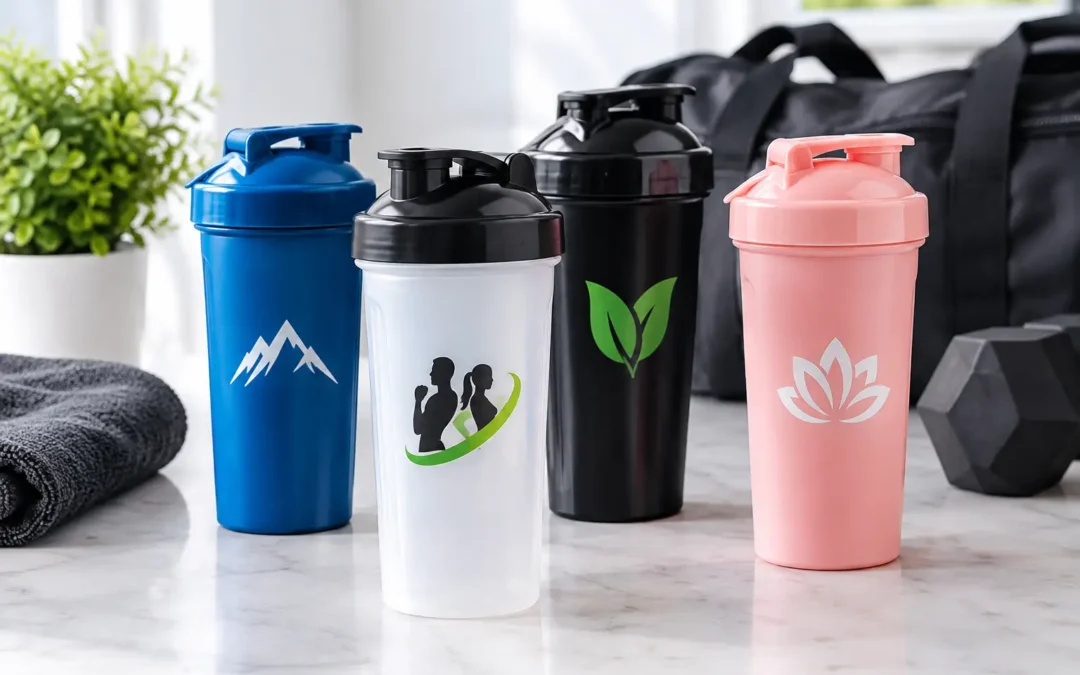
A shaker bottle has a short working life if it leaks in a gym bag, holds an unpleasant smell after a few washes or leaves your logo hard to read. That is why knowing how to select shaker bottles is less about choosing the lowest unit price and more about matching the product, branding method and order timing to the job at hand.
For promotional campaigns, fitness centres, sports clubs and corporate wellness programs, shaker bottles are a practical piece of branded drinkware. They are used repeatedly, travel well and put your brand in front of the recipient well beyond the day they receive it. The right choice, however, depends on how the bottle will be used, who will receive it and how prominently the branding needs to perform.
How to Select Shaker Bottles for Your Audience
Start with the intended user. A budget-friendly plastic shaker may be well suited to a high-volume event giveaway, where broad reach and unit price are the priorities. A premium stainless steel option may make more sense for staff packs, loyalty rewards or a gym membership offer where the item needs to feel more substantial.
Consider the environment as well. A bottle handed out at a fun run, university activation or trade event needs to be easy to carry, simple to fill and suitable for quick distribution. For a health club, supplement retailer or corporate wellness program, durability and day-to-day usability carry more weight. The bottle becomes part of the user’s routine, so the lid, capacity and cleaning experience matter just as much as the appearance.
It also pays to think about what recipients will put in the bottle. Protein powders, meal replacements and electrolyte mixes all benefit from an internal mixing feature. A bottle used mainly for water may not need the same level of mixing performance, although a shaker ball or mixing insert still adds perceived value.
Select the Right Capacity
Capacity affects convenience, cost and the available area for your artwork. Smaller bottles are compact and economical for sample packs, promotions and junior sport. Mid-sized options are a dependable all-round choice for gym use and corporate giveaways. Larger bottles suit users making substantial protein shakes, carrying hydration for training or preparing drinks ahead of time.
There is no single best size. A large bottle can look more impressive and provide more print area, but it may be less convenient in a car cup holder, backpack pocket or crowded gym bag. When selecting for bulk supply, choose a capacity that fits the recipient’s likely use rather than simply choosing the largest option available.
Material Matters for Cost, Feel and Branding
Most promotional shaker bottles are made from BPA-free plastic, while premium ranges may use stainless steel or other insulated constructions. Plastic remains popular because it is lightweight, cost-effective and available in a broad range of colours. It is usually the practical choice for large campaigns where quantity is a key driver.
Stainless steel can provide a more premium finish and stronger perceived value. It may be appropriate for staff recognition, executive merchandise, high-end fitness partnerships or branded retail programs. The trade-off is a higher unit cost and, depending on the product, more specific artwork requirements for laser etching or printing.
Colour selection deserves more attention than it often receives. A bottle colour that aligns with your brand can make a simple one-colour logo look intentional and polished. Clear, white, black and neutral bottles generally offer flexibility across a range of artwork colours. Bright bottle colours can create instant event impact, but check that your logo retains enough contrast to stay legible.
Check the Lid and Mixing System Before You Order
The lid is where a shaker bottle proves its value. A secure screw-top lid, firm flip cap and reliable seal reduce the chance of leaks during transport. This is particularly important for gym members, sporting teams and customers who will carry the bottle between home, work and training.
Ask how the bottle is designed to mix powder. Common options include a stainless steel shaker ball, plastic mixer insert or built-in grid beneath the lid. Each can be effective, but the design should be easy to remove and clean. A complicated insert may look clever at first, yet become inconvenient if residue builds up in difficult-to-reach areas.
Wide-mouth openings are useful for adding powder, ice and liquid without spills. They also make washing easier. For branded merchandise intended for repeat use, this practical detail can have more influence on recipient satisfaction than an extra design feature.
If the bottle includes a carry loop, handle or storage compartment, assess whether it supports the intended use. These additions can be useful for gym-focused promotions, but they can also increase cost and add moving parts. For a large event handout, a straightforward, dependable shaker often delivers better value than a feature-heavy model.
Plan Your Artwork Around the Print Area
A shaker bottle is not a flat flyer. Its tapered shape, curved surface, seams and lid position all affect how artwork can be applied. Before committing to a style, confirm the available print area and the recommended decoration method for that material.
Screen printing is often a practical option for bold logos and simple artwork, particularly on high-volume plastic bottles. It works well when your branding relies on solid colours and clear shapes. Full-colour digital printing may suit artwork with gradients, detailed illustrations or multiple logo colours, provided the selected bottle and print process support it.
Laser etching can create a precise, long-lasting finish on suitable metal bottles. It is particularly effective for understated premium branding, although the resulting mark is typically limited to the contrast created by the bottle’s surface rather than your full brand colour palette.
Keep the artwork readable at arm’s length. Fine text, detailed taglines and low-contrast colour combinations can disappear on a curved bottle. In most cases, a strong logo, a concise message and enough clear space around the design will produce the best result. If you are ordering for multiple locations, teams or event sponsors, allow time for artwork checks so names, logos and versions are managed correctly.
Balance Unit Price With Total Campaign Value
A low-cost bottle is not always the lowest-cost outcome. If recipients do not use it because the lid feels flimsy or the branding wears poorly, the campaign loses its value quickly. Equally, paying for a premium insulated bottle may not be necessary when the objective is to place thousands of branded items into attendees’ hands at a one-day event.
Set a target budget per unit, then work backwards from your quantity, branding requirements and delivery date. Larger order volumes can improve unit pricing, but only if you have a realistic plan for storage, distribution and future use. Ordering more than required simply to meet a price break can create stockholding issues, especially if the artwork includes a dated campaign message.
For ongoing programs, a standard shaker bottle range can make repeat ordering easier. Consistent product selection helps maintain brand presentation across sites, events and seasonal campaigns while reducing the time spent re-approving artwork.
Allow Enough Time for Custom Production
Branded shaker bottles involve more than selecting a product from a catalogue. Stock availability, bottle colour, decoration method, artwork approval, production capacity and freight all need to align. A campaign deadline may be fixed, such as an opening day, tournament, expo or membership launch, so build in approval time before production begins.
Provide final artwork in the required format and confirm the delivery address, quantity split and required-in-hands date early. If bottles are going to several clubs, venues or state offices, this information can affect packing and freight planning. It is far easier to organise a staged delivery before production than to solve a distribution problem when cartons are already on the way.
Where timing is tight, product flexibility can help. Being open to an alternative bottle colour, capacity or decoration option may protect the deadline without compromising the overall presentation. An experienced trade supplier can guide you towards options that are appropriate for the quantity, artwork and turnaround required.
Questions Worth Asking Before Approval
Before placing a bulk order, confirm whether the bottle is suitable for the intended beverage type, how the mixing component works, what branding area is available and which decoration method best suits your logo. Also check minimum order quantities, production timing, carton quantities and whether individual packing is needed for your distribution plan.
For hospitality groups, gyms and businesses running recurring promotions, it is worth retaining approved artwork files and product specifications. This creates a cleaner repeat-order process and helps ensure the next batch matches the first.
A well-selected shaker bottle becomes useful branded merchandise rather than a short-lived giveaway. Choose it with the same care you would apply to any customer-facing item: make it practical, make the branding clear and give production enough time to be done properly.