
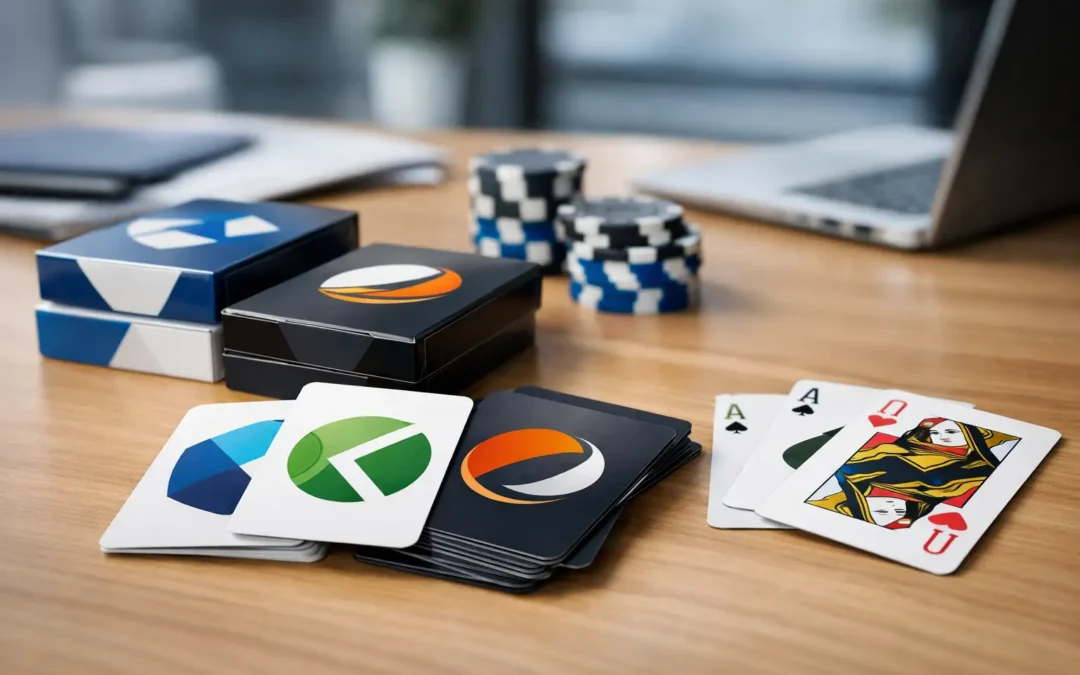
A deck of cards tends to stay on the table longer than most promotional products. It gets picked up, passed around, packed for trips, kept in desk drawers and used in staff rooms, hotel lounges, clubs and event spaces. That is exactly why corporate playing cards continue to work so well for businesses that want useful branded merchandise rather than something disposable.
For procurement teams and marketing managers, the appeal is straightforward. Corporate playing cards are compact, cost-effective in volume and easy to distribute, but they still offer strong branding space across the tuck box, card backs and selected face cards. When the product is specified properly, they also present well – which matters if the cards are part of a campaign, a venue fit-out, a client gift pack or an on-site promotional giveaway.
Why corporate playing cards still work
A lot of promotional items get one look and are forgotten. Playing cards are different because they have an obvious function. People know what they are for, and they do not need instructions, batteries or a special setting to be useful. That gives them a longer shelf life than novelty merchandise.
They also suit a wide range of industries. Hospitality venues use them in bars, gaming areas and accommodation packages. Breweries and distilleries can include them in branded merchandise packs. Event organisers use them for sponsor activations, VIP kits and attendee gifting. Corporate teams can use them for conferences, internal rewards, client hampers and sales promotions.
From a budget point of view, they sit in a practical middle ground. They are usually more memorable than a basic flyer and less expensive than many premium gifts. That makes them a sensible option when you need reach, presentation and manageable unit pricing at the same time.
Where branded card decks fit best
The best results usually come when the cards are matched to the setting. A generic order without a clear use case can still work, but a deck designed for a particular audience will usually perform better.
In hospitality, branded playing cards are often used where customers are already spending time seated and socialising. Clubs, pubs, hotels and resorts can use them as part of the guest experience or retail merchandise range. In these settings, the cards do more than carry a logo – they reinforce the venue identity in a relaxed, repeat-use format.
For corporate promotions, they work well in campaign packs where you want an item that feels considered but is still cost-efficient in bulk. They are easy to combine with drinkware, printed materials or event merchandise without creating freight headaches. Their size helps when packs need to be posted, handed out at trade events or included in conference satchels.
There is also a fit for tourism, fundraising and membership organisations. A customised deck can showcase local imagery, sponsor branding or club identity while still being practical enough for regular use. That mix of utility and visibility is what keeps the product relevant.
Customisation options that matter
Not all branded decks are equal. The finish, print quality and layout choices have a direct effect on how the product is received. If the deck looks cheap or handles poorly, the branding suffers with it.
The outer tuck box is usually the first priority because it carries the strongest shelf presence. This is where logos, campaign graphics, venue branding or event identity can be applied cleanly. It is also the part most visible before the deck is opened, so consistency with broader brand assets matters.
The card backs provide the main repeating branding area. For many businesses, this is enough. A well-designed back with clear logo placement, strong contrast and good colour control can create a polished result without overcomplicating production.
Some orders go further with custom face cards, jokers or selected inserts. That can be effective if you want to include sponsor messages, product information, venue artwork or a themed campaign concept. The trade-off is that more customisation usually means more artwork preparation and, depending on the specification, a higher unit cost or longer lead time. It is worth doing when the deck is part of a larger brand experience, but not every campaign needs full custom faces.
Design considerations for bulk orders
With corporate playing cards, clear branding almost always works better than crowded branding. A deck has limited space, and too much detail can make the product look busy rather than premium.
Strong results usually come from keeping the logo placement confident, using brand colours carefully and making sure fine details will reproduce well at scale. Thin lines, very small type and low-contrast graphics can all become problems in print, especially on coated stock.
This is also a product where the audience should influence the artwork. A deck for a brewery launch can be bolder and more character-driven than one intended for a law firm conference pack. A venue may want high-energy graphics, while a corporate client gift may call for a cleaner and more restrained presentation. The point is not to force every deck into the same design approach. It is to make sure the final product suits the environment where it will be used.
Artwork handling matters too. Buyers ordering in volume should confirm file setup, bleed, colour requirements and proofing expectations early. That avoids delays later, especially when cards are part of a wider merchandise run with fixed event dates.
Material and finish choices
The feel of the deck is part of the brand impression. Card stock, coating and shuffling quality all affect whether the product feels promotional in the basic sense or genuinely worth keeping.
For short-term giveaways, a standard printed deck may be enough. For retail-style presentation, hospitality use or premium campaign packs, better stock and finish are often worth the extra spend. A smoother shuffle, cleaner print and sturdier tuck box can make a noticeable difference in perceived value.
Packaging can also shift the outcome. If the deck is going into a presentation box, event pack or gift set, dimensions and finish should be planned as part of the overall order. This is especially relevant when cards are being paired with branded glassware, drinkware or printed collateral. There is no value in a strong card deck if it arrives in packaging that feels like an afterthought.
Lead times, quantities and procurement realities
This is where experienced supply support matters. A lot of promotional products look simple until you are managing artwork approvals, branding positions, freight timing and delivery to multiple locations.
Corporate playing cards are generally well suited to bulk procurement because they store and ship efficiently. That said, lead times will still vary depending on print method, customisation level, quantity and packaging requirements. A standard deck with straightforward artwork is one thing. A fully customised campaign deck with inserts, gift packing and split delivery is another.
Minimum order quantities are also worth checking early. If the item is for a national campaign, venue group or event rollout, wholesale volumes usually make sense. If the requirement is smaller, the specification may need adjusting to keep unit pricing commercially viable.
For Australian businesses, local support around artwork, quoting and delivery planning can remove a lot of friction. This is especially useful when procurement teams need reliable timelines rather than best-case estimates. ABC2000 works with business buyers who need that practical approach – not just product choice, but clear guidance on what can be delivered, how it will be branded and when it will arrive.
When playing cards are the right promo item
Playing cards are a good fit when you want branding that stays in circulation. They are particularly effective for venues, leisure-focused brands, travel and accommodation, events, clubs and campaign merchandise packs. They also suit businesses that want something compact and easy to distribute without defaulting to low-value throwaways.
They may be less suitable if the audience has no likely use for them or if the campaign calls for a highly technical or product-specific message. In those cases, another item may do a better job. The strongest merchandise choices are not about forcing one product into every campaign. They are about selecting an item that matches the setting, the audience and the budget.
When chosen well, a branded deck does more than carry a logo. It gives people a reason to keep your brand close at hand, use it again and associate it with something practical. That is usually a better result than a promo item that gets binned by the end of the day.