
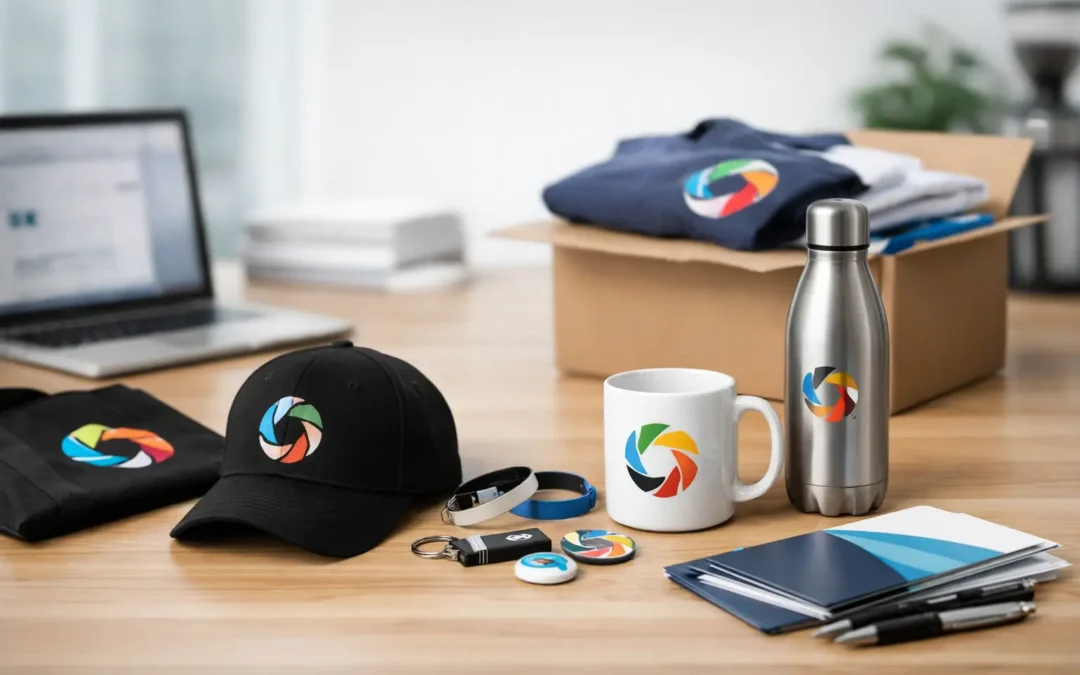
A rushed merch order usually shows itself before the cartons are even opened. The artwork was supplied late, the branding method did not suit the product, the delivery date was treated as a preference rather than a fixed deadline, and suddenly a simple campaign item becomes a procurement problem. If you are working out how to order promotional merchandise for a business, venue, event or hospitality operation, the process is less about picking a product and more about getting the details right early.
For bulk branded orders, the best results come from treating merchandise as part of your wider brand presentation. That means matching the product to the job, confirming quantities properly, choosing a branding method that suits the material, and allowing enough production time for custom work. Whether you are buying for a national rollout, a club promotion, a brewery launch or an event pack, a practical ordering process saves time, protects the budget and reduces rework.
How to order promotional merchandise without delays
The first step is being clear on what the merchandise needs to do. Some buyers start with the item, but in most commercial orders it is better to start with the use case. Are you handing products out at an expo, supplying branded glassware to a venue, creating staff kits, supporting a product launch or ordering event merchandise in volume? The answer shapes everything from product type to print method.
Drinkware is a good example. A stubby holder for a brewery campaign, a printed coffee cup for takeaway branding and laser etched glassware for hospitality service all sit under promotional merchandise, but they serve different purposes and need different production methods. If the merchandise will be used repeatedly in service or on site, durability matters more than novelty. If it is for broad campaign reach, unit cost and ease of distribution may take priority.
Once the purpose is clear, quantities become easier to estimate. Bulk ordering is where trade pricing starts to make sense, but there is still a balance to strike. Ordering too conservatively can push your unit price up and leave you short on stock. Ordering too heavily can tie up budget in items that sit in storage. For events, it helps to look at attendance data, expected staff use and any backup quantity you need for breakages, late registrations or follow-up activity.
Start with product suitability, not just price
Low unit pricing gets attention, but it should not be the only filter. A promotional item has to fit the brand, the audience and the setting where it will be used. A hospitality operator may need branded drinkware that presents well under service conditions. A marketing team may need lightweight, easy-to-distribute items for a campaign. A procurement manager may need consistency across multiple product lines rather than a one-off special.
Material and finish matter more than many first-time buyers expect. Plastic, stainless steel, glass, ceramic, silicone and fabric all behave differently in production. The same logo can look sharp in one application and underwhelming in another depending on the surface, shape and print area. Curved products, textured finishes and dark backgrounds often need more planning than flat, light-coloured items.
This is where working with an experienced supplier helps. A supplier that handles both sourcing and branding can flag issues before production starts, such as when a fine-line logo will not reproduce well at a small size, or when a particular colour match is unrealistic on a certain substrate. That advice is not just about appearance. It protects lead time, avoids extra setup costs and reduces the risk of a finished product that does not meet expectations.
Get the artwork sorted early
Artwork is one of the biggest causes of avoidable delay. Buyers often assume the logo file they use for email signatures or social media will be enough for print, but production requires something more precise. Vector files, correct brand colours, approved lockups and any font or outline requirements should be resolved before the order reaches proofing.
If multiple stakeholders need to approve artwork, build that time into the schedule. Marketing may sign off on brand presentation, procurement may need purchase order alignment, and operations may want confirmation that the product itself is practical. A fast production schedule can still stall if approvals are treated casually.
Proofing matters just as much as artwork supply. Before production begins, check placement, scale, spelling, colour references and any reverse-side or wrap print details. If the order includes several products, confirm that the branding has been adapted properly for each one rather than assuming a single artwork layout suits everything. What works on a carton or banner may not translate neatly to a tumbler, pint glass or stubby holder.
Choose the right branding method for the item
If you are learning how to order promotional merchandise for the first time, the branding method can seem like a technical detail. It is not. The branding process affects cost, durability, appearance and production timing.
Screen printing works well for many straightforward designs and can be cost-effective for volume. Digital print may suit more detailed artwork or multi-colour graphics, depending on the product. Pad printing is common on smaller or irregular surfaces. Laser etching gives a premium, long-lasting finish on suitable materials, especially for glassware and metal drinkware. Embroidery, embossing and transfer methods each have their place too.
There is no single best option across every order. A venue stocking branded glassware may prefer an etched finish for presentation and longevity. An event organiser pushing through a broad-volume campaign may prioritise a print method that keeps unit costs under control. What matters is matching the branding method to the item and the end use, not forcing a logo onto a product in the cheapest possible way.
Confirm lead times as a real deadline
Promotional merchandise is usually tied to something date-driven – an event, launch, seasonal promotion, venue opening or campaign start. That makes lead time one of the most commercial parts of the order, not just an admin detail.
Ask what the timeline includes. There is a difference between stock availability, artwork approval time, production time and freight time. If goods are being customised, the clock generally starts once the artwork is approved, not from the day of the first enquiry. During busy seasonal periods, the production queue can affect timing as well.
For Australian business buyers, local coordination can make a major difference when deadlines are tight. It is easier to manage proofs, production updates and delivery expectations when you are dealing with a supplier that understands domestic freight timing and commercial order pressures. If the delivery date is non-negotiable, say so early. It is far better to choose a product that can be delivered on time than to approve the perfect item too late.
Budget for the full order, not just the unit price
Buyers comparing quotes sometimes focus too narrowly on the item cost. In practice, the total order value is shaped by setup charges, branding method, quantity breaks, packaging, freight and any artwork support required. A cheaper base product can become less economical if the decoration method is inefficient or the presentation is poor.
It is also worth thinking about value over lifespan. Reusable branded drinkware, quality glassware or durable event merchandise may cost more per unit than a short-life giveaway, but the brand exposure can be stronger and longer lasting. For venues and hospitality groups, presentation quality can also affect how the brand is perceived by patrons.
Where budgets are fixed, it often makes sense to decide what matters most: reach, finish, durability or speed. You may be able to increase quantity by simplifying the branding treatment, or improve product quality by narrowing the range. Good procurement decisions come from understanding the trade-offs rather than expecting every order to deliver the lowest price, fastest turnaround and highest specification all at once.
What to check before you approve the order
Before sign-off, make sure the practical details line up. That includes product specification, colour choice, branding position, approved artwork, quantity, cartons, delivery address and required-in-hands date. If the order is going to multiple locations, that should be discussed up front rather than after production is complete.
It is also smart to confirm what happens if stock availability changes. In large-volume orders, some products move quickly, especially around peak promotional periods. An experienced supplier should be able to suggest suitable alternatives without derailing the project. That flexibility matters when campaigns are live and deadlines are fixed.
For repeat buyers, keeping records of previous orders helps streamline future procurement. Product codes, artwork versions, print colours and past quantities give you a stronger starting point for reorders and make brand consistency easier to maintain. This is especially useful for venues, clubs, breweries and event organisers that need the same merchandise range across multiple runs.
Ordering promotional merchandise well is really about reducing uncertainty. The more clearly the product purpose, artwork, branding method, quantity and deadline are defined, the smoother the production process becomes. For Australian businesses buying in volume, the best supplier is not just the one with product range, but the one that can guide the order from concept to delivery without losing sight of cost, quality and timing. If you approach the job with that mindset, the merchandise works harder from day one.