
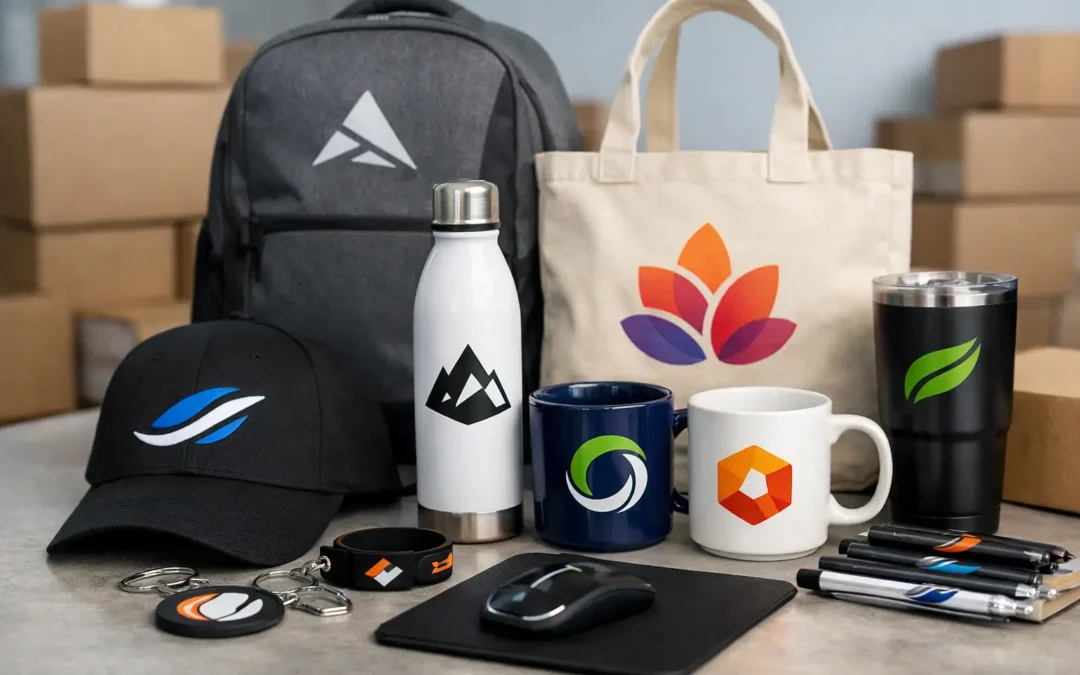
A venue opening in three weeks, a brewery launch, a national sales promotion or a packed event calendar can all create the same procurement problem: you need branded stock in volume, and it needs to look right when it arrives. Branded merchandise wholesale is not simply about finding the lowest unit price. It is about choosing useful products, suitable branding methods and realistic production timing so every item represents your business properly.
For Australian businesses, clubs, hospitality operators and event teams, bulk promotional merchandise works best when it is planned as part of the wider brand presentation. A reusable cup, branded pint glass, staff uniform, banner or giveaway item has a job to do. It should be appropriate for the audience, fit the setting and stand up to repeated handling.
What wholesale branded merchandise should deliver
Buying at wholesale volume gives businesses more than a better per-unit cost. It creates consistency. The same logo colour, decoration position and product specification can be carried across campaign stock, venue supplies and repeat orders. That matters when merchandise is being distributed through multiple locations, supplied to staff or used throughout a large event.
The right product also remains visible after the first interaction. Drinkware is a strong example. A quality branded water bottle may travel from the office to the gym. A custom glass can become part of a customer’s regular home bar collection. In hospitality, branded glassware reinforces the venue or beverage brand every time a drink is served, rather than disappearing into a drawer after one use.
Volume purchasing does require more upfront decisions. Product availability, minimum order quantities, artwork approval and decoration setup all affect the final result. Buyers who allow time for these details usually avoid the costly compromises that come with rushed sourcing.
Choosing branded merchandise wholesale by purpose
Start with where the item will be used, rather than starting with a catalogue category. A practical item for a trade event may not suit a premium corporate gift, and a product that works behind a busy bar may not be the best option for a staff onboarding pack.
For events and campaigns, consider items that are easy to distribute, carry and retain. Caps, tote bags, reusable cups, lanyards and branded bottles are familiar choices because they are useful on the day and can continue promoting the brand afterwards. If the event is outdoors, product durability and weather resistance should be part of the brief.
For hospitality and beverage businesses, presentation and service conditions carry more weight. Glassware needs to suit the drinks being poured, be practical for staff to handle and support regular replacement ordering. Branded beer glasses, wine glasses, cocktail glassware, ceramic mugs and takeaway cups each create a different impression. The best choice depends on the venue format, customer expectations and how frequently the product will be used.
Corporate and trade buyers often need merchandise that supports relationships rather than a one-off giveaway. Premium drinkware, notebooks, apparel, tech accessories and desk items can work well, provided the quality matches the value of the relationship. A low-cost item can be effective at scale, but it may not be appropriate for a client gift or executive event.
Before selecting a product, confirm four practical points:
- Who will receive or use it, and in what setting?
- How long does it need to remain useful or visible?
- Does the product need to survive washing, transport or heavy daily use?
- What quantity is needed now, and is repeat supply likely?
These answers help narrow the range quickly and prevent a product decision based solely on an appealing unit price.
Match the branding method to the product
A logo is only as effective as its application. Different materials, artwork styles and order volumes call for different decoration methods, and each has a place.
Screen printing is commonly used for clear, bold designs on products such as bottles, bags, apparel and promotional items. It can offer excellent visibility for simple artwork and solid colours. Pad printing is suited to smaller or curved print areas where precision matters. Digital printing can be useful where artwork includes detailed colour or a more complex design.
For metal drinkware, glassware and premium items, laser etching offers a clean, durable finish. Rather than applying ink to the surface, the design is etched into the material. This creates a refined result that is particularly popular for corporate drinkware, barware and long-life promotional products. However, laser etching does not reproduce full-colour artwork, so it is best suited to logos that remain recognisable as a single-colour mark.
Print colour also needs a practical discussion. Pantone matching may be important for established brands, but the final appearance can vary depending on the product surface and decoration process. A logo printed on a matte black bottle will present differently from the same logo applied to clear glass. Supplying clean vector artwork and allowing for a proof approval stage are two of the simplest ways to protect brand consistency.
Lead times are part of the product specification
The product is not right if it arrives after the event. Wholesale merchandise projects should be planned backwards from the required delivery date, allowing time for artwork preparation, proofing, production, freight and a small buffer for unexpected changes.
Stock items with standard decoration can often move faster than custom-made or offshore-produced products, but availability can change quickly around major event periods, Christmas, end-of-financial-year campaigns and large industry activations. If timing is tight, buyers may need to choose from available local stock, simplify the decoration method or adjust the product specification. These are sensible trade-offs when the deadline cannot move.
For larger programs, it is worth forecasting demand rather than ordering only when stock is nearly exhausted. Venues, breweries and multi-site businesses benefit from holding a repeat-order specification that records the product, colour, branding position and artwork version. This reduces approval time and helps maintain the same look across future orders.
Australia-wide delivery also needs to be considered at the start. Split deliveries to venues, offices or event locations may be required, and cartons of drinkware can be bulky and heavy. Providing accurate delivery addresses, site contacts and receiving hours helps avoid delays once the goods leave production.
Build a clearer bulk order brief
A detailed brief allows a supplier to quote accurately and recommend options that genuinely fit the job. It does not need to be complicated. The useful details are quantity, product preference, logo files, required-in-hands date, delivery location, budget range and any packaging or fulfilment requirements.
If you have flexibility, say so. For example, a marketing manager may prefer an insulated bottle in a specific colour but be open to a similar model if stock is limited. That gives the supplier room to offer a practical alternative without losing time. If there is no flexibility on colour, product style or delivery date, make those priorities clear from the outset.
Budget conversations should include more than the item cost. Decoration setup, additional print colours, individual packaging, freight and fulfilment can all affect the total. At the same time, a higher unit price may be justified when the product has a longer service life or a more premium presentation. The cheapest option is not always the most economical once replacement rates, brand perception and campaign value are considered.
Why a single-source supplier makes procurement easier
Managing products, printing, artwork and delivery through separate providers can work for a small, simple order. It becomes harder when several product types, multiple brand applications or a firm campaign deadline are involved. A supplier that can coordinate sourcing, custom decoration, printing and fulfilment provides one point of contact and a more accountable production process.
This is especially useful for businesses combining event merchandise with display materials. Branded drinkware may be only one part of the requirement. The same campaign could need pull-up banners, point-of-sale material, staff apparel, printed collateral and giveaway stock. Coordinating these elements as a total image solution helps keep colours, messaging and timing aligned.
ABC2000 works with bulk buyers on this practical basis, with trade-focused product sourcing and branding support for orders that need to perform in real commercial settings. The priority is not to overcomplicate the process, but to make sure the chosen product, decoration and delivery plan match the brief.
The strongest merchandise orders begin with a clear purpose and a realistic deadline. Bring those two details, along with your artwork and approximate quantity, to the first conversation. From there, the right wholesale product becomes much easier to specify, brand and deliver with confidence.