
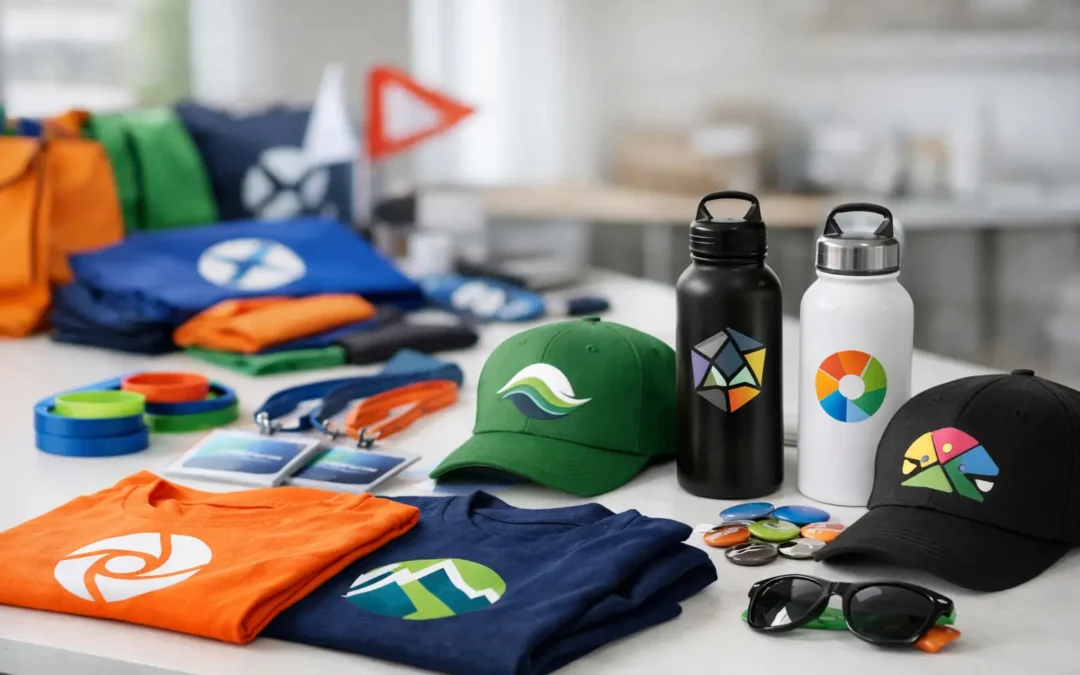
A busy event floor gives people only seconds to notice a brand. The right bulk event merchandise keeps working after that moment – in a guest’s hand, on a desk, behind a bar or in a team member’s kit. The wrong product becomes leftover stock, a missed deadline or a branding exercise that does not reflect the standard of the event.
For Australian organisers, venues, clubs and marketing teams, the strongest merchandise order is rarely about choosing the cheapest item. It is about selecting practical products, applying the artwork correctly and getting the full quantity delivered when it is needed. That takes a clear brief before production begins.
Start with the event, not the product
A reusable cup may be ideal for a beer festival, but it is not necessarily the best choice for a corporate conference. Likewise, premium branded glassware can lift a hospitality launch, while a high-volume community event may need durable, easy-to-distribute drink bottles or tote bags.
Begin with the action you want the attendee to take. Are they buying a drink, registering at a stand, taking home a sample, attending a VIP function or representing your team? Merchandise is most effective when it has a job to do. A useful item earns more visibility than a novelty giveaway that is discarded on the way out.
Consider the setting as well. Outdoor events benefit from products that are lightweight, durable and easy to carry. Indoor trade shows need items that fit easily into a bag and do not create clutter at the stand. Hospitality venues need drinkware that suits service requirements, storage space and the look of the venue. A product can look excellent in a catalogue but be impractical once crowds, staff and transport are involved.
Bulk event merchandise: choose items people will use
Drinkware remains one of the most reliable categories for event supply because it is useful across many audiences. Branded tumblers, reusable cups, water bottles, stubby holders, coffee cups and glassware can carry a logo without feeling overly promotional. For breweries, clubs, bars and food events, glassware also becomes part of the customer experience rather than simply a giveaway.
The best option depends on volume, budget and intended lifespan. Single-use or low-cost items can suit a short campaign with a large attendance target. Reusable cups and bottles generally offer stronger ongoing exposure, particularly where sustainability expectations are part of the event brief. Premium glassware or insulated drinkware can be effective for ticketed functions, sponsor gifts and retail merchandise, where perceived value matters more than the lowest unit cost.
Beyond drinkware, practical event products include lanyards, tote bags, caps, notebooks, pens, keyrings and staff apparel. These products work best when they support the event operation. A lanyard can identify delegates and sponsors. A tote bag can carry exhibitor material. Branded apparel can make staff easy to find in a crowded venue. There is no need to force every logo onto every available item. Select a small, purposeful range and do it well.
Match the branding method to the material
A good product with poor decoration will still look poor. Branding method affects colour accuracy, durability, setup requirements and lead time, so it should be discussed early rather than added as an afterthought.
Screen printing is often a practical choice for simple artwork and larger quantities, especially where bold spot colours are required. Digital printing can suit more detailed or full-colour artwork, depending on the product and print area. Laser etching is particularly effective on selected metal drinkware and glassware, creating a refined finish that does not rely on ink colour. Pad printing may be used where the branding area is smaller or curved.
The product surface matters. A logo that is clear on a flat tote bag may need adjustment for a tapered cup, rounded bottle or textured item. Fine type, small reverse details and subtle tonal elements can disappear when reduced to a compact print area. If your brand guidelines include several logo versions, provide the preferred files and allow for a practical recommendation based on the item.
For best results, supply vector artwork where available, such as an AI, EPS or print-ready PDF file. Also confirm the brand colours, required print position and whether each item needs the same artwork. Event merchandise often involves more than one logo, including event branding, sponsors, venue marks and campaign messaging. The more artwork variations involved, the more carefully the order needs to be planned.
Keep the design readable at event distance
Event merchandise is viewed quickly. A large, clear logo usually delivers more impact than a crowded layout with multiple messages. If sponsor recognition is required, establish hierarchy before artwork approval. The event name may need to lead, while sponsor logos appear in a defined secondary position.
This is especially relevant for glassware and drinkware. A clean one-colour print can look more premium than a complex design trying to fit within a small decoration area. It depends on the product, but clarity nearly always wins.
Order quantities with a realistic buffer
Ordering exact attendee numbers is risky. Guests bring colleagues, staff need replacements, sponsors request extras and a portion of stock may be used for pre-event promotion or retained for follow-up activity. A sensible buffer protects the event from running short, particularly when the merchandise is a functional part of service, such as cups, lanyards or staff uniforms.
The right buffer varies by event type. A tightly managed corporate function may need only a modest allowance. A public festival, venue activation or open registration event usually needs more flexibility. Consider whether merchandise will be distributed to every attendee, offered only at selected points, sold at the event or held for future campaigns.
There is also a pricing benefit to planning quantity bands. Wholesale unit pricing often improves as quantities increase because setup, production and freight costs are spread across more units. However, the lowest unit price is not automatically the best purchase if it creates unnecessary storage or leaves you with dated event-branded stock. Buy for a clear use case, not simply to reach a volume threshold.
Build production time into the event plan
A deadline is not just the event date. The real deadline is when stock must arrive at the office, warehouse, venue or freight depot. From there, products may need to be counted, packed into event kits, distributed to multiple locations or delivered to exhibitors.
Custom merchandise has several stages: product availability, artwork preparation, proof approval, decoration, quality checks, packing and freight. Each stage needs time. Last-minute orders can sometimes be managed, but options may be narrower and urgent production or freight can affect cost.
Avoid approving artwork in a rush. Check spelling, dates, sponsor logos, print positions and colour instructions before giving final approval. A proof is the point to resolve uncertainty, not a formality to click through. Once production starts, changes may delay the order or create additional costs.
For multi-site events, confirm where each portion of the order is going and how it should be labelled. Sending stock to one central location may reduce freight complexity, but direct distribution can save your team time when venues, branches or activation teams are spread across Australia. The best approach depends on who is receiving and managing the stock at each end.
Make merchandise part of the wider event image
Merchandise should sit comfortably alongside signage, menus, uniforms, displays and printed collateral. When the visual language is consistent, the event feels organised and professionally presented. When every item uses a different logo version, colour or message, the brand loses impact.
This is where a total image approach can reduce administration. Coordinating promotional products, branded drinkware, printed material and display requirements through one experienced supplier can make artwork handling and production planning more straightforward. ABC2000 supports bulk commercial orders with custom branding, printing, laser etching and Australia-wide delivery, giving buyers a practical point of contact for event supply requirements.
Consistency does not mean every item must look identical. A premium VIP glass may use a subtle etched logo, while a high-volume reusable cup uses a bold one-colour print. Both can belong to the same event if the brand hierarchy and colour treatment are considered from the beginning.
Ask the questions that prevent costly surprises
Before placing an order, confirm the final quantity, decoration method, artwork format, production timing and delivery address. Ask whether the item is suitable for its intended use, especially for hospitality environments where glass type, washability, capacity and handling can matter. If you are ordering reusable drinkware, check how it will be collected, cleaned or distributed during the event.
Also be clear about budget priorities. If presentation is essential, it may be worth investing in a better product or finish and reducing the number of product types. If reach is the priority, a simpler item in a larger quantity may deliver better value. Neither approach is universally right. The event objective should decide.
A well-planned merchandise order gives attendees something useful while making the event easier to run and the brand easier to remember. Set the brief early, allow enough production time and choose products that will still look right once the doors open and the crowd arrives.