
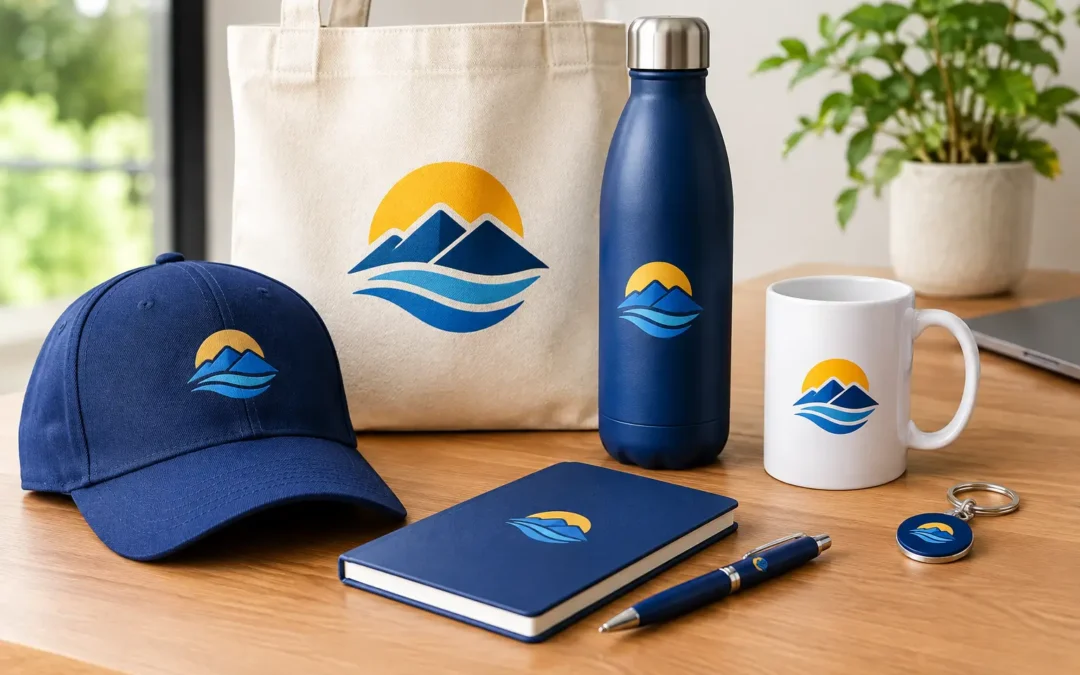
A carton of branded products arriving the day after an event is not a bargain. For Australian businesses buying in volume, the value of promotional merchandise comes down to three things: whether people will use it, whether the branding looks right, and whether the stock arrives when it is needed. This small business promotional products guide is designed to help buyers make practical decisions before artwork is approved and production begins.
Promotional products are often treated as a final marketing detail. In reality, they are physical brand assets. A well-chosen drink bottle, glassware range or event giveaway can stay in front of customers long after a campaign, trade show or venue activation has finished. A poorly chosen item can consume budget, occupy storage and disappear without making an impression.
Start with the job the product needs to do
The right product is not always the cheapest item or the most unusual one. It is the item that suits the audience, the environment and the desired outcome. A brewery ordering branded pint glasses has different requirements from a construction business supplying staff with insulated travel mugs, or a club preparing merchandise for a members’ event.
First, decide where and how the product will be used. Items handed out at a busy expo need to be easy to carry and simple to brand. Products used by hospitality staff must withstand frequent handling and washing. Corporate gifts generally need a higher perceived value, with a finish that reflects the relationship being built.
It also helps to be clear about the intended life of the product. Single-event giveaways can justify a lower unit cost if they support a large audience and immediate brand recognition. Reusable drinkware, glassware, bags and desk items usually work harder over time because they remain visible in homes, workplaces and venues.
Match the item to the audience, not just the logo
Think about the recipient’s routine. A stainless steel bottle makes sense for active teams, outdoor events and workplaces where people carry water throughout the day. Branded beer glasses, wine glasses and bar accessories suit venues, breweries, clubs and hospitality promotions. Pens, notebooks and lanyards remain useful for conferences, training days and front-of-house operations.
Practicality matters more than novelty. If an item has an obvious use, recipients are more likely to keep it. That gives a business more repeated exposure for the same promotional spend.
Build a sensible bulk budget
A promotional product quote should be assessed as a complete landed solution, not just a unit price. Product type, quantity, decoration method, number of print colours, artwork preparation, packaging and freight can all affect the final figure. For some products, a modest increase in quantity can improve the unit rate enough to make the overall purchase more efficient.
Bulk buying is particularly effective where stock can be used across multiple campaigns or locations. A national hospitality group may hold branded glassware for venue openings and seasonal promotions. A small business with recurring trade shows may order a core range once, then replenish as needed. This reduces repeated artwork setup and last-minute sourcing pressure.
Avoid ordering purely to reach a price break, though. Excess stock only represents value when it is likely to be used before branding, contact details or campaign messaging change. If your logo is being updated, order conservatively or select products with branding that will remain relevant.
When comparing options, look beyond the headline price and consider:
- the expected cost per useful impression, not simply the cost per item
- whether the product is appropriate for the recipient and setting
- the quality of the decoration and how it will hold up in use
- production lead time, freight timing and any event deadline
- minimum order quantities and the capacity to reorder consistently.
This approach protects both budget and brand presentation. The cheapest product can become expensive if it looks poor, arrives late or is not used.
Choose a branding method that suits the product
The decoration method affects how your logo appears, how durable it is and what artwork is required. It should be selected with the product material and intended use in mind, rather than treated as an afterthought.
Screen printing is a common choice for bold, simple artwork on products such as bottles, bags and promotional accessories. It can provide strong colour coverage, particularly where the design uses solid colours. Pad printing is useful for smaller, curved or uneven print areas, although fine detail needs careful review at small scale.
Laser etching is often preferred for metal drinkware and selected glassware because it creates a precise, permanent mark. It has a premium, understated appearance, but it does not reproduce full brand colours. Digital printing can suit detailed artwork, gradients and full-colour designs, subject to the product surface and print area.
For branded glassware, the choice is especially important. A design that looks sharp on a flat digital proof may need adjustment for the curve of a wine glass, tumbler or beer glass. Fine type, very thin lines and low-contrast artwork may not reproduce clearly at production size. Ask for guidance early, before the design is locked in.
Prepare artwork before the deadline becomes urgent
High-resolution artwork is one of the easiest ways to prevent delays. Vector files are generally preferred for logos because they can be scaled cleanly and separated for different decoration methods. If the available artwork is a small image file, it may need to be redrawn or adjusted before production.
Confirm the print position, maximum decoration area, colours and proof approval process before placing the order. A proof is not administrative paperwork. It is the opportunity to check spelling, logo proportions, placement and legibility before a bulk run is produced.
Allow time for internal sign-off as well. Marketing may approve the visual direction, while procurement needs to confirm quantities, budgets and delivery details. Bringing those decisions together early avoids a situation where a production slot is held up by one final approval.
Plan backwards from the event or campaign date
Most deadline problems begin with an incomplete timeline. Buyers often count only the event date and the product lead time, overlooking artwork changes, proof approval, freight and receiving stock at the correct location.
Work backwards from the date the goods must be in hand, not the day they are required on site. If products are going to a hotel, venue, warehouse or regional office, allow time for delivery booking, unpacking and distribution. Large events can also have strict bump-in windows, so stock may need to arrive earlier than expected.
As a working rule, finalise product selection and artwork well ahead of the required date. Custom production has variables, particularly during peak event periods, Christmas campaigns and major sporting or hospitality seasons. A supplier can provide realistic timing once they know the product, quantity, decoration method and delivery destination.
ABC2000 works with commercial buyers who need this process managed clearly, from product selection and artwork handling through to custom branding and Australia-wide delivery. That level of coordination matters when a branded order is part of a wider launch, venue fit-out or event programme.
Keep brand consistency across every touchpoint
Promotional merchandise should look like it belongs alongside your signage, menus, uniforms, packaging and printed materials. Consistency does not mean applying the logo to everything in the same position. It means using approved colours, suitable logo versions and a level of quality that matches the rest of the brand.
A brewery, for example, might use a bold one-colour mark on branded pint glasses while reserving a more detailed full-colour treatment for event banners and printed collateral. A corporate business may use subtle laser etching on executive drinkware, then a brighter print treatment for a public-facing campaign giveaway. Both approaches can be consistent when they are intentional.
Be cautious with products that have limited decoration space. A logo, web address, phone number, campaign message and several icons may all fit technically, but the result can be difficult to read. One clear mark is usually more effective than crowded artwork.
Make ordering easier next time
The strongest promotional product programmes are repeatable. Once a business has confirmed reliable items, approved artwork and preferred decoration methods, future orders become faster and less risky. Keep records of product codes, colours, print specifications, approved proofs and previous quantities.
For venues, clubs and multi-site businesses, establish a core branded range that can be reordered as stock is used. This might include drinkware for service, reusable bottles for staff, event merchandise and printed display materials. Standardising the essentials gives each location a consistent presentation while making procurement more efficient.
The best promotional product is the one that earns its place in the recipient’s routine and arrives ready to represent your business properly. Start with the purpose, allow enough production time and choose a supplier that understands bulk ordering realities. Your brand will be seen in the details people keep using.