
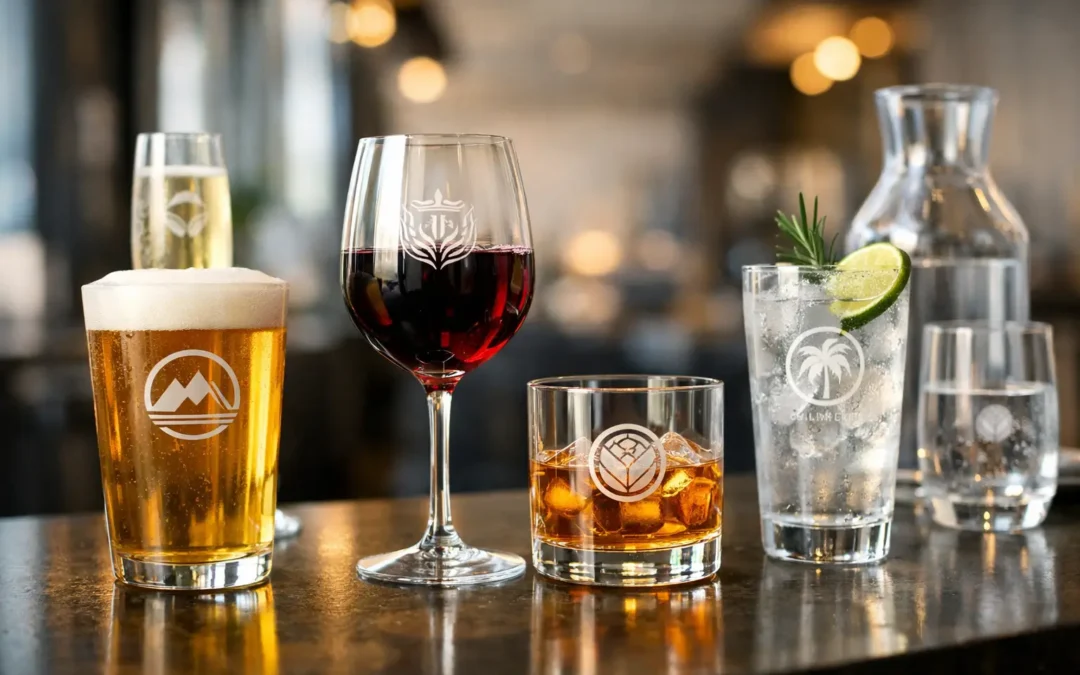
A busy Friday service quickly shows whether branded glassware is doing its job. A well-chosen beer glass, wine glass or tumbler puts your venue name in customers’ hands, photographs clearly and stands up to repeated washing. Branded glassware for hospitality venues is not simply a promotional extra. It is working stock that needs to suit the drinks list, service style, storage space and replacement cycle of the operation.
For bars, clubs, breweries, hotels and event operators, the best result comes from matching the vessel and branding method to how the glass will actually be used. A sharp logo on the wrong glass shape, or a decoration method unsuited to high turnover, can create unnecessary cost and frustration. Planning the order properly from the outset keeps branding consistent and makes bulk purchasing far more efficient.
Why branded glassware for hospitality venues earns its place
Glassware is one of the few branded items customers use for the full duration of a drink. Unlike a coaster or menu, it stays visible from the first pour to the last sip. That makes it particularly useful for venues building recognition, breweries wanting every serve to reinforce their identity, and clubs seeking a more polished presentation across functions and bars.
The effect is practical as well as visual. A dedicated branded pint or schooner can support a house beer range. Branded wine glasses can lift a bistro, cellar door or hotel function package. Tumblers give spirits, cocktails, soft drinks and water service a consistent look without requiring a different product for every beverage.
There is also a stock-control consideration. Clearly branded glassware is easier for staff to identify among mixed supplies and gives hired spaces or event bars a more established appearance. It will not prevent every breakage or walkout, but it makes replacement stock part of a controlled venue presentation rather than an afterthought.
Start with service requirements, not the logo
The right glass depends on the drinks you sell most often and the pace at which staff need to work. A craft brewery may need branded schooners, pints and tasting paddles that suit its core pours. A cocktail bar may prioritise highballs, rocks glasses and stemware. A sports club with several bars may get better value from a versatile tumbler and a standard beer glass that can be ordered again as stock is used.
Capacity matters. Choose a glass that aligns with advertised serving sizes, headspace requirements and any responsible-service procedures. Beer glassware should accommodate the intended pour cleanly, while wine glasses need enough bowl size for the wine style and the level of table service you are offering. Oversized glassware can look generous but may complicate portion control. Smaller or highly specialised shapes can be memorable, yet they may slow service and take up more storage space.
Consider the practical features that affect staff every day. Stackable designs can save room in a crowded bar, although they are not appropriate for every drink. A sturdy base may be better suited to high-volume venues than a delicate, fine-rimmed option. Stemless wine glasses offer a relaxed, durable alternative for outdoor areas and large functions, while traditional stemware may better suit formal dining or premium events.
If your venue has outdoor dining, pool areas or major event traffic, polycarbonate drinkware can be worth considering alongside glass. It offers a safer option in locations where breakage is a greater concern. The trade-off is that it does not provide the same weight, clarity or premium feel as real glass, so the setting and customer expectation should guide the decision.
Choose a decoration method that suits the job
Branding needs to look good at first service and continue to represent the venue after repeated use. The appropriate method depends on the artwork, order quantity, glass shape and expected washing conditions.
Laser etching creates a permanent, refined mark by removing a fine layer from the surface. It is well suited to simple logos, text and designs where a subtle frosted finish suits the brand. Etching is a strong choice for premium glassware, awards, corporate gifting and venues that want a restrained, long-lasting decoration. It does not reproduce full colour artwork, so it is less suitable where exact brand colours are essential.
Screen printing and other printed decoration methods allow greater flexibility with colour and can give a logo stronger shelf impact. They work well for breweries, promotional barware, campaigns and event glassware where colour recognition matters. Fine lines, small text and large solid print areas should be reviewed carefully before production, particularly on curved glass surfaces.
A large logo is not always the answer. The best placement is generally the one that remains visible in use without interfering with the customer’s grip, the drinking rim or the view of the beverage. A one-colour mark near the upper bowl of a beer glass may be more effective than a busy multi-colour design wrapped around the entire vessel.
Get the artwork right before production begins
Glass is unforgiving of poor artwork. A logo that looks acceptable on a screen can lose detail when reduced to fit a small tumbler or etched onto a curved surface. Supply clean, high-resolution vector artwork where available, and make sure the approved file reflects the exact version of your logo, colours and wording.
Before approving production, check the decoration size, position, orientation and print colours. Confirm whether the logo will face the drinker, the person opposite them or the bar display. This sounds minor, but it changes how the glass performs in table service, product photography and customer-generated social content.
For multi-site venues, breweries with stockists or event operators using several suppliers, establish one approved artwork file and decoration specification. It reduces variation between future orders and makes repeat purchasing quicker. ABC2000 can assist with artwork handling and production guidance so buyers can move from approved design to bulk supply with fewer avoidable delays.
Plan quantities around operations and replacements
Hospitality glassware should be ordered for the real operating environment, not just the number of seats in the venue. Account for service turnover, dishwasher cycles, bar locations, function rooms, breakage allowance and reserve stock. A 150-seat venue may need considerably more than 150 glasses of a popular style during a full service period.
For a first branded run, it can be sensible to focus on the glasses with the highest visibility and fastest turnover. For example, a brewery may begin with branded schooners and tasting glasses before extending to specialty vessels. A hotel may standardise water tumblers and wine glasses across its function offering before adding cocktail glassware for a particular bar.
Bulk ordering usually delivers better unit pricing, but it should be balanced against storage capacity and how frequently your menu or visual identity changes. If a seasonal campaign, festival or sponsor activation is involved, allow enough time for artwork approval, production and Australia-wide delivery. Last-minute orders restrict product and decoration choices, particularly when quantities are substantial.
It is also worth setting a replacement plan. Keep the product code, approved artwork and previous order details on file. When breakages occur or a new venue opens, reordering matching stock is far easier than trying to source a similar-looking glass months later.
Build the glassware into the venue experience
The strongest branded glassware feels like part of the venue, not an advertisement added at the last minute. Match the glass style to your menu, the decoration to your brand guidelines and the quantity to your service reality. A coastal hotel may favour clean, understated etched tumblers; a lively brewery can justify bolder printed beer glassware; a corporate event may need a polished, uniform finish across hundreds of guests.
Think beyond the bar as well. Branded glassware can support tasting events, member rewards, product launches, merchandise sales and sponsor packages. The same product can perform several jobs when the design is purposeful and the quality is appropriate for commercial use.
A good starting point is simple: identify the drinks customers order most, the glasses staff reach for most often and the branding they are most likely to remember. That is where a bulk glassware order will earn its place first.