
A campaign can have strong creative, paid media and a full event calendar, then lose impact at the point of contact if the merchandise arrives late, looks inconsistent or does not suit the audience. Marketing campaign merchandise planning is where practical procurement decisions protect the work your campaign team has already put in.
For Australian businesses, the right approach is not simply choosing products with the lowest unit price. It is selecting useful items, confirming branding methods early, allowing for production and freight, and ordering enough stock to support every campaign touchpoint. Done properly, branded merchandise becomes a repeatable part of your marketing operation rather than a last-minute expense.
Start With the Campaign Job
Before comparing drink bottles, glassware, apparel or event giveaways, define what the merchandise needs to achieve. A product selected for a product launch has a different job from merchandise used in a brewery venue, a member rewards programme or a national trade event.
Consider where recipients will receive it, whether they are likely to keep and use it, and what action you want it to support. For example, a premium laser-etched tumbler can reinforce a hospitality partnership or VIP experience. A practical reusable drink bottle may deliver greater reach for a fitness promotion, staff programme or community event. Branded display materials, meanwhile, must work at a distance and carry clear campaign messaging in a busy environment.
The best item is usually the one that makes sense in the recipient’s day. It should feel appropriate to the occasion, reflect the value of the offer and present your logo clearly without forcing too much information onto a small print area.
Build Marketing Campaign Merchandise Planning Around Dates
Campaign deadlines are fixed more often than they appear. An event opening, seasonal promotion, sponsorship activation or new venue launch cannot simply move because printed stock is still in production. Work backwards from the date merchandise must be in hand, not the date it needs to leave the supplier.
Allow time for product selection, quotation approval, artwork preparation, proofing, production, quality checks and Australia-wide freight. Complex orders involving multiple product types, individual packing or delivery to several locations need further coordination. If a campaign includes branded glassware, consider the handling and freight requirements as early as possible.
Artwork is a common source of delay. Supply clean, high-resolution files in the required format and nominate the correct logo version at the beginning. Confirm brand colours, print position, decoration size and any variable information, such as event dates or location names, before production approval. A proof is the point to check the details carefully. It is much easier to adjust a layout then than after a bulk order has been branded.
For recurring activity, keep a simple campaign calendar that flags merchandise requirements several months ahead. This gives your team more product choice, more flexibility on branding methods and better control over costs than an urgent order placed close to an event.
Choose Products for Use, Not Just Appearance
A visually appealing product can still miss the mark if it has limited practical value. Campaign merchandise earns its place in the budget when people use it after the first interaction. Each use is another opportunity for brand visibility.
Drinkware is particularly effective because it fits workplaces, venues, outdoor events, staff packs and customer gifts. The decision between a ceramic mug, insulated bottle, plastic stadium cup, branded glass or reusable coffee cup depends on the audience and environment. A club may need durable barware at volume, while a corporate client gift may call for a more premium finish.
Product quality should match the campaign promise. If you are promoting a premium service, a lightweight giveaway that feels disposable can send the wrong message. Conversely, supplying high-end merchandise for a wide public distribution may consume budget that would be better allocated to volume, event signage or follow-up marketing.
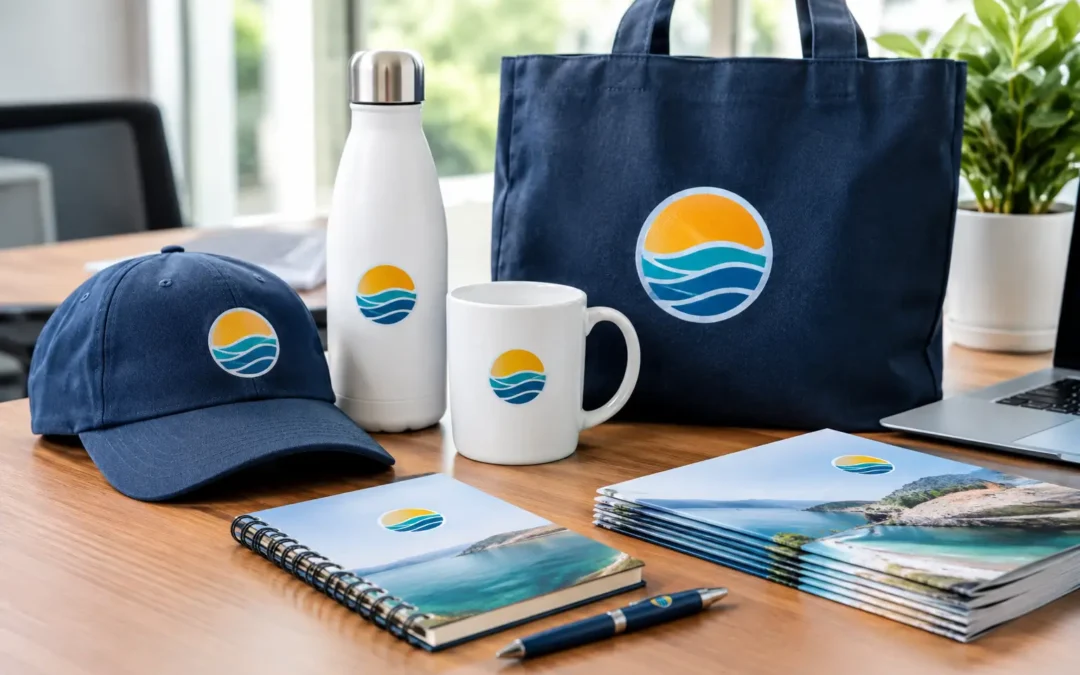
Think about the full presentation as well. A well-branded product can be undermined by poor packaging, inconsistent colours or a display table that does not match the campaign identity. This is where a total image approach is useful: merchandise, printed collateral and display materials should work as one visible system.
Match the Branding Method to the Product
Not every decoration method suits every product. The material, shape, logo detail, order quantity and intended lifespan all influence the best option.
Screen printing can suit bold artwork and higher-volume promotional items. Pad printing is often useful for curved or irregular surfaces, where a conventional flat print is not practical. Digital printing can reproduce more detailed, full-colour artwork where the product and print area allow it. Laser etching is a strong option for metal drinkware and selected glassware, giving a precise, durable finish that suits premium branding.
A simple one-colour logo may provide the clearest result on a small product. A detailed campaign design may need a larger printable area or a different item entirely. Trying to reproduce fine text or multiple small logos on a compact giveaway often creates a result that is hard to read.
Ask for advice on the decoration method before settling on the product. An experienced supplier can identify when artwork needs simplifying, when a colour match may vary by material, and when a different item will deliver a more professional result. These decisions affect both presentation and production timing.
Set a Budget That Accounts for the Whole Order
Unit price matters, particularly on large promotional orders, but it is only one part of the purchasing decision. A realistic budget includes the product, branding setup, decoration, artwork adjustments where required, packaging, freight and any split delivery requirements.
Volume usually improves unit pricing, but ordering excess stock simply to reach a price break can create storage problems or leave you with dated campaign material. The right quantity depends on expected attendance, distribution channels, replacement needs and whether the product can be reused for future activity.
It is sensible to allocate stock across each campaign use rather than treating the order as one number. A launch event, sales team, venue counter, media pack and staff allocation can each draw from the same inventory. Without a clear allocation, the highest-visibility activity may be left short while stock has already been distributed elsewhere.
Where budget is tight, protect the elements customers will notice most. This may mean selecting a simpler product with a crisp, well-positioned logo instead of a cheaper item carrying an overcomplicated design. It can also mean reserving premium merchandise for high-value clients while using a separate volume item for general giveaways.
Plan Distribution Before the Goods Arrive
Merchandise needs an owner once it reaches your office, warehouse, venue or event site. Confirm who will receive it, where it will be stored and how stock will be counted. For multi-site campaigns, record quantities by location and nominate a contact responsible for confirming delivery.
At events, consider how products will be presented and issued. A giveaway handed out without context may disappear quickly. A product connected to a sign-up, demonstration, purchase, competition or hospitality experience gives staff a clearer way to use it as a campaign tool.
For hospitality operators and venues, practical stock management is especially important. Branded glassware, cups and bar accessories may need replenishment throughout a promotion, and breakage or loss should be factored into the original quantity. Ordering too tightly can leave a venue substituting unbranded stock during the period when brand consistency matters most.
Measure More Than How Fast Stock Disappears
Fast distribution does not automatically mean success. A useful campaign review looks at the outcome the merchandise was meant to support: event attendance, leads collected, social sharing, sales conversations, repeat venue visits, staff engagement or client retention.
Gather feedback from the people issuing the merchandise as well as recipients. They can tell you whether a product was easy to display, whether stock levels were adequate and which items attracted the strongest response. Keep notes on print quality, freight timing and any artwork changes required. This creates a more reliable buying process for the next campaign.
ABC2000 supports bulk branded merchandise orders with practical advice on product selection, decoration, artwork and delivery planning. For buyers managing multiple campaign elements, working with one experienced supplier can reduce handovers and help keep the finished presentation consistent.
The most effective merchandise is planned early enough to be chosen on purpose. Give your team time to select products people will genuinely use, approve the branding properly and put stock where it can do its job when the campaign begins.