
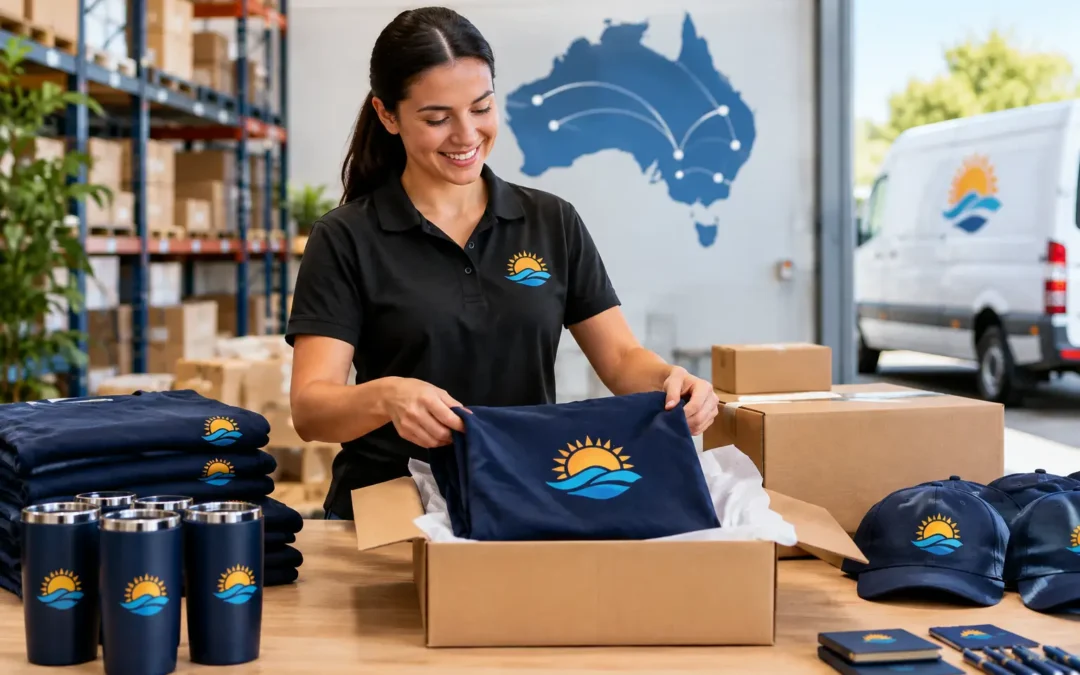
A campaign can look completely organised at head office and still fail at the final stage: cartons arriving late, branded stock sent to the wrong venue, or merchandise that does not match the approved artwork. Australia-wide merch fulfilment is the operational work that prevents those costly gaps, helping businesses move branded products from production to the right people, locations and events with control.
For marketing teams, venues, breweries, clubs and procurement departments, fulfilment is more than freight. It brings together stock planning, branding accuracy, packing, labelling and delivery timing. When those elements are managed by one experienced supplier, ordering large quantities of promotional merchandise becomes far easier to coordinate.
What Australia-wide Merch Fulfilment Covers
Merch fulfilment begins before any carton leaves a warehouse. It starts with choosing products that suit the purpose, confirming decoration requirements and allowing enough time for custom production. A drink bottle for staff onboarding, branded glassware for a hospitality rollout and event merchandise for a national promotion each need a different approach to quantities, packing and delivery.
At its practical level, fulfilment can include receiving or holding stock, applying approved branding, packing products for individual sites or recipients, adding location labels and despatching orders across Australia. For a business with multiple venues or a campaign travelling between states, this removes the need for internal teams to split cartons, manage stock counts and organise separate freight bookings.
The scope should be agreed upfront. Some buyers need bulk delivery to one warehouse. Others need stock divided by state, venue, franchisee or event date. The best arrangement depends on who will receive the merchandise, whether storage is required, and how much flexibility the rollout needs.
Why Fulfilment Needs to Be Planned With Production
A common procurement mistake is treating product production and delivery as separate jobs. In reality, they affect each other from the first quote. The branding method may determine lead time, the finished item may influence carton size, and the number of delivery locations will affect both packing requirements and freight costs.
Custom drinkware is a good example. A printed tumbler, laser-etched bottle and branded beer glass all have different production processes and handling needs. Glassware needs careful protective packing. Large drinkware orders can be bulky even when the unit price is economical. If stock is being sent to several venues, the carton configuration needs to be considered before production is complete, not after.
Artwork approval is equally important. Confirming logo placement, print colours, decoration size and product finish early avoids delays later in the process. For campaigns with several branded items, keep approved artwork versions clearly named and matched to each product code. This helps prevent an outdated logo or incorrect event date appearing on part of the order.
A supplier that manages sourcing, decoration and fulfilment can identify these details early. That gives buyers a clearer view of what is achievable by the required date and where compromises may be needed.
Build Your Fulfilment Brief Around the Delivery Outcome
A useful fulfilment brief is not just a list of products and quantities. It explains what needs to arrive, where it needs to go and how it will be used once it gets there. Clear instructions reduce back-and-forth and help the supplier pack the order in a way that works at the receiving end.
For larger rollouts, provide product quantities per location, complete delivery addresses, site contacts, receiving hours and any delivery restrictions. Many venues have limited loading access, while event sites may require deliveries on specific days or need cartons labelled with a stand number, event name or contact person.
It is also worth identifying whether each location needs identical stock or an allocation based on its size. A metropolitan venue may require more branded pint glasses than a regional site, while an interstate sales team may need a smaller kit of caps, notebooks and drink bottles. Sending the same carton to every location can be simple, but it is not always the most efficient use of budget or stock.
Where merchandise is intended for individual recipients, confirm the format before packing begins. Recipient-level fulfilment requires accurate address data, privacy-aware handling and a clear plan for returns or undeliverable parcels. For venue and trade orders, site-level packing is generally more economical and easier to manage.
Choose Products That Travel and Perform Well
Not every promotional product suits a national distribution program. The right item must work for the brand, but it also needs to be practical to decorate, pack, transport and use.
Drinkware remains a strong choice because it is useful, visible and suitable for many industries. Branded water bottles work well for corporate teams, fitness promotions and outdoor events. Printed mugs and reusable cups suit staff programs and customer giveaways. Custom glassware gives hospitality operators, breweries and clubs a branded asset that continues working across every service.
The trade-off is that premium and fragile products need appropriate handling. Glassware can make a strong impression, but it should be packed for the delivery conditions and destination. If speed and low freight volume are the priority, a lighter product may be a better fit. If presentation at a launch or venue is the priority, a higher-value item may justify the additional packing and freight cost.
Product selection should also consider the decoration method. Screen printing, pad printing, digital printing and laser etching each suit different materials and logo styles. A simple one-colour mark may be cost-effective for a large run, while fine detail or a permanent etched finish may call for a different method. The best option is not always the cheapest per unit – it is the one that delivers the required look, durability and turnaround.
Control Costs Without Losing Brand Consistency
Freight, packing and storage are real costs in Australia-wide merch fulfilment, particularly when deliveries are going to regional areas, remote locations or multiple states. The answer is not automatically to choose the lowest-cost product or carrier. It is to make decisions with the full rollout in view.
Consolidating delivery addresses can reduce handling. Standardising a core range of branded products can simplify repeat ordering. Holding a sensible quantity of fast-moving stock may support future campaigns, provided there is confidence it will be used before branding or messaging changes.
For repeat supply, a planned program is often more efficient than ordering from scratch each time. Businesses can establish approved product selections, artwork files, decoration specifications and packing requirements. That creates greater consistency across venues and campaigns, while reducing approval time when the next order is needed quickly.
This approach is particularly useful for organisations with regular events, seasonal promotions or multiple sites. Rather than rushing to source merchandise every time, the team can draw from an agreed range and adjust quantities to suit the campaign.
Set Realistic Timelines for National Rollouts
Production time and freight time are both part of the deadline. Custom merchandise needs time for product availability, artwork checks, branding, quality control, packing and transport. A delivery date is only dependable when each stage has been allowed for.
Avoid relying on a single final date where possible. Work backwards from the event, opening or campaign launch and set internal dates for artwork approval, quantity confirmation and address finalisation. Late changes to delivery locations or branding can affect the whole program, especially when products have already been packed or decorated.
It also helps to allow a buffer for high-demand periods. End-of-year events, national sporting calendars, trade shows and large hospitality activations can place extra pressure on production and freight networks. Early planning gives more product choice and usually provides better control over costs.
ABC2000 supports commercial buyers with bulk branded merchandise, custom drinkware, glassware, printing and practical fulfilment support. The focus is on helping businesses make sound procurement decisions before deadlines become urgent.
The Detail That Makes Fulfilment Work
Reliable fulfilment is built on accurate information: approved artwork, confirmed quantities, clear packing instructions and realistic delivery dates. It is not glamorous work, but it is what ensures branded merchandise arrives looking right and ready to use.
When your next campaign involves more than one location, plan the delivery outcome at the same time as the product. A well-prepared brief gives your supplier room to manage the details properly and gives your brand a far better chance of being seen exactly as intended.