
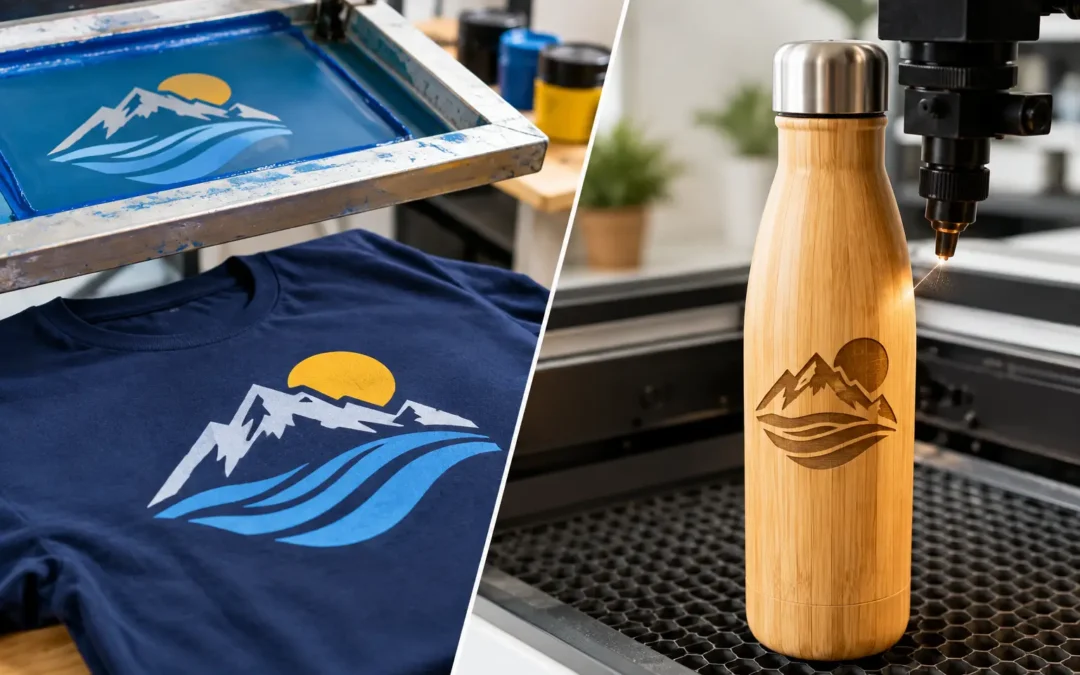
A black stainless steel bottle with a crisp silver logo and a colourful branded pint glass may both look premium, but they need different decoration methods. The screen printing vs laser etching decision affects more than appearance. It influences artwork options, unit cost, production planning and how the product performs in daily use.
For bulk promotional merchandise, there is no single best method. The right choice comes down to the product material, the number of colours in your design, the level of durability required and the result you want customers, staff or venue patrons to see.
Screen Printing vs Laser Etching: The Core Difference
Screen printing applies ink to the surface of a product through a prepared mesh screen. Each colour in the artwork requires its own screen and print pass, making the process particularly effective for bold logos, solid colours and larger branded areas. On drinkware and glassware, the ink is cured to help it adhere to the item.
Laser etching uses a focused laser to alter the product surface. On powder-coated bottles and tumblers, the laser removes the outer coating to reveal the stainless steel beneath. On glass, it creates a frosted mark. On timber, it burns or darkens the surface. The artwork is not added as ink, so the finished mark takes its character from the material itself.
That difference explains the usual visual outcome. Screen printing gives you colour and coverage. Laser etching delivers a refined, permanent-looking mark that is generally limited to the contrast available in the base material.
When Screen Printing Is the Better Commercial Choice
Screen printing is often the practical choice for campaigns where brand colour is non-negotiable. A logo with a distinctive red, a bright club crest or a multi-colour event identity will usually reproduce more faithfully with printed inks than with laser etching.
It also works well when the aim is immediate visibility. A large white print on a dark stubby cooler, a colourful logo on reusable cups or a bold design around a beer glass stands out from a distance. This makes screen printing popular for festivals, venues, product launches and promotional giveaways where the item needs to do some of the marketing work on its own.
The method suits a broad range of products, including plastic drinkware, glassware, metal bottles, notebooks, bags and display materials. However, not every item can accept every ink type or print position. Curved surfaces, textured finishes and tapered drinkware may place limits on the size or complexity of the decoration area. A supplier should confirm these details before artwork is approved.
For straightforward one-colour branding at volume, screen printing can be cost-effective. Set-up is involved because screens must be prepared, but that cost is spread across a larger order. It is especially efficient when the same artwork will be applied to hundreds or thousands of items.
Artwork considerations for screen printing
Screen printing rewards clean, decisive artwork. Solid shapes, clear lettering and strong contrast tend to produce the most reliable result. Fine lines, tiny reversed text and subtle gradients can be possible in some applications, but they should be assessed against the product and print method rather than assumed to work.
Each additional colour generally adds set-up and production complexity. If a full-colour logo is essential, screen printing may still be suitable, but the budget and lead time need to reflect the number of colours. For a single-colour logo, the process is usually simpler, faster to approve and easier to keep consistent across a large run.
Where Laser Etching Adds Value
Laser etching is a strong option when you want the product material to be part of the branding. It is widely used on stainless steel drink bottles, insulated tumblers, metal barware, bamboo products and selected glassware. The finish is clean and understated, which suits corporate gifts, brewery merchandise, staff presentation packs and premium hospitality items.
On coated metal drinkware, the contrast can be particularly striking. A matte black bottle etched back to stainless steel creates a sharp silver logo without the need for ink. Because the design is cut into or through the surface finish, it is less likely to chip or wear in the same way as a surface print under repeated handling.
Laser etching also has an advantage for detailed single-colour artwork. Fine text, line illustrations and small logos can reproduce neatly when the artwork is supplied in an appropriate vector format and the product surface is suitable. That said, very fine detail still needs sensible judgement. What looks sharp on a screen may not remain legible at a small physical size on a curved tumbler.
The limitations are just as relevant. Laser etching does not reproduce brand colours. A blue logo on a black bottle will not become blue through laser decoration – it will reveal the material beneath the coating. The final mark may be silver, dark, natural timber brown or frosted glass, depending on the item. This can look excellent, but it must align with the brand brief.
Laser results depend on the product
Not all laser-etched products look the same, even when they use identical artwork. Powder-coated stainless steel provides high contrast, while bare stainless steel can produce a more subtle tone-on-tone result. Glass gives a frosted appearance, and timber varies according to grain, moisture and natural colour.
This is why product selection should come before decoration selection. If the goal is a high-contrast etched logo, choose an item designed to produce that result. If a particular bottle is only available in a finish that gives low contrast, screen printing may offer the better brand outcome.
Durability, Care and Everyday Use
For hospitality, sporting clubs and workplaces, branded drinkware is often handled hard and washed frequently. Laser etching is generally the stronger option where long-term wear resistance is the main priority, particularly on powder-coated metal. There is no printed ink layer to be rubbed, scratched or lifted from the surface.
A quality screen print can also perform very well when the correct ink, curing process and product are matched. However, it remains a surface decoration and can be affected by abrasive cleaning, harsh dishwasher cycles or repeated contact with other hard items. This does not make screen printing unsuitable. It simply makes care requirements and intended use part of the purchasing decision.
For reusable venue cups or short-term campaign merchandise, strong visual impact may matter more than a decade of wear. For premium bottles used by field staff, clients or club members, laser etching may justify its different finish and pricing.
Cost, Quantity and Lead Time
Buyers often ask which option is cheaper, but the useful answer is: it depends on the order specification. Screen printing can carry higher set-up requirements where multiple colours are involved, yet it becomes highly efficient at scale. Laser etching avoids colour set-up but has machine time attached to every individual item, especially for larger decoration areas or detailed designs.
Quantity matters, but so does artwork. A simple one-colour logo on a large run may suit screen printing very well. A premium insulated bottle with a fine, single-colour logo may be better suited to laser etching. Comparing quotations only by unit price can miss the real issue – whether the finished product will accurately represent the brand.
Lead time should be discussed at the beginning, not after stock has been selected. Production schedules vary with stock availability, artwork readiness, decoration method and order volume. Event deadlines, opening dates and campaign launches should be stated clearly so product sourcing, proofing and production can be planned realistically.
How to Make the Right Choice for Your Order
Start with the product’s purpose. If it needs bright, recognisable colour across a large area, screen printing is usually the logical first option. If the item is intended to feel durable, premium and material-led, laser etching deserves serious consideration.
Then assess the artwork honestly. Multi-colour logos favour print. Fine single-colour marks often suit laser work. Finally, think about the recipient and environment. A branded glass for a busy bar, a bottle for a corporate conference and a tumbler for a brewery loyalty programme each have different expectations around visibility, use and longevity.
For large-volume drinkware and promotional orders, ABC2000 can help match the product, artwork and decoration method before production begins. A clear brief, suitable artwork and early approval give your order the best chance of arriving on time and looking right from the first carton to the last.