
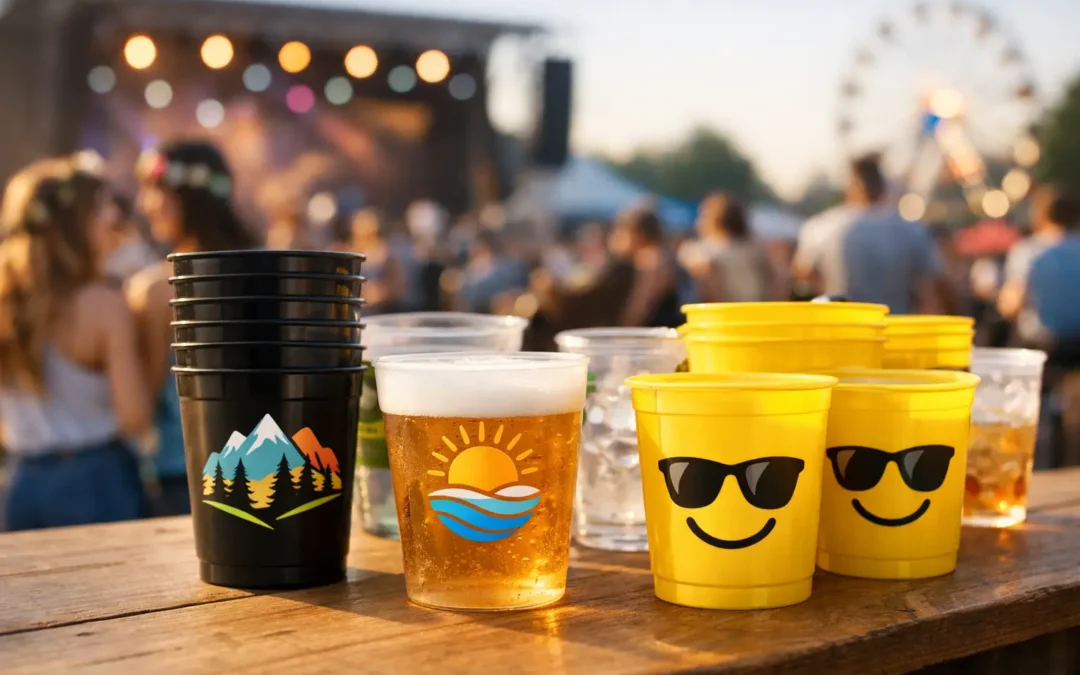
Festival drink service gets judged fast. If queues blow out, cups split, branding rubs off or stock runs short by mid-afternoon, people notice. That is why bulk branded cups for festivals are not just a merchandise line item. They sit right at the intersection of service speed, presentation, sponsor visibility and event logistics.
For organisers, venues, breweries and procurement teams, the best cup choice is usually the one that keeps operations moving while still looking sharp in a crowded environment. That sounds simple, but the right result depends on pour type, expected volumes, branding method, delivery timing and what the cup needs to do after it leaves the bar.
Why bulk branded cups for festivals matter
At festival scale, drinkware is part of the front-of-house system. It affects how quickly staff can serve, how consistently drinks are presented and how professionally the event feels. A cup that looks good in a product image can still be the wrong fit if it is awkward to stack, too thin for high-turnover service or unsuitable for the beverage mix.
Branding also does more work at festivals than it does in many other environments. Cups move through bars, VIP areas, food zones and sponsor activations. They end up in photos, on tables and in hands across the site. That makes them one of the more practical branded assets in the event footprint, provided the print quality and cup selection are right.
There is also the cost side. In bulk quantities, unit pricing matters, but so does waste. Ordering too many can leave you with dead stock. Ordering too few can create expensive last-minute freight or force product substitutions that compromise presentation. Experienced buyers usually look beyond the headline unit cost and assess the full procurement outcome.
Choosing the right cup for the event
Not every festival needs the same cup. A beer-focused event, a music festival with multiple bars and a council-run food and wine event will all have different service needs.
For cold beverages, clear plastic cups remain a practical option where visibility of the drink matters and fast service is the priority. They suit beer, cider, soft drink and mixed beverages, especially where multiple bar points need easy stacking and quick replenishment. If the event is leaning into a premium look, branded reusable cups can offer better presentation and stronger perceived value, but they require more upfront planning around quantity, handling and budget.
Cup size matters more than many first-time buyers expect. If one bar is pouring schooners, another is serving tasting portions and a third is doing soft drinks, a single cup format may not be enough. Standardising where possible helps with purchasing and service efficiency, but over-simplifying can create issues at the bar. It often makes more sense to align cup sizes to the actual pour strategy rather than forcing every outlet into one specification.
Material choice is another practical consideration. Lighter-weight cups can reduce costs, but they may not hold up as well in high-volume conditions. Thicker options can improve feel and reduce split risk, especially in busy hospitality settings, though they come at a higher unit price. There is no universal right answer here. It depends on crowd size, handling conditions and the brand standard the event wants to maintain.
Branding options and what they mean in practice
When buyers ask for custom cups, they are usually thinking about logo placement and colour matching. Both matter, but branding method is just as important.
For bulk festival orders, print needs to stay legible and consistent across the run. Fine detail can look good in artwork approval but become less effective on curved drinkware, particularly if the logo is small or the colour contrast is weak. In practical terms, bold branding often performs better than intricate branding, especially outdoors where cups are viewed quickly and from a distance.
Single-colour prints can be cost-effective and clean, particularly for event logos, breweries and sponsor marks. Multi-colour branding can create stronger visual impact, but it may increase production complexity and cost depending on the product and print method. The best option depends on budget, lead time and how critical exact brand reproduction is.
Positioning matters too. A logo that disappears under a hand grip or wraps awkwardly around the seam is wasted branding. Good artwork setup takes into account how the cup will actually be held, filled and seen in use. That is one reason many trade buyers prefer a supplier that can review artwork with production in mind rather than simply taking a file and sending it to print.
Ordering in volume without creating problems
Festival buyers rarely have the luxury of ordering one product in isolation. Cups usually sit within a larger procurement schedule that includes bar consumables, signage, merchandise, activation materials and event infrastructure. That means cup ordering has to fit a timeline, not just a budget.
The first decision is quantity planning. A rough estimate based on ticket numbers is not always enough. You need to account for beverage mix, service style, length of event, VIP requirements, staff use and contingency stock. Multi-day events and events with staggered attendance patterns need even closer forecasting, because daily usage can vary more than expected.
Lead time is the next pressure point. Custom production takes time, and so does freight, especially during busy event periods. Leaving approvals too late can limit product choice or branding options. If your event date is fixed, reverse-planning from the in-hands deadline is usually the safest approach. That gives enough room for artwork approval, production, packing and delivery without relying on best-case timing.
It is also worth asking how the order will be packed and delivered. For major events, receiving one large shipment with no site breakdown may create as many problems as it solves. Depending on the event format, split deliveries or clearly labelled carton quantities can make venue setup far more efficient.
What experienced buyers check before approving a cup order
A cup order can look straightforward until the details start surfacing. That is why experienced procurement teams tend to ask very specific questions early.
They want to know whether the cup suits the intended beverage, whether branding will reproduce cleanly at the required size, and whether production timing is realistic. They also check carton counts, minimum order quantities and whether stock availability is confirmed before artwork is finalised. These are not small details. They are often the difference between a smooth rollout and a stressful week before bump-in.
They also look at consistency. If the event needs repeat orders, or if multiple festival dates are being planned across the year, consistency in cup supply and print quality becomes even more important. A dependable supply partner helps reduce rebriefing, reapproval and avoidable delays.
Bulk branded cups for festivals and sponsor value
Festival cups are often treated as operational stock, but they can also carry sponsor value if handled properly. A sponsor logo on a cup only works when the print is clear, the placement is deliberate and the cup itself suits the event environment.
For some events, co-branding makes commercial sense. The event brand remains primary, with a secondary sponsor mark supporting the partnership. For others, particularly beverage-led activations, a sponsor or brewery brand may lead. The right layout depends on the commercial objective and the politics of the event, which are sometimes just as important as the design.
There is a trade-off, though. Overloading a cup with logos can weaken the visual result and make the branding feel cheap. In most cases, simpler layouts hold up better in real-world use and deliver stronger recognition.
Working with a supplier that understands event timelines
Large event orders rarely run perfectly on autopilot. Artwork may need adjustment, quantities may change and freight timing may tighten as the date approaches. That is why operational support matters just as much as product range.
A supplier with experience in high-volume drinkware can help buyers narrow down the right format, flag potential production issues early and keep the order moving against a real deadline. For Australian buyers, local support also makes communication easier when approvals, dispatch timing or delivery coordination need attention. ABC2000 works with businesses that need this kind of practical ordering support, especially where branded drinkware is part of a larger event or venue requirement.
The best buying decisions usually come from asking a simple question at the start: what does this cup need to achieve on the day? Once that is clear, the right product, branding approach and order plan become much easier to lock in. For festivals, that clarity saves time, protects presentation and gives your team one less thing to worry about when the gates open.