
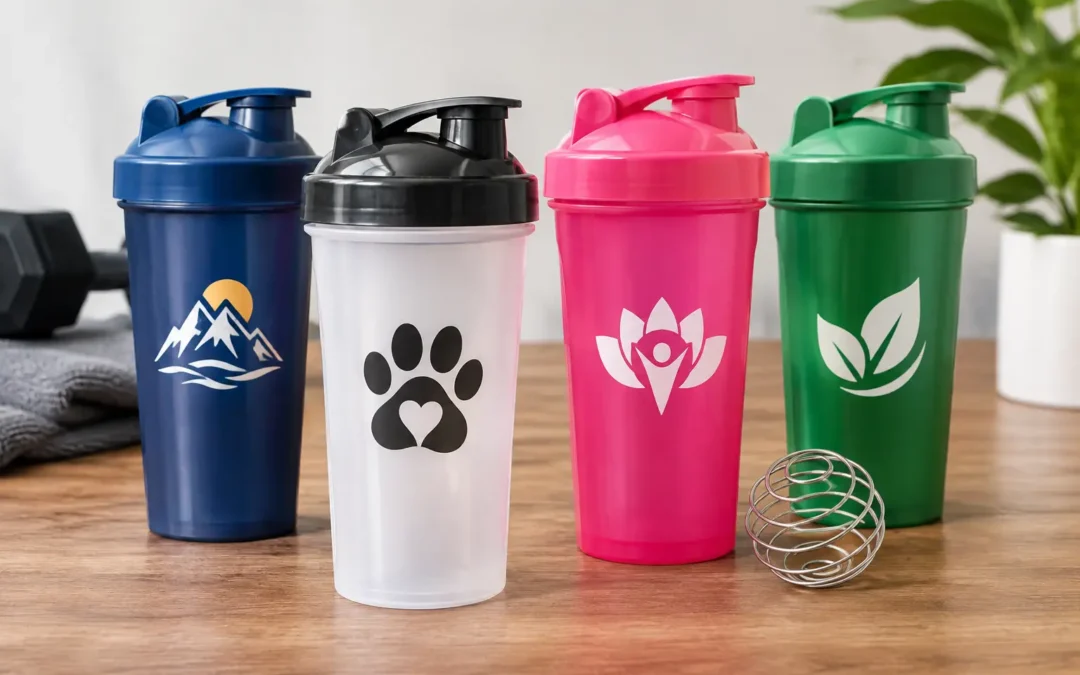
A shaker bottle may look like a simple promotional item, but it can quickly become a visible part of a member’s gym bag, an employee wellbeing pack or a sporting club’s merchandise range. This custom shaker bottles review looks at what Australian bulk buyers should assess before committing to a printed order, from bottle construction and branding coverage to production timing and practical use.
For procurement teams, the best choice is rarely the cheapest unit on a quote. A bottle that leaks in a tote bag, holds odours after regular use or shows a poor-quality print can work against the campaign it was meant to support. The right product should suit the audience, carry the brand clearly and arrive in time for distribution.
What a Good Custom Shaker Bottle Needs to Do
Shaker bottles are most effective when they are selected as useful drinkware rather than treated as a novelty giveaway. They are commonly used for protein shakes, hydration powders, meal replacements and electrolyte mixes. That means the lid, mixing mechanism and material matter just as much as the decoration.
A reliable bottle should close securely, pour cleanly and be comfortable to hold. It also needs sufficient space for a logo without making the finished item feel crowded. For gyms, health clubs and fitness events, regular use is the goal. For a one-day activation, a lighter promotional model may be suitable, provided it still presents well and is fit for purpose.
Capacity is the first practical decision. Smaller bottles are compact and easy to carry, while larger options better suit protein users and longer training sessions. A 500 ml to 600 ml size is often a versatile middle ground for corporate wellness packs and event merchandise. Larger capacities can make more sense for gym retail, sports programs and audiences likely to use the bottle every day.
Custom Shaker Bottles Review: Materials and Build Quality
Most custom shaker bottles are made from plastic, but not all plastic products perform the same way. The material affects weight, transparency, appearance, print result and expected lifespan. Buyers should also check that the product is suitable for food and beverage use and understand its care instructions before distribution.
Clear, frosted and solid-colour bottles
Clear bottles make it easy for users to see measurements and monitor drink levels. They suit nutrition-focused promotions, although a detailed logo can be less prominent against a busy background. Frosted finishes offer a softer, more premium appearance and can help a simple one-colour print stand out.
Solid-colour bottles create stronger contrast for a logo when the artwork and bottle colour are selected carefully. They can be especially effective for clubs, teams and brands with established colour palettes. The trade-off is that some colours limit print options, particularly when fine detail or small type is required.
Lids, seals and mixing inserts
A shaker is only as good as its lid. Look for a firm screw-top or secure flip-cap design, a reliable seal and a drinking opening that feels practical rather than flimsy. Leak resistance is a key quality consideration for any product likely to be carried in a bag or vehicle.
Mixing inserts vary by style. Some bottles use a plastic grid beneath the lid, while others include a mixing ball. Both can work well for powders, but the chosen design should be easy to remove and clean. If the bottle is intended for high-frequency gym use, a simple construction with fewer hard-to-clean areas is usually the safer commercial choice.
Graduated measurements are also valuable for the end user. They reinforce the bottle’s fitness purpose and make it more useful for measured servings. However, printed measurement marks and branding need to remain visually distinct, so artwork placement should be confirmed before production.
Branding Methods That Hold Up in Use
Branding is where a standard bottle becomes a promotional asset. The best method depends on the bottle surface, artwork, print colours and the level of detail required. A good supplier will review the artwork against the selected product and flag issues such as lines that are too fine, type that is too small or colour combinations with insufficient contrast.
Pad printing is commonly used for logos and concise artwork on curved drinkware. It is a practical option for bulk orders and works well when the design is clean and the print area is controlled. Screen printing can suit larger, bolder graphics, particularly for simple one-colour or limited-colour designs.
For businesses wanting a premium finish, consider whether the available bottle style supports a more detailed branding treatment. Not every shaker bottle is suitable for every application method, and a finish that looks impressive on a metal tumbler may not translate to a curved plastic surface. Product and decoration should be specified together, not as separate decisions.
Keep artwork purposeful. A primary logo, short campaign line or team name will generally read better than a full marketing message. Shaker bottles are handled, washed and viewed at different angles, so immediate recognition matters more than fitting every brand element onto the print area.
Matching the Bottle to the Campaign
The most suitable shaker bottle depends on where it will be used and who will receive it. A fitness studio opening may prioritise a bold branded bottle that supports member acquisition. A national workplace wellbeing campaign may require a practical, broadly appealing design that can be packed and sent efficiently. A sporting club may favour colours that align with its uniform and supporter merchandise.
For hospitality venues and breweries, shaker bottles can also support non-alcoholic promotions, staff initiatives or branded retail ranges. In these settings, presentation and consistent decoration are particularly important. The product should feel aligned with the venue’s wider visual identity rather than like a leftover promotional item.
Bulk quantity changes the equation. Larger orders can improve unit pricing, but they also require earlier artwork approval and realistic production planning. Where an event date is fixed, allow time for product selection, artwork preparation, proofing, branding, production and freight across Australia. Leaving bottle selection until the final week creates unnecessary risk, especially when a specific colour or print treatment is required.
Questions to Ask Before Approving a Bulk Order
A clear brief prevents costly assumptions. Before placing an order, confirm the bottle capacity, colour, lid style, branding position, print colours, artwork format, quantity and required delivery date. It is also worth asking whether the quoted turnaround begins after artwork approval, as this is often the point at which production can properly commence.
Request a visual proof that shows the artwork at the intended size and position. This is particularly important for logos with fine lines, reversed text or multiple colours. A proof helps buyers check practical details that may not be obvious in a flat logo file, including whether the design wraps too close to a seam, measurement marks or the bottle’s grip area.
Packaging should be considered where bottles are being mailed, included in kits or distributed at multiple locations. Individual packaging may help protect the product and simplify fulfilment, while bulk carton packing can be more efficient for a single event or venue delivery. The appropriate option depends on the distribution plan, not just the product price.
ABC2000 works with business buyers who need this process handled commercially: selecting suitable drinkware, checking artwork, coordinating branding and planning delivery around campaign or event requirements. That support is particularly useful where quantities are high or deadlines cannot move.
Value Is Measured After Distribution
A low unit price can be attractive on paper, but the useful measure is whether recipients keep and use the bottle. A functional shaker with crisp branding can generate repeated exposure at gyms, offices, sporting grounds and on the commute. A poorly chosen bottle is more likely to be forgotten in a cupboard or discarded after a single use.
Consider the intended life of the product. For a short event, a straightforward BPA-free plastic shaker with a clear logo may offer the right balance of cost and impact. For member gifts, retail merchandise or ongoing staff programs, upgrading the material, lid quality or decoration can be justified because the bottle is expected to remain in regular circulation.
The strongest order starts with a practical question: what does the recipient need this bottle to do? Once that is clear, capacity, material, lid style and branding method become easier to specify. A shaker bottle that performs well in the real world gives your brand a place in the routine that follows.