
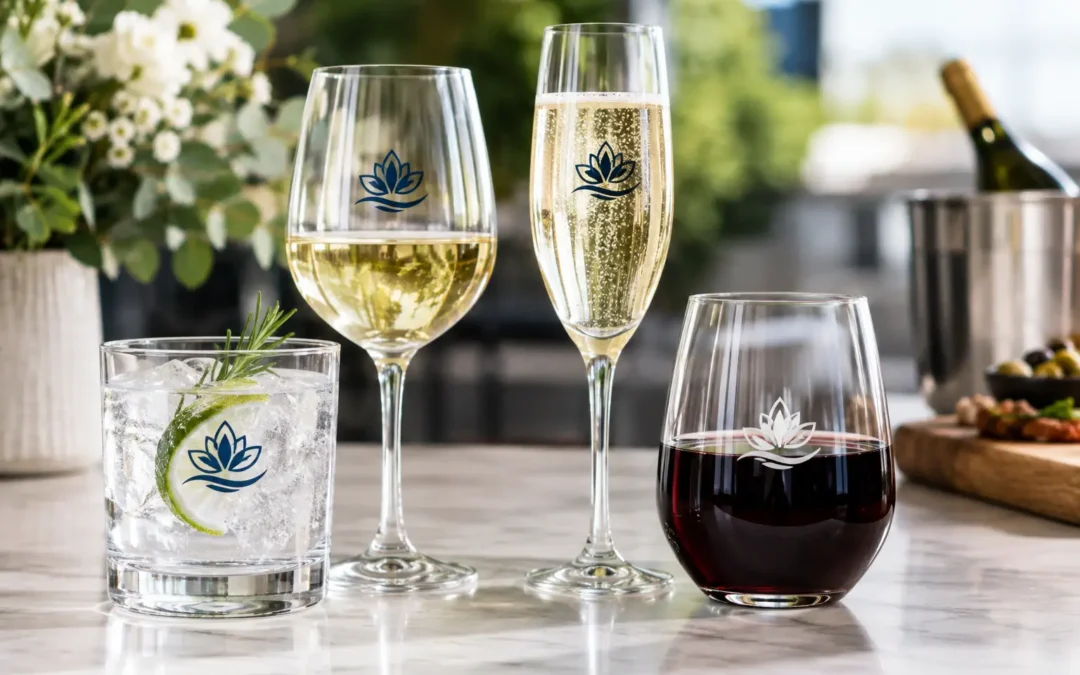
A busy service period quickly exposes poor glassware buying decisions. Chips, inconsistent capacities, difficult-to-read branding and urgent top-up orders all cost time at the bar. This hospitality glassware procurement guide is designed for Australian venues, breweries, clubs, caterers and event organisers purchasing glassware in commercial quantities, with or without custom branding.
The right order is not simply the lowest unit price. It is the combination of glass shape, durability, branding method, carton quantity, lead time and a reliable plan for replacements. When those details are specified early, your team can serve confidently and your brand looks consistent across every table, bar and event activation.
Start With How the Glass Will Be Used
Before selecting styles, identify where and how each glass will work. A high-volume pub, a boutique brewery tasting room and a conference venue may all serve beer, wine and soft drinks, but they need different stock profiles.
For frequent bar service, choose practical shapes that staff can stack, carry and wash efficiently. A heavier base can improve stability in busy environments, while a more refined stemmed glass may suit a restaurant, function room or premium beverage service. The trade-off is straightforward: lighter, finer glassware can improve presentation but generally needs more careful handling and a higher replacement allowance.
Capacity matters as much as appearance. Confirm the intended serve, required headroom and whether a glass needs a measurement line. Beer venues should also consider the style of beverage being poured. Pint, schooner, tumbler, stemmed beer and tasting glasses each create a different customer experience and affect foam retention, portion control and shelf storage.
Build a Working Range, Not a Random Assortment
Most hospitality operations benefit from a focused range rather than too many one-off styles. A practical core may include a water tumbler, a beer glass, a wine glass, a highball and a smaller tasting or spirits glass. The exact mix depends on your menu and service model, but standardising wherever possible makes ordering, storage and staff training easier.
For events, think beyond the menu. Consider whether guests will be standing, whether glassware will be collected and washed on site, and whether breakage risk makes reusable glass unsuitable for some areas. Branded plastic drinkware may be the more practical choice for outdoor activations, sporting venues or large festivals, while branded glassware delivers a stronger premium impression in controlled hospitality settings.
Specify Commercial Durability Before Branding
A good-looking glass is only a good purchase if it holds up in service. Ask about the glass type, rim finish, base thickness and whether the item is suitable for commercial glasswashers. Dishwasher compatibility should be assessed alongside your actual wash cycle, chemicals and racking system, not as a general assumption.
Stackability is another operational detail often missed during procurement. Stackable tumblers save space behind the bar, but poorly designed stacks can stick together, chip at contact points or retain water after washing. If storage is tight, request dimensions and carton details before committing to a large quantity.
It also pays to consider availability for repeat orders. Hospitality glassware breaks and menus change. Selecting a style that can be reordered, rather than an unusual short-run item, helps maintain a consistent presentation over time. For branded stock, retain approved artwork files and production specifications so future orders match the original as closely as possible.
Hospitality Glassware Procurement Guide to Branding Methods
Branding should suit the glass, the artwork and the job it needs to do. A bold one-colour logo on a pint glass has different requirements from detailed artwork on a wine glass for a corporate function.
Screen printing is commonly suited to strong logo designs and repeat bulk orders. It provides clear colour application and can be an efficient option when the artwork is straightforward. Fine lines, tight registration across several colours and very small text may require adjustments to ensure the result remains legible on a curved glass surface.
Laser etching creates a permanent, understated finish and is particularly effective for premium venue branding, awards, staff gifts and smaller-format logos. It does not reproduce colour, so it works best where the mark remains recognisable in a single etched treatment. Frosted or etched effects can look refined, but contrast should be considered carefully, especially on clear glass in low-light venues.
For multi-colour logos or event graphics, speak with your supplier early about print area, artwork setup and the most suitable decoration process. A logo that looks sharp on a flat screen may need simplification or repositioning for a narrow tumbler, stemmed glass or curved beer vessel. Supplying vector artwork from the outset reduces delays and gives production teams a cleaner starting point.
Approve What Will Actually Be Produced
Artwork approval is not a formality. Check logo placement, print size, colour references, spelling, capacity markings and the orientation of any secondary artwork. If a glass will be photographed or used for sponsor exposure, make sure the branding faces the guest or camera in the intended service position.
For major campaigns, new branding treatments or high-value venue orders, a pre-production sample can be worthwhile. It adds time and sometimes cost, but it can prevent an expensive error across thousands of units. For repeat orders using an already approved specification, the process is usually more direct.
Calculate the Real Cost Per Serve
Comparing unit prices is useful, but hospitality procurement needs a broader view. Freight, decoration, setup, carton configuration, warehousing space and expected breakage all affect the real cost of the order.
A cheaper glass that chips early or prints poorly may create more replacement buying and weaken the venue presentation. Conversely, a premium glass may not be justified for a high-turnover outdoor event where loss rates are high. The appropriate spend depends on service environment, brand positioning and expected lifespan.
Order quantities should reflect both immediate demand and practical reserve stock. A venue should hold enough glassware to cover peak service, washing turnaround and a sensible breakage buffer. Event organisers need to factor in guest numbers, beverage choices, service stations and whether glassware is being reused across sessions.
Bulk ordering often improves unit pricing, but over-ordering can create storage pressure and tie up budget in slow-moving stock. Where repeat supply is likely, ask about ongoing availability, production lead times and whether the item can be supplied in scheduled releases rather than all at once.
Work Backwards From the Service Date
The production schedule should begin with the date the glassware must be on site, not the date it is first discussed. Allow time for product selection, artwork preparation, proof approval, production, quality checking, freight and receiving. Add extra time for public holidays, seasonal demand, complex decoration or split deliveries.
If the order supports an event, build in a buffer for venue access and stock checking. Delivering to a warehouse, club or convention venue can involve booking requirements, limited receiving hours or a need for labelled cartons. Clear delivery instructions reduce the risk of stock arriving when no one can receive it.
This is where a single supplier that can source, brand and coordinate delivery becomes commercially useful. ABC2000 works with business buyers on bulk branded drinkware orders, helping align product choice, artwork and production timing with the practical needs of the job.
Keep Procurement Simple for Repeat Orders
Once the first order is complete, document the specification. Record the product name or code, capacity, branding position, decoration method, approved artwork version, colour reference, carton quantity and supplier contact details. This gives procurement teams a clear reference point when stock needs replenishing six months later.
For multi-site venues, clubs or franchise groups, a controlled specification also protects brand consistency. Staff should not need to guess which glass style or logo version applies at each location. A standard order brief makes it easier to manage approvals, budgets and delivery requirements across the group.
The best glassware order supports service as well as branding. Choose pieces your team can use every day, approve artwork with care, and allow enough time for production to be done properly. That approach turns bulk glassware from another operational expense into a visible, dependable part of the customer experience.