
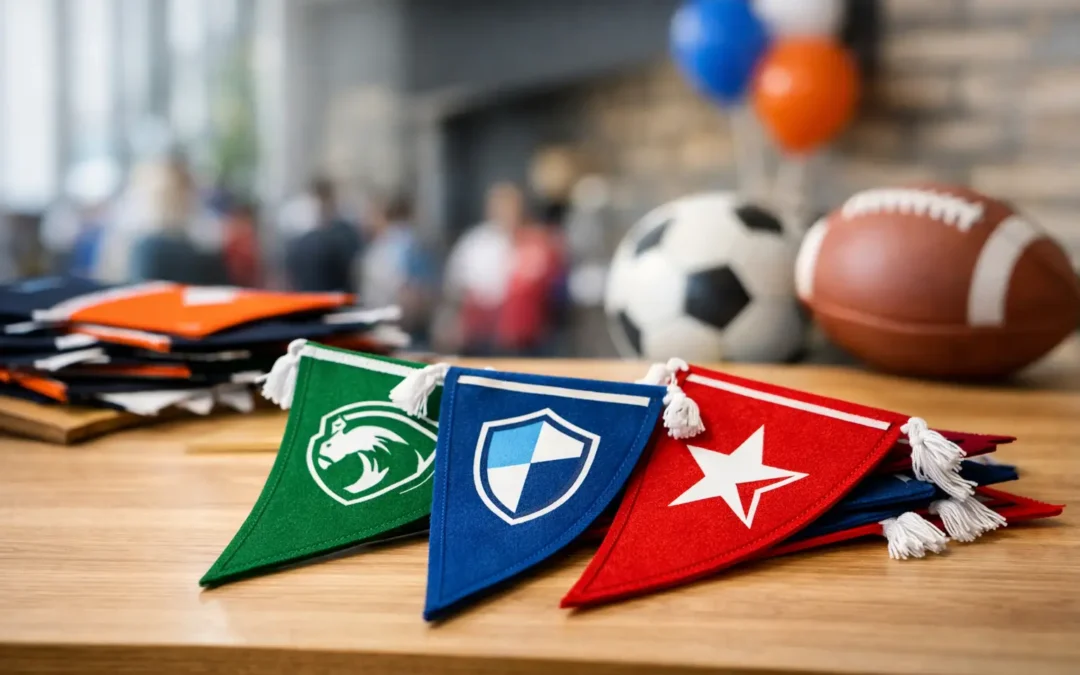
A well-made pennant still does a job that plenty of newer promo items cannot. In clubrooms, behind bars, across sponsor walls and at presentation nights, sports team pennants give your brand a physical presence that feels tied to history, loyalty and local identity. For clubs, venues and event organisers buying in volume, they are not just decorative. They are a practical branding tool that supports visibility, recognition and consistency.
Why sports team pennants still work
Pennants have stayed relevant because they suit the way sport is experienced in Australia. They are easy to display, easy to distribute and immediately connected to club culture. Whether you are supplying a junior association, a suburban footy club, a cricket tournament or a hospitality venue backing a local side, a pennant carries the badge, colours and message in a format people recognise.
That matters commercially. Branded merchandise works best when it feels natural to the setting. A sports team pennant does not need much explanation. It belongs in changerooms, clubhouses, bars, canteens, sponsor activations and supporter packs. It can be sold as merchandise, presented as a commemorative item or used as part of event dressing.
There is also a longevity factor. Some promotional items are built for short campaigns. Pennants often stay on walls for years. That makes them useful when the goal is not just one-off exposure, but ongoing brand presence across a venue or organisation.
Where sports team pennants add value
The strongest results usually come when pennants are treated as part of a wider branding program rather than a last-minute extra. Clubs and organisers often get better value when they think about where the product will sit, who will receive it and what role it needs to play.
Club merchandising and supporter sales
For clubs, pennants are a straightforward merchandise line. They are accessible in price, easy to stock and suitable for broad supporter groups. Not every fan wants apparel sizing, but a pennant is simple to buy and simple to display. That makes it a useful option for family clubs, school sport, regional leagues and community organisations that want merchandise with broad appeal.
Event presentation and venue branding
At tournaments, gala dinners and presentation nights, pennants can help make a space look organised and on-brand without the cost of more complex display builds. They work well on tables, stage backdrops, walls and entry points. If you are managing a venue or event series, that consistency matters. It helps the room feel finished and makes sponsor and club branding easier to coordinate.
Commemorative and exchange items
Pennants also have value as keepsakes. Representative teams, touring clubs and competition organisers often use them for exchanges, milestone matches and finals series. In those cases, quality becomes more important than unit price alone. If the item is meant to mark an occasion, poor finishing or unclear branding will be noticed.
Choosing the right pennant format
Not every club needs the same product. The right format depends on budget, display purpose and how long the pennant needs to last. Buyers usually get the best result when they start with use case first and artwork second.
A simple printed pennant can be the right choice for high-volume giveaways or basic supporter merchandise. It keeps unit costs manageable and works well where broad distribution matters more than premium detailing. On the other hand, if the pennant is being presented to sponsors, officials or visiting teams, a more refined finish may be worth the extra spend.
Size also changes the result. Smaller pennants suit presentation packs, awards and desk display. Larger formats are better for wall display, clubrooms and event branding. The trade-off is obvious – bigger products create more visual impact, but they can add to freight volume and storage requirements.
Shape matters too. Traditional triangular and shield-style pennants feel familiar and sport-specific. Custom shapes can stand out, but they are not always the most practical option for bulk runs. If production speed and clean presentation are priorities, standard formats are often the smarter commercial choice.
Branding details that make a difference
A sports team pennant only works if the branding is handled properly. Club colours need to be accurate. Logos need to reproduce cleanly. Text needs to remain legible from a practical viewing distance. Those points sound basic, but they are where many orders go wrong.
Artwork quality is usually the first issue. If a club crest only exists as a low-resolution file pulled from an old social post, the finished product will suffer. Fine details can fill in, outlines can blur and colour matching becomes inconsistent. For organisations ordering at scale, clean artwork setup is not a minor detail. It is part of getting a professional result.
Material and finish also affect how the branding reads. Some fabrics and print methods create a sharper, flatter finish suited to detailed logos. Others have more texture, which can work well for a classic merchandise look but may soften small elements. There is no universal best option. It depends on whether you need crisp sponsor branding, a premium presentation piece or an economical supporter item.
Hanging cords, edging, tassels and backing should also be considered early. These finishing elements can improve presentation, but they need to fit the purpose. For heavy-use venue display, practicality may matter more than decorative extras. For ceremonial or commemorative use, those details can add perceived value.
Bulk ordering considerations for clubs and venues
Most business buyers are not ordering one or two pennants. They are ordering for a season launch, a chain of venues, a tournament rollout or a merchandise program. That changes what matters in the buying process.
Lead time is a key factor. Custom production takes planning, especially if artwork approval, colour matching and freight need to line up with a fixed event date. Leaving pennants until the final week before a presentation night or opening round is where pressure builds and choices narrow. Buyers generally get better outcomes when they confirm quantities, artwork and delivery points as early as possible.
Quantity breaks also matter. In wholesale purchasing, unit pricing often improves at volume, but only if the quantity is realistic. Over-ordering to chase a lower unit cost can create storage issues or leave clubs sitting on outdated stock after a rebrand or sponsor change. Under-ordering can force rushed repeat runs that cost more in the long term. The right balance depends on event frequency, supporter demand and whether the design is likely to stay current.
Delivery planning is another practical issue. A single metro delivery is one thing. Split deliveries across venues, clubs or event sites require more coordination. If the order is part of a broader merchandise or event materials rollout, having one supplier manage branding and fulfilment can remove a lot of friction.
How pennants fit into a broader merchandise mix
Pennants are rarely the only item in play. They work best when they support a broader visual program that might include branded drinkware, signage, banners, stubby holders, apparel or hospitality presentation items. For business buyers, that joined-up approach tends to produce a stronger result than selecting products in isolation.
A venue backing a team can use pennants alongside branded glassware and display materials to reinforce the same colours and identity across the space. A club can pair pennants with event merchandise to create supporter packs that feel intentional rather than pieced together. A tournament organiser can use them alongside sponsor collateral and presentation products to keep branding consistent from entry to awards night.
This is where supplier capability matters. If your order involves multiple branded elements, the process is easier when artwork handling, production and delivery are managed with commercial deadlines in mind. That is one reason many buyers prefer working with an experienced wholesale supplier such as ABC2000 rather than trying to coordinate separate vendors for each product line.
Getting a better result from sports team pennants
The best pennant orders are usually the ones planned with clear priorities. If budget is the driver, keep the format straightforward and focus on clean branding. If presentation is the goal, invest in finish and material quality. If the order is tied to a hard deadline, choose options that match realistic production timelines rather than pushing for unnecessary complexity.
It also helps to think past the order itself. Ask where the pennants will be displayed, how long they need to last, whether the design may change next season and how they will sit alongside the rest of your branded merchandise. Those questions keep the product commercially useful, not just visually appealing.
A good pennant does more than fill a blank wall. It gives clubs, venues and organisers a practical way to show identity, reward loyalty and keep their branding visible long after the event has finished. If you choose the format carefully and buy with the end use in mind, it becomes one of those simple products that keeps proving its value.