
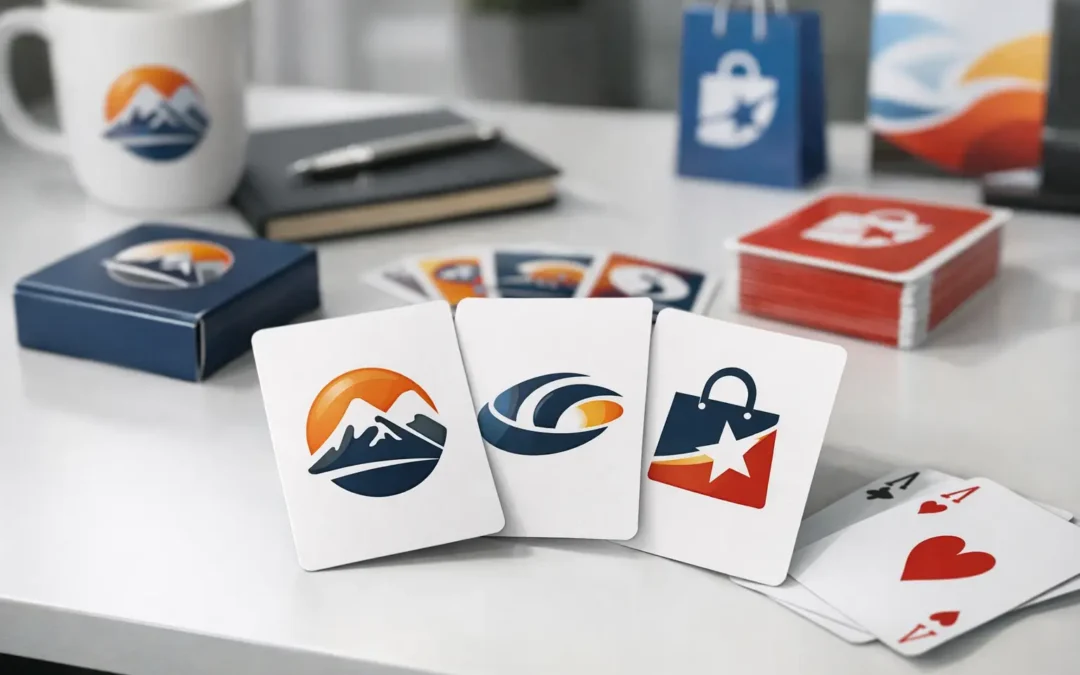
A deck left on a bar, in a hotel room or on an event table keeps working long after a flyer gets binned. That is the real advantage of logo playing cards. They are compact, useful, easy to distribute in volume and strong on repeat brand exposure, which makes them a smart option for businesses that need promotional merchandise with practical staying power.
For procurement teams, venue operators and event managers, the appeal is straightforward. Playing cards are familiar, cost-effective in bulk and suitable for a wide range of brand environments, from hospitality and tourism through to corporate campaigns and club promotions. When the artwork is handled properly and the product quality is right, they present as more than a giveaway. They become part of the customer experience.
Why logo playing cards still work
A lot of promotional items get used once, if at all. Playing cards tend to stay in circulation. People keep them in caravans, break rooms, hotel suites, pubs, club lounges and staff amenities. That extended use matters because your branding is seen repeatedly rather than in a single moment.
They also suit group settings. Unlike a pen or stubby holder, a deck of cards is often used by several people at once. That creates a wider viewing audience for the same unit cost. In a venue setting, the product can move from table to table. In tourism and accommodation, it can become part of the guest offering. In a branded event pack, it adds something interactive rather than purely decorative.
There is also a practical branding advantage. A card deck gives you multiple print surfaces to work with, including the tuck box and the card backs. That opens up options depending on budget, artwork complexity and the level of brand presence you want.
Where logo playing cards fit best
The strongest use case depends on what you need the product to do. For some buyers, the goal is broad promotional reach at a manageable unit price. For others, it is about adding polish to a venue, campaign or customer pack.
Hospitality operators often use branded playing cards in bars, accommodation rooms, gaming lounges and member areas where guests are likely to spend time socially. Clubs and pubs can use them as a practical branded accessory rather than a short-term novelty. Breweries and beverage brands may include them in merchandise packs, launch kits or seasonal promotions where the product supports a relaxed, social brand image.
Corporate buyers usually approach them differently. In that setting, logo playing cards work well for conference packs, staff events, client gifts and campaign merchandise where you want a branded item that feels useful without pushing the budget into premium gift territory. Tourism operators, caravan parks and resorts are another natural fit because the product suits leisure time and can help reinforce brand presence during the stay.
They can also work for fundraising and community campaigns, although in those cases the artwork and overall presentation need more attention. A generic deck with a small logo in the corner tends to look like an afterthought. If the brand wants stronger impact, the card box and back design should be treated as part of the wider visual identity.
Branding options that affect the result
Not all custom decks are equal. The quality of a branded card deck comes down to stock, print clarity, finish and how well the artwork has been adapted to the product format.
The simplest option is branding the outer tuck box. This is usually the most economical path and still gives a clear branded finish. It works well when the cards are being handed out as a promotional item and the main requirement is visible packaging with practical use.
Printing the backs of the cards creates stronger and more frequent brand exposure because the logo or design is seen throughout play. That is the better choice when brand presence is the priority. It also gives the deck a more complete custom look, which can matter for venues, premium promotions and branded retail-style merchandise.
Fully customised face cards or numbered cards are possible in some production programs, but they are not always necessary. They can add cost, complexity and lead time. For many commercial orders, a branded box and custom card backs deliver the best balance of impact, production efficiency and budget control.
Finish matters too. A deck that feels flimsy or sticks during use can undermine the brand. If the product is intended for regular handling in a venue or accommodation environment, it is worth checking coating, card stock and pack durability rather than buying on unit price alone.
What buyers should consider before ordering
The first question is volume. Like many promotional products, playing cards generally become more cost-effective at higher quantities. That suits wholesalers, venue groups and event buyers ordering at scale, but smaller orders may carry a noticeably higher unit cost. If the product is going into multiple locations, it often makes sense to consolidate the order for better pricing and consistent presentation.
Artwork is the next consideration. A deck of cards has tighter design constraints than a drink bottle or coaster because alignment and print consistency need to be right across multiple components. Logos should be supplied in suitable file formats, colours should be checked against print requirements and any fine details should be reviewed for legibility at size. This is especially important if the brand has strict visual identity standards.
Lead time also matters. Promotional playing cards are not usually the item you leave until the last minute, particularly if custom printing extends beyond the tuck box. Production schedules, proofing and freight all need to be factored in. For event-based orders, working back from the delivery date is the safest approach.
Packaging requirements can influence the specification as well. Some buyers only need standard boxed decks for bulk distribution. Others may want the cards packed into welcome kits, promotional bundles or event merchandise sets. That changes how the product should be planned from the start.
Bulk supply matters more than most buyers expect
For commercial orders, the product is only half the job. The other half is making sure supply runs smoothly. That means artwork approval, branding consistency, production accuracy and delivery timing all need to be managed properly.
This is where experienced bulk supply support makes a difference. A buyer sourcing logo playing cards for one pub may have a simple brief. A buyer ordering across multiple sites, events or campaign waves has a more complex requirement. In that case, dependable timelines and a clear ordering process are just as important as the deck itself.
It is also worth considering how the cards sit alongside other merchandise. A standalone deck can work well, but in many campaigns it is more effective as part of a coordinated range. If the cards are being ordered with barware, event items, printed materials or venue merchandise, the branding needs to be consistent across the whole set. That broader brand presentation is often what lifts the result from basic promo stock to a more considered business asset.
When they are the right choice, and when they are not
Playing cards are a strong fit when your audience values practical items, your brand is active in social or leisure environments, and you need reasonable unit pricing for volume distribution. They are also useful when you want a promotional product with repeat use rather than single-use visibility.
They may be less suitable if your campaign needs immediate utility in a workplace setting, or if your audience is unlikely to use recreational products. In those cases, drinkware, pens, notebooks or event-specific merchandise may give better return. It depends on where the product will be used and how naturally it fits the audience.
That said, logo playing cards often perform well because they do not ask much from the end user. People already know what they are, how to use them and where to keep them. That familiarity removes friction, which is not always the case with trend-driven promotional products.
For Australian businesses buying branded merchandise in volume, the best promotional products are the ones that are easy to distribute, easy to use and easy to remember. Playing cards tick those boxes when the quality is right and the branding has been planned properly. If the goal is a practical item with broad appeal and genuine staying power, they are well worth considering as part of the mix. ABC2000 works with business buyers who need that kind of reliable, well-managed branded supply, especially when deadlines and presentation both matter.
The smartest promo item is not always the newest one. Often it is the one people keep within reach.