
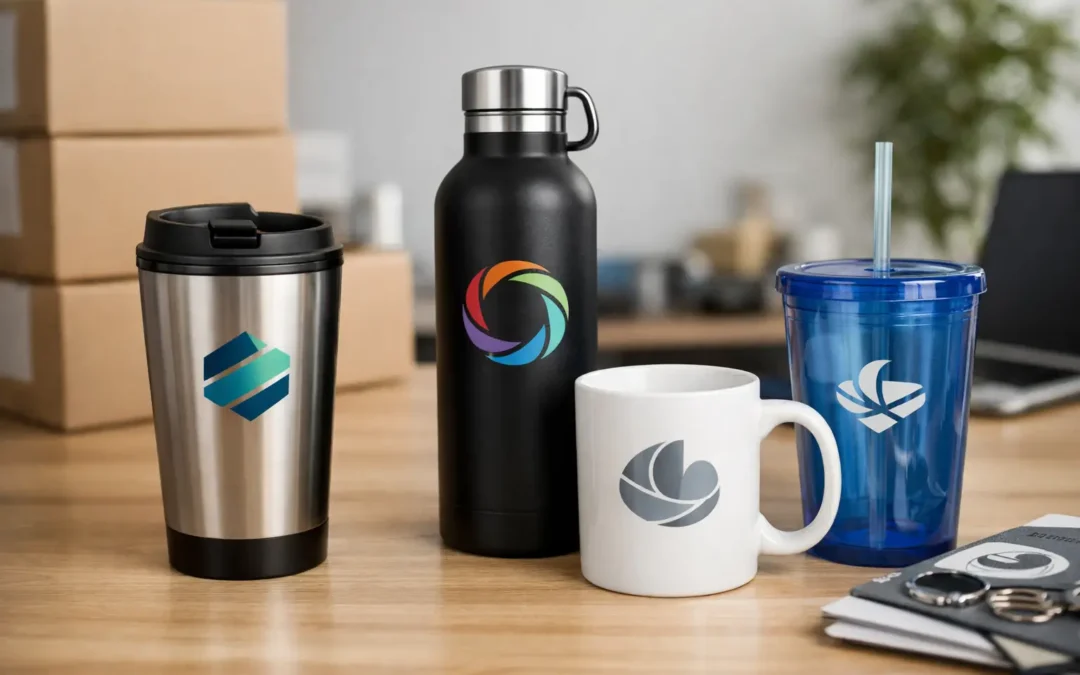
A branded stubby cooler that suits a summer beer promotion may be the wrong choice for a corporate conference. Likewise, premium laser-etched bottles can elevate a staff gift, but may stretch the budget for a festival giveaway. Knowing how to choose branded drinkware starts with the job the product needs to do, then works back through audience, branding method, order quantity and delivery date.
For Australian businesses buying at volume, drinkware is not simply a promotional extra. It is a practical, visible item that can be used repeatedly in offices, venues, clubs, gyms, events and homes. The right product keeps your brand in hand. The wrong one can create unnecessary cost, weak branding or stock that never leaves the storeroom.
Start with the occasion and end user
The most useful question is not, “What is the cheapest drink bottle?” It is, “Where will this item be used, and by whom?” A café, brewery, sporting club and corporate procurement team may all need branded drinkware, but their requirements will be very different.
For hospitality and venue operations, durability and glassware presentation are often the priority. Pint glasses, schooners, wine glasses, cocktail glasses and reusable cups need to suit the service environment, stack or store efficiently where required, and hold up to regular washing. Branding should be visible without interfering with measurements, venue messaging or the look of the drink.
For events and campaigns, portability usually matters more. Reusable coffee cups, plastic cups, aluminium bottles, tumblers and stubby coolers are easy to distribute and work well when guests are moving through a venue. Consider whether the item will be handed out at registration, included in a merchandise pack or sold at a bar. That decision affects the ideal size, weight and price point.
Corporate gifts and staff packs generally justify a more premium product. Vacuum insulated bottles and travel mugs offer daily use value, particularly for teams that commute, work on site or travel between locations. A well-finished bottle with a clean logo can feel more considered than a low-cost giveaway, but only when the recipient is likely to use it.
Choose the right branded drinkware material
Material influences cost, perceived value, print options, longevity and suitability for the intended drink. There is no universal best option. The right selection depends on how long the product needs to last and what it needs to communicate about your business.
Plastic and reusable event cups
Plastic drinkware remains a practical choice for large events, outdoor activations, sporting venues and functions where glass is unsuitable. It is lightweight, economical in volume and easy to move between locations. Reusable cups also support waste-reduction goals when paired with a collection or refill system.
The trade-off is perceived value. A basic plastic cup is effective for fast distribution and high-volume branding, but it will not carry the same premium feel as glass or stainless steel. Choose a quality reusable option when the cup will be kept, refilled or used across multiple event days.
Glassware for venues, bars and breweries
Branded glassware has a strong place in hospitality because it becomes part of the customer experience. A logo on a beer glass, wine glass or spirit tumbler can reinforce venue identity at every serve. Breweries can also use branded glassware to support taproom presentation, merchandise sales and promotional launches.
Consider the glass shape as carefully as the branding. A glass that suits a pale ale may not be the best format for cocktails, sparkling wine or a tasting paddle. Confirm capacity, dishwasher suitability, packing configuration and whether the glass will be used behind the bar, sold to customers or both.
Stainless steel, aluminium and insulated drinkware
Metal drinkware is often selected for corporate promotions, outdoor industries, fitness campaigns and premium retail merchandise. Stainless steel bottles and tumblers offer durability, while insulated styles help maintain drink temperature for longer. They are particularly useful when practical performance is part of the product appeal.
Laser etching can provide a refined, permanent-looking finish on suitable metal surfaces. Screen printing may suit larger or more colourful designs. The product shape, coating and available decoration area will determine which method produces the clearest result, so it is worth checking this early rather than selecting a bottle based on appearance alone.
Ceramic and glass coffee cups
Ceramic mugs work well for office kitchens, staff recognition, café merchandise and client packs. They provide a generous branding area and a familiar, everyday use case. Glass coffee cups can feel more contemporary and are popular for café-focused promotions, although breakage and transport should be considered for large distribution campaigns.
If the product is intended for takeaway coffee, check lid style, heat protection, capacity and whether the cup will fit common café equipment. A great-looking cup that is awkward to hold or difficult to clean is unlikely to become a regular favourite.
Match the branding method to your artwork
A drinkware product is only as effective as the branding applied to it. Fine detail, small text and complex gradients may not reproduce cleanly on every surface, particularly on curved bottles, textured coatings or small print areas. A logo that looks sharp on a brochure may need simplifying for drinkware.
Screen printing is a reliable option for bold logos and spot colours, especially on cups, bottles and promotional drinkware ordered in bulk. It can provide strong visibility and is often cost-effective for larger quantities. Pad printing can suit smaller print areas and shaped products, while digital printing may be appropriate for full-colour artwork on compatible items.
Laser etching is popular for stainless steel and selected coated drinkware because it creates a precise, professional mark without relying on printed ink. It is a strong choice for simple logos, names and premium corporate branding. However, it is usually not the answer when your artwork depends on multiple colours.
Before production, provide clean vector artwork where possible. Files such as AI, EPS or high-quality PDF generally give the production team the best foundation. Confirm the print position, maximum decoration size, colours and proofing process. A production proof is where you check the practical details: is the logo centred, readable and at the right scale for the product?
How to choose branded drinkware within budget
Unit price matters, but it should not be the only purchasing measure. A lower-cost item that is used once may deliver less value than a slightly better product kept for years. At the same time, premium drinkware is not automatically a smart investment if it is being given away in very high numbers at a one-day event.
Build the budget around total landed requirements: product cost, branding, setup charges where applicable, packaging, freight and the quantity needed. Ordering a little too close to the required quantity can be risky if you need samples for internal approval, replacements for damaged stock or additional units for VIPs and staff.
Volume often improves unit pricing, but avoid ordering excess stock without a realistic reuse plan. Standard drinkware branded with an evergreen company logo can usually be held for future events, recruitment packs or client gifts. Products tied to a dated campaign, sponsorship or one-off event should be ordered more carefully.
For a useful comparison, assess options against four commercial questions:
- Will the recipient genuinely use it?
- Does the material suit the environment and safety requirements?
- Can the logo be reproduced clearly in the required colours?
- Does the total cost fit the campaign or operational budget?
This approach prevents decisions based solely on a catalogue image or headline unit price.
Plan production and delivery early
Drinkware orders involve more than selecting an item and sending a logo. Stock availability, decoration method, artwork approval, production scheduling and freight all affect the final delivery date. Glassware and bulky bottles also need appropriate packing and transport planning, particularly for regional deliveries or event sites with restricted access.
Start by working backwards from the date the stock must be in hand, not the date of the event. If products need to be packed into welcome kits, distributed to multiple branches or delivered before a venue bump-in, allow time for those steps as well. A campaign deadline is rarely flexible once invitations, media or ticketing are live.
Experienced buyers also check whether the product is locally held or sourced to order. Local stock may offer a faster path for standard lines, while specialised colours, premium finishes or custom-shaped drinkware can require more lead time. Neither option is inherently better – it depends on your deadline, quantity and level of customisation.
ABC2000 supports bulk drinkware procurement with product sourcing, artwork handling, printing, laser etching and Australia-wide delivery, helping buyers keep product and branding decisions in one practical process.
Check the details that affect day-to-day use
The strongest branded drinkware feels considered because it works well after the first use. For bottles and travel mugs, review capacity, lid security, insulation, cleaning requirements and whether replacement parts are available. For glassware, check dimensions, stackability, dishwasher use and the suitability of the glass for commercial service.
For event cups and outdoor drinkware, consider safety, weight and how easily units can be packed, carried and handed out. For hospitality, check whether the branding position remains visible when the glass is filled or held. Small details such as these affect whether the product supports your brand presentation or creates frustration for staff and customers.
A well-chosen piece of drinkware does more than display a logo. It earns its place through regular use, reliable presentation and a finish that still looks right long after the event, campaign or first order has passed.