
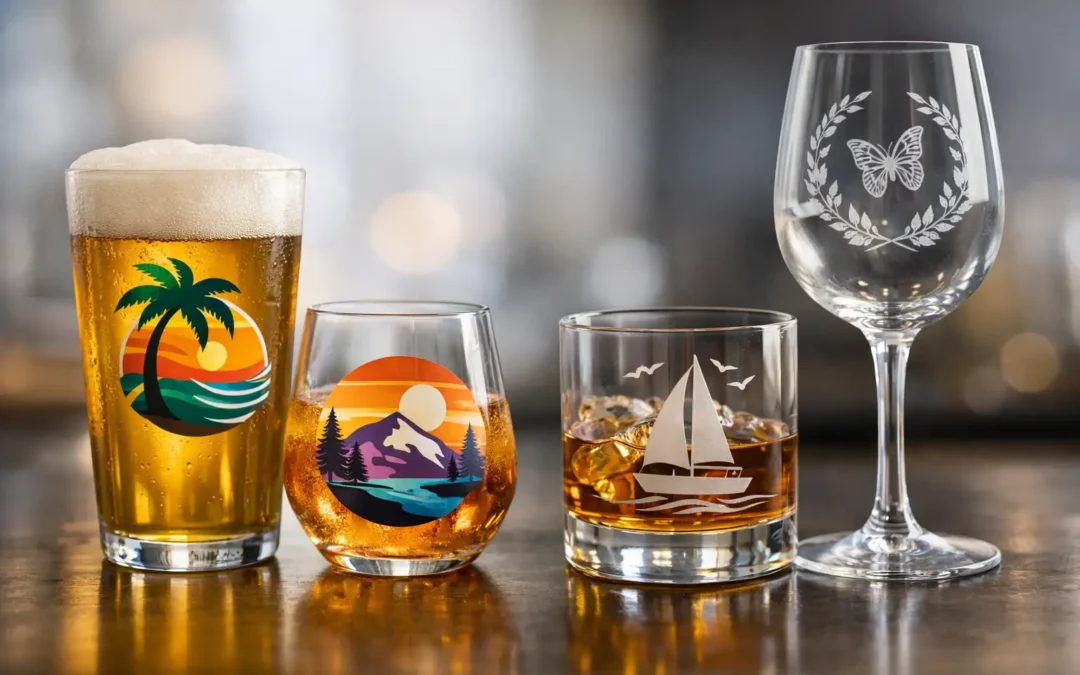
A branded glass has to do more than hold a drink. In a bar, brewery, club or event setting, it needs to present your logo clearly, suit the service environment and keep working through the quantity of use you expect. When choosing printed glassware vs etched glassware, the right answer comes down to the artwork, the intended lifespan of the glass and the commercial purpose behind the order.
Both options can produce a professional result at volume. The key difference is how the branding is applied and what that means for appearance, durability, pricing and production planning.
Printed Glassware vs Etched Glassware: The Core Difference
Printed glassware uses ink applied to the outside of the glass, generally through screen printing or pad printing. The result can be a single-colour logo, a multi-colour design, detailed artwork or a campaign message placed where customers will see it. It is the more flexible option for brands with specific colours, illustrated artwork or promotional messaging.
Etched glassware creates a permanent frosted mark in the glass surface. This is commonly achieved through laser etching, which removes a fine layer of the surface to reproduce the logo or design. It has a refined, understated finish that suits premium hospitality, corporate gifting, clubs and businesses wanting branding that will not fade with regular washing.
What printed glassware does best
Print gives buyers more freedom. A brewery can reproduce a recognisable coloured logo on pint glasses, an event organiser can add sponsor branding, and a venue can create a bold design that stands out across a crowded bar. It is particularly useful where brand guidelines require exact colours or where the design includes gradients, fine graphics or text that needs to be immediately visible.
The quality of the finished print depends on the artwork, glass shape, available print area and the decoration method selected. A well-prepared vector logo and a sensible design size usually deliver the best result. Large areas of solid ink, very fine reverse text and highly curved print positions may need adjustment before production.
For promotional campaigns, printed glassware is often the strongest visual choice. It gives a brand more presence from a distance and can turn an everyday beer glass, wine glass or tumbler into an effective piece of event merchandise.
What etched glassware does best
Etching is about permanence and polish. The design is not a layer sitting on top of the glass, so there is no printed ink to chip or wear away through normal commercial use. This makes laser-etched glassware a practical option for venues, restaurants, clubs and corporate buyers ordering drinkware intended for long-term service.
The appearance is more subtle than print. An etched logo is generally a frosted or tonal finish rather than a full-colour reproduction, which can look particularly effective on clear glassware. It suits clean logos, monograms, line art and simple type. On darker drinks, the mark can become more noticeable as the liquid provides contrast behind it.
That understated finish is not always ideal for high-energy campaigns or logos built around bright colours. If colour recognition is central to the design, print will usually carry the brand more effectively.
| Consideration | Printed glassware | Etched glassware | |—|—|—| | Brand appearance | Bold, colourful and highly visible | Refined, tonal and premium | | Artwork options | Suitable for colours and more detailed designs | Best for simple single-tone logos and text | | Durability | Long-lasting when correctly produced, but can wear over time | Permanent mark in the glass surface | | Best suited to | Promotions, launches, events and campaign merchandise | Hospitality service, premium gifts and repeat-use venue stock | | Pricing factors | Colour count, print positions and artwork complexity | Artwork detail, etching area and glass type |
Choosing the Right Finish for Your Order
The first question is not which method is better. It is what the glass needs to achieve once it is in use.
For hospitality operations and venue stock
A busy venue may wash and reuse branded glassware hundreds of times. If the glasses form part of the permanent presentation of a restaurant, cellar door, club or bar, etching can be a sound long-term investment. It provides a consistent logo without adding colour that may compete with menus, beverages or the overall fit-out.
However, print can still be the right choice for hospitality. A brewery taproom, sports bar or beachside venue may want bright, recognisable branding that contributes to the atmosphere. Printed pint glasses and schooners are useful where the logo needs to work as a visible part of the customer experience, not simply as a maker’s mark.
For events, launches and promotional campaigns
If you are ordering for a festival, conference, product launch or sponsor activation, printed glassware usually offers more impact. Colour can match the campaign identity, differentiate sponsors and make the item more likely to be retained after the event. A branded glass can continue generating impressions well after the first drink has been served.
Consider the event timeline early. Custom glassware requires artwork approval, decoration and dispatch planning, particularly for larger orders or busy seasonal periods. Leaving the decision until the final week can limit available glass styles and branding options.
For corporate gifts and premium merchandise
Etched whisky tumblers, stemless wine glasses and beer glasses make a strong corporate gift where the recipient is expected to keep the item. The finish feels considered without being overly promotional. It also works well for anniversary gifts, staff recognition, executive packs and member merchandise.
Printed glassware can suit gifting too, especially when the design is celebratory or campaign-led. The decision often comes back to whether the brand needs colour. A colourful commemorative graphic has a different role from a discreet company logo on a premium tumbler.
Artwork Matters More Than Buyers Expect
The decoration method should be selected after reviewing the actual logo, not before. A logo that looks excellent on a website or brochure may need changes to work on a curved glass surface.
For printed glassware, colours should be supplied clearly and artwork should be provided in a high-quality vector format where possible. Fine lines, tiny type and complex colour transitions can be difficult to reproduce at a small scale. Simplifying a design slightly can often improve its readability and give the finished glass a cleaner result.
For etched glassware, contrast is created by the etched surface rather than ink. Solid, uncomplicated artwork generally translates best. Fine detail can be reproduced depending on the glass and marking area, but an experienced supplier should assess the design before production and recommend any practical amendments.
Glass shape also affects the branding area. A straight-sided tumbler offers a different printable surface from a curved wine glass, beer tulip or stemless glass. Ask for the available decoration area before finalising artwork, especially if a logo has a wide horizontal format.
Cost, Quantity and Lead Time Considerations
Unit cost is only one part of the comparison. The more useful question is which option gives the right result for the expected life of the product.
Print pricing can be influenced by the number of colours, print locations and set-up requirements. A simple one-colour logo on a standard glass is generally more straightforward than a detailed multi-colour design printed in several positions. Etching does not require colour matching, but costs can vary with the marking size, logo complexity and chosen glassware.
Quantity matters for both methods. Wholesale orders spread production set-up costs across more units, making larger runs more cost-effective. This is why it can be worthwhile for venues and businesses to plan for ongoing stock needs rather than ordering small emergency top-ups.
When requesting a quote, provide the glass style, quantity, delivery deadline, artwork and intended use. It also helps to state whether the glassware will be commercially washed, handed out at an event or packed as gifts. These details allow the supplier to recommend a practical decoration method rather than simply pricing the first option requested.
Production Checks Before You Approve
Before your order goes into production, confirm the details that affect the final result. For bulk branded glassware, these checks prevent avoidable delays and ensure the product matches your expectations:
- Confirm the final glass style, capacity and stock availability.
- Approve the artwork size, placement and orientation on the glass.
- Check printed colour references or accept the tonal appearance of an etched finish.
- Clarify washing expectations, packing requirements and delivery date.
- Allow time for artwork proofing before the production deadline.
A proof is particularly valuable when branding a new glass shape or ordering a large quantity. It gives all stakeholders a clear reference point before the full run is produced.
Make the Choice Match the Job
Choose printed glassware when colour, campaign visibility and flexible artwork are the priority. Choose etched glassware when you want a permanent, premium mark for repeat-use drinkware. There are also occasions where a mixed approach makes commercial sense: printed glasses for a public event, then etched stock for the permanent venue bar.
The strongest branded glassware orders begin with a clear use case, accurate artwork and enough lead time to assess the best decoration method. For buyers managing bulk quantities, that upfront planning turns a simple glass into a consistent part of the brand experience. ABC2000 can help assess the product, branding method and production requirements before your order is committed.