
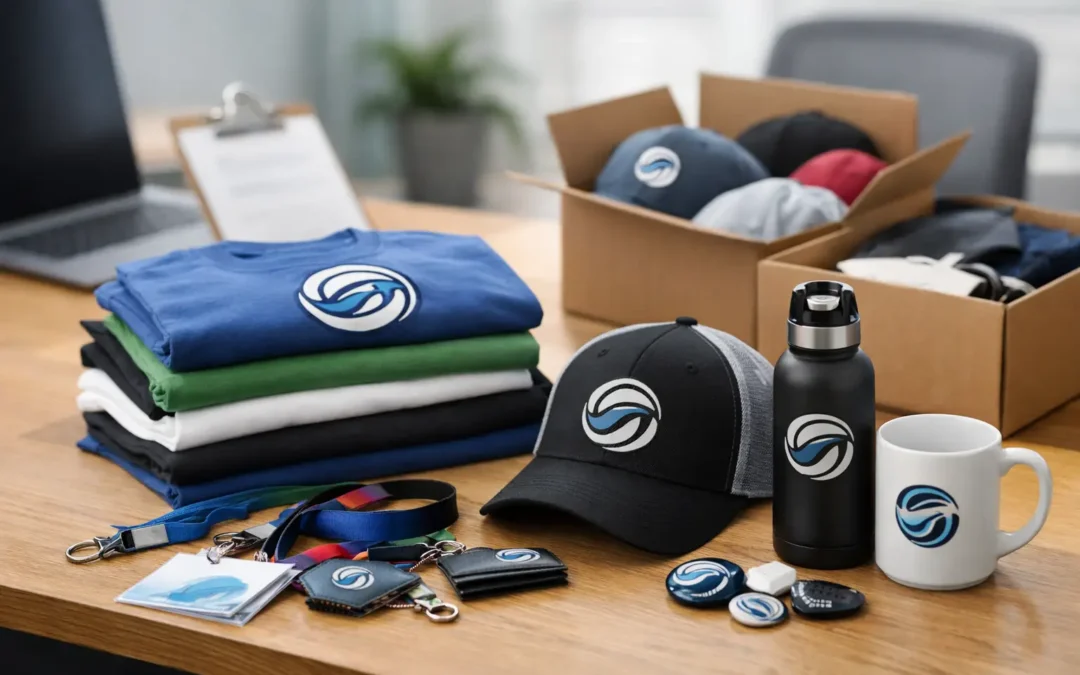
A week before bump-in is the wrong time to discover your branded cups need a longer production run, or that the supplied logo will not reproduce cleanly at the required size. Knowing how to order event merchandise properly means working backwards from the event date, selecting products people will actually use, and confirming every production detail before your order enters the queue.
For Australian event organisers, venues, breweries, clubs and marketing teams, merchandise is not an afterthought. It can support ticket sales, improve sponsorship visibility, create a consistent event look and give attendees something useful to take home. The strongest orders are planned as part of the event operation, not treated as a last-minute promotional purchase.
Start With the Job the Merchandise Needs to Do
Before choosing products, decide what the merchandise needs to achieve. A reusable branded cup for a beer festival has a different role from a premium glassware gift for a corporate dinner. One may need to move quickly through a busy bar service, while the other needs to feel substantial enough for a VIP table setting.
Consider who will receive the item, where it will be used and what happens after the event. For example, drink bottles and tumblers suit staff packs, outdoor activations and longer campaigns. Stubby holders and branded glasses are a natural fit for breweries, licensed venues and sporting clubs. Tote bags, lanyards and caps can provide high visibility at conferences, community events and trade shows.
Price matters, but unit cost should not be the only deciding factor. A lower-cost item that does not suit the audience can become surplus stock. A more practical product with a longer usable life may deliver better brand exposure well after the event has finished.
How to Order Event Merchandise to a Deadline
Start with the in-hands date, not the date you intend to place the order. Your in-hands date should allow for delivery, receiving goods, checking quantities and quality, packing attendee bags or distributing stock to multiple locations. If your event involves regional freight, venue access restrictions or a fixed bump-in window, add further contingency.
Production timing depends on the product, stock availability, order quantity and decoration method. Screen printing, pad printing, digital printing, embroidery and laser etching all have different setup and production requirements. Custom-made products or unusual colours may need more lead time than stocked items with standard branding.
A practical ordering schedule usually includes time for product selection, quotation approval, artwork review, proof approval, production and freight. The proof stage is especially important. Once artwork is approved and production begins, changes can cause delays and additional costs.
If the event date is close, be direct about it from the first enquiry. A supplier can then recommend products and branding options that are realistic for the available timeframe. It is better to choose an in-stock item with an achievable decoration method than to commit to a product that cannot be delivered when needed.
Set Quantities With Distribution in Mind
Ordering the same number of items as registered attendees is not always enough. Think through how stock will be used on the day. Will every attendee receive an item? Are products reserved for speakers, sponsors, staff, VIPs or competition prizes? Will you sell merchandise at a bar or registration desk?
Build a sensible buffer for late registrations, breakages, staff requirements and unexpected demand. The right buffer depends on the item and event format. For low-cost giveaways, a higher contingency can prevent a bare table halfway through the day. For premium glassware or apparel, a tighter quantity may be more appropriate.
It also pays to check carton quantities and price breaks. Wholesale merchandise is commonly priced by volume, so a small increase in quantity may improve the per-unit cost. However, do not increase numbers simply to reach a price tier if the remaining stock has no clear use after the event. Consider whether leftover goods can support future promotions, hospitality service or staff recognition.
Prepare Artwork Before Requesting a Final Proof
Good merchandise starts with artwork that is suitable for the product and branding method. A logo that looks sharp on a website may not work at a small print size on a pen, keyring or glass. Fine lines, tiny text and subtle colour gradients can become unclear when reduced.
Supply vector artwork where possible, such as AI, EPS or print-ready PDF files. These formats allow branding to be scaled without losing clarity. If only a raster image is available, a high-resolution PNG or PDF may be usable, but it should be assessed before production is approved.
Be clear about the intended logo version, brand colours and placement. A simple one-colour mark can be highly effective on drinkware, particularly when it is positioned cleanly and sized for easy recognition. Multi-colour artwork can offer greater impact, but it may affect setup, print costs and lead time. For premium glassware, laser etching creates a refined, permanent finish, though it delivers a tonal etched result rather than a printed brand colour.
Always review the artwork proof carefully. Check spelling, phone numbers, event dates, sponsor logos, colour references and placement. Ask whether the proof reflects the final decoration size and whether the image shown is indicative or production accurate. One person should have clear authority to approve the proof, particularly where several stakeholders are involved.
Match the Product to the Branding Method
The product and decoration method need to work together. This is where experienced supplier advice can prevent an expensive mismatch.
Screen printing can suit bold graphics and larger runs, while pad printing is often used for smaller or curved print areas. Digital printing is useful for detailed, full-colour artwork on compatible products. Laser etching is popular on metal drinkware and glassware because it is durable and gives a professional finish. Embroidery can add a premium feel to caps, uniforms and textiles, but very detailed logos may need to be simplified.
Think about use conditions as well. Merchandise for outdoor summer events should be durable, easy to carry and appropriate for heat, moisture and frequent handling. Venue drinkware needs to suit service requirements, washing processes and storage. If products will be posted to attendees or distributed across Australia, weight and breakability can also affect freight planning.
Confirm What Is Included in the Quote
A clear quote makes approval easier and reduces surprises later. Check that it identifies the product, colour, quantity, decoration method, number of print colours or positions, setup costs, artwork requirements, production timing and freight.
For multi-location events, confirm whether goods are being delivered to one warehouse, separate venues or individual branches. Consolidated delivery may simplify receiving, while split delivery can reduce internal handling. The best option depends on your event team, storage space and distribution plan.
It is also worth confirming stock status before presenting a product internally. Promotional stock can move quickly during peak event periods. If an item is critical to your campaign, ask whether stock can be allocated once the order is approved.
Plan Delivery and On-Site Handling
A delivery confirmation is not the same as an event-ready plan. Make sure someone can receive the cartons, count them and store them safely before the event. For fragile items such as branded glassware, inspect cartons on arrival rather than waiting until the morning of the function.
Label cartons by product type or event area if stock needs to be divided between registration, bar service, VIP rooms and sponsor activations. This small step saves time during bump-in and helps staff distribute merchandise consistently. If products are part of a gift pack, assemble a sample pack first to confirm the presentation and packing space work as expected.
For repeat events, keep a record of quantities ordered, items that performed well, delivery timing and any attendee feedback. That information turns the next order into a faster, more accurate procurement process.
The best event merchandise order is one that arrives on time, reflects the brand accurately and makes life easier for the team on the ground. With practical product selection, production-ready artwork and enough lead time, ABC2000 can help turn a bulk merchandise requirement into a polished part of the event experience.