
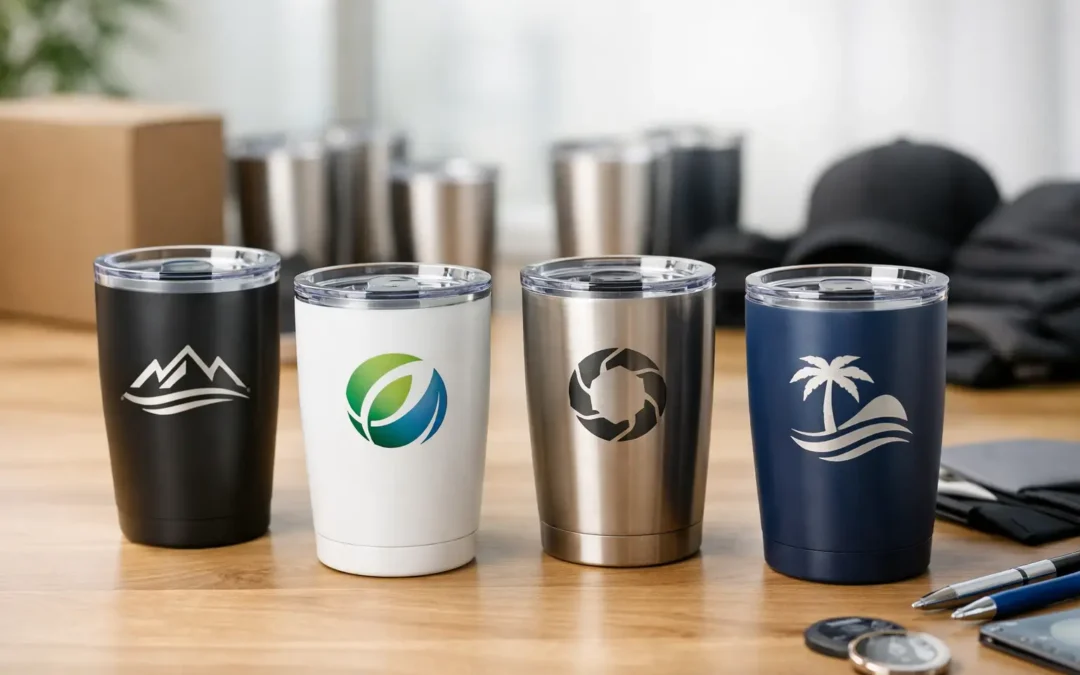
A crowded bar, a corporate golf day or a brewery launch gives a brand only a few seconds to make an impression. Custom stainless steel cups keep that impression in customers’ hands long after the event finishes. For businesses buying at volume, they are a practical alternative to disposable drinkware and a high-use promotional product that can carry a logo, campaign message or venue identity day after day.
Unlike a flyer or single-use giveaway, a well-chosen metal cup has a job to do. It serves drinks, travels to worksites and picnics, sits on office desks and returns to events. That repeated use is what makes the product valuable, but only when the cup style, branding method and order process suit the intended application.
Why Custom Stainless Steel Cups Work for Business
Stainless steel drinkware suits organisations looking for a more durable branded item without moving into premium giftware pricing for every recipient. Cups are available in formats that suit cold drinks, wine, beer, coffee and general hydration, so they can be matched to the way a venue, team or campaign actually operates.
For hospitality businesses, breweries, clubs and outdoor events, reusable cups can also support a more considered service model. A branded steel cup looks more substantial than disposable alternatives and can become part of the customer experience. For corporate teams, it gives staff or clients an item that is useful beyond a single activation.
The commercial benefit is not simply that stainless steel lasts. It is that the branding remains visible through regular use. A clean logo on a cup used each morning has more ongoing value than a product that is put in a drawer after an event.
There are trade-offs. Stainless steel costs more per unit than basic plastic drinkware, and it may not be the right choice for a very large one-day crowd where collection, washing and loss are difficult to manage. It works best when durability, perceived quality and repeat use are central to the brief.
Match the Cup to the Job
The right cup starts with where and how it will be used. A brewery may require stackable pint-style cups that are straightforward for bar staff to handle. A corporate event may favour insulated tumblers with lids. A sports club could choose sturdy, uncomplicated cups for canteen service, member packs or sponsor promotions.
Capacity matters more than many buyers expect. A cup that is too small for the intended serve creates frustration, while an oversized tumbler can feel impractical for a short event. Consider common beverage sizes, whether ice will be used and if a lid or straw is required. If the drinkware is for coffee, check that the design suits hot beverages rather than assuming every stainless steel cup has the same insulation or lid performance.
Finish also affects presentation. Brushed stainless steel has a clean, industrial appearance that works well for many corporate and hospitality brands. Powder-coated colours can create stronger shelf impact and provide a useful background for contrasting artwork. Matte, gloss and coloured finishes should be selected with the logo treatment in mind, not simply because they look good in isolation.
For high-turnover venues, operational details are equally important. Ask about stackability, dishwasher suitability, lid availability and the practicalities of storing the quantity required. A cup that photographs well but slows service during a busy Saturday session is unlikely to be the best buying decision.
Consider the recipient and setting
A cup for a mining contractor’s safety campaign has different requirements from one for a wedding venue or festival sponsor. Worksite recipients may value a larger, lidded tumbler that handles daily travel. Guests at a ticketed function may prefer a compact cup that feels special but is easy to carry. Venue-branded cups need to fit the service environment, while promotional cups need enough everyday appeal that recipients choose to keep using them.
This is where a supplier should help narrow the range. Rather than selecting solely from a product image, provide the event type, expected quantity, beverage application, deadline and artwork. Those details make it easier to identify a product that is commercially suitable.
Branding Methods That Suit Stainless Steel
The logo application should be chosen around the cup finish, artwork detail and expected use. Laser etching is a popular option for stainless steel because it creates a precise, permanent mark and gives branding a refined appearance. It is particularly effective for logos with clean lines, names, numbering and simple single-colour artwork.
Printed branding can be the better option when colour is a key part of the identity. Screen printing and other print methods can reproduce bold logo colours on suitable cup surfaces, subject to the product and artwork requirements. A bright campaign graphic may have more impact in print than an etched treatment, especially on powder-coated drinkware.
Do not assume that the largest possible logo is the best one. A design needs clear space, suitable line thickness and positioning that works with the curve of the cup. Fine text can become difficult to read, and detailed graphics may need simplifying. Strong branding often comes from getting scale, placement and contrast right rather than filling every available area.
Before production, artwork should be checked for format, resolution and print suitability. Vector artwork is generally preferred for crisp logo reproduction. If an organisation only has a low-resolution image or an old file, resolve that early. Artwork delays are one of the most common reasons an otherwise straightforward promotional order loses time.
Plan Bulk Orders Around the Real Deadline
For custom drinkware, the event date is not the production deadline. The order needs enough time for product selection, stock confirmation, artwork approval, branding production, quality checks and delivery to the required Australian location. Where quantities are substantial or branding is more complex, allowing additional lead time gives more flexibility if a preferred product needs to be changed.
A practical brief should confirm the delivery address, required-in-hand date, quantity, cup style, branding position and artwork status from the start. If cups are being sent to multiple locations or included in staff packs, mention that upfront. Fulfilment requirements can affect packing, labelling and freight planning.
Buyers should also allow for realistic quantities. Ordering exactly the guest count can create problems when staff, sponsors, presenters or late registrations are added. For retail or hospitality use, anticipated breakage, loss and future top-up requirements should be considered as well. A modest buffer can be more cost-effective than arranging a rushed repeat run.
For recurring promotions, it is worth standardising the chosen cup and artwork treatment. Consistent drinkware across venues, annual events or franchise locations strengthens brand recognition and makes repeat procurement simpler. It also reduces the risk of each new order becoming a fresh artwork and product-selection exercise.
Getting Better Value From a Cup Program
Unit price matters, but it should be assessed alongside longevity, branding quality and the purpose of the item. The cheapest option is not always the strongest value if it does not suit the beverage service, cannot display the logo clearly or feels too disposable for the campaign.
Bulk quantities usually provide better buying efficiency, particularly where the same artwork is used across the full order. However, volume should reflect a genuine usage plan. A large order that sits in storage for years ties up budget and may not match future branding. When demand is uncertain, a core quantity for immediate needs plus a clear plan for repeat supply can be the more sensible approach.
ABC2000 works with business buyers who need more than a cup with a logo added at the last minute. The process should account for product suitability, artwork preparation, branding application, production timing and delivery, so the finished drinkware arrives ready for its role.
Custom stainless steel cups are most effective when they are treated as working brand assets rather than event leftovers. Choose a style people will want to use, give production the time it needs, and make every branded cup earn its place in the order.