
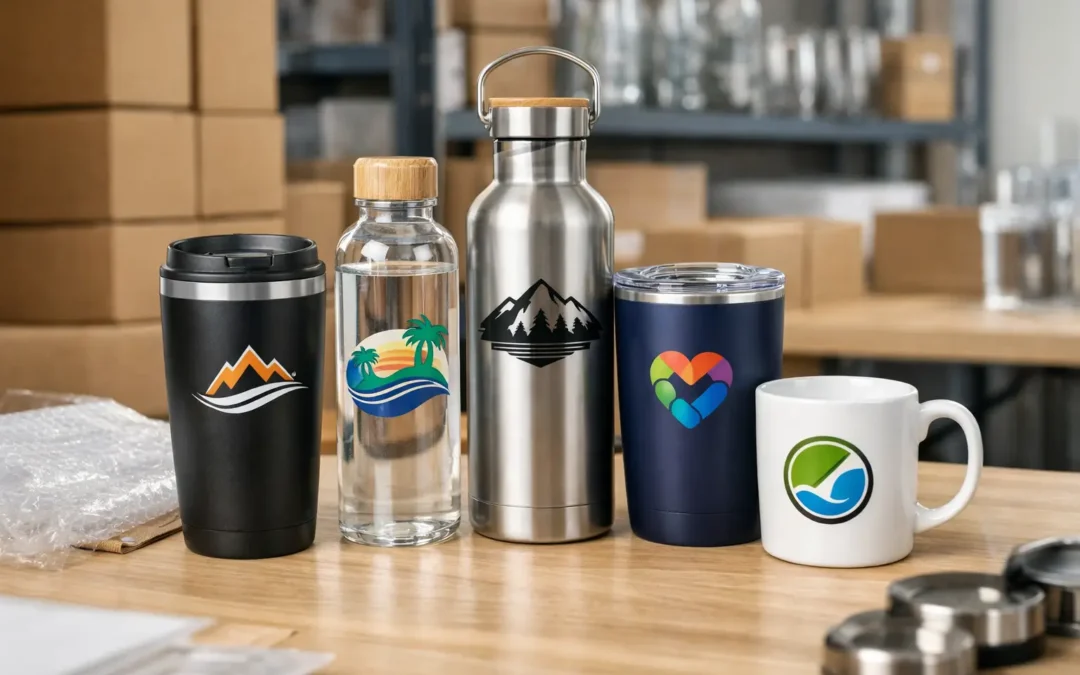
A festival needs 3,000 branded cups at the gate by Friday. A brewery needs new glassware ready for a taproom launch. A marketing team needs insulated bottles for a national campaign, with every logo consistent. A guide to wholesale drinkware ordering starts with that practical reality: the product is only one part of the job. Quantity, branding method, artwork, production timing and freight all need to line up.
For Australian business buyers, the best wholesale order is not simply the lowest unit price. It is the drinkware that suits the intended use, carries the brand clearly, arrives when promised and performs well once it is in customers’ hands.
Start With the Job the Drinkware Needs to Do
Drinkware works hardest when the vessel matches the environment. A reusable stadium cup has different requirements from a premium wine glass, and a stainless steel vacuum bottle is not the right answer for every giveaway. Before comparing products, define where the item will be used, who will receive it and how long it needs to last.
For high-volume events, reusable plastic cups are often a practical choice. They are lighter to handle, straightforward to distribute and suitable for venues where glass is not permitted. For clubs, breweries and hospitality venues, branded beer glasses, wine glasses and cocktail glassware can become part of the customer experience and reinforce the venue identity at every serve.
Corporate campaigns may call for insulated tumblers, travel mugs or water bottles. These products have a higher perceived value and can remain in regular use long after an event ends. That extended use can justify a larger upfront investment, particularly when the audience is staff, clients or members rather than one-day attendees.
Capacity matters as well. Consider standard serving sizes, whether ice will be used, where the drinkware will be stored, and whether it needs to fit a car cup holder or office kitchen shelf. Small details affect adoption. A bottle that is awkward to carry or a glass that does not suit the venue’s pour size can create avoidable friction.
Guide to Wholesale Drinkware Ordering: Set Quantity Properly
Ordering exactly the number of guests or recipients is rarely the safest approach. Events have breakages, last-minute registrations, staff needs and opportunities for additional sales. Hospitality operators also need to allow for back-of-house stock, replacement glassware and busy trading periods.
The right buffer depends on the product and the purpose. A large outdoor event may need a more generous allowance for loss and damage than a staff conference where bottles are issued against a registration list. For ongoing venue supply, it can be more economical to place a volume order that covers anticipated replacements, provided storage space and cash flow allow for it.
Quantity also affects unit pricing. Wholesale pricing generally improves as volumes rise because set-up, artwork preparation and production time are spread across more units. However, a lower unit rate does not automatically mean a better purchase. Avoid over-ordering a dated campaign design or seasonal message that cannot be used later.
Where repeat supply is likely, ask whether the same product can be sourced again and whether artwork files can be retained for future runs. Product availability can change, so planning a re-order path early is useful for branded venue glassware and recurring promotions.
Choose a Branding Method That Fits the Material
A sharp logo begins with the right decoration process. The best method depends on the vessel material, shape, print area, artwork detail and expected level of wear. Treat branding as a production decision, not an afterthought.
Screen Printing and Pad Printing
Screen printing is well suited to bold artwork, solid colours and many high-volume plastic drinkware applications. It offers strong visual impact for simple, recognisable branding. Pad printing can be useful on curved or smaller print areas where a direct print needs to follow the shape of the product.
Both methods work best when artwork is designed with the available print area in mind. Fine lines, tiny type and crowded details can lose clarity, especially on a curved cup or bottle. A simpler logo treatment often reads better from across a bar, trade stand or event precinct.
Laser Etching and Engraving
Laser etching is a popular option for stainless steel drinkware and selected coated products. It creates a precise, permanent mark by revealing the base material or contrasting layer beneath the surface. The result is polished and durable, making it a strong choice for premium bottles, travel mugs and corporate merchandise.
The trade-off is colour. Laser etching does not reproduce a full-colour logo in the same way as digital printing. If specific brand colours are essential, a printed option may be more suitable. If the priority is a refined, long-lasting finish, etching can be the better fit.
Full-Colour Printing and Transfers
Full-colour decoration suits artwork with gradients, photographic elements or multiple colours that would be difficult to reproduce through single-colour printing. It can be effective for campaign artwork, detailed illustrations and designs with strong visual personality.
Not every vessel or surface will support every full-colour method. Curves, tapers, handles and textured finishes can restrict the available decoration area. An experienced supplier can help identify where the artwork will sit best and whether a design needs adjustment before production.
Supply Artwork That Is Ready for Production
Artwork approval is one of the most common points where an otherwise straightforward order can slow down. A logo copied from a website, supplied as a low-resolution image or placed in a Word document may look acceptable on screen but will not necessarily reproduce cleanly at print size.
Where possible, provide editable vector artwork, such as AI, EPS or print-ready PDF files. Vector files retain crisp edges when enlarged or reduced, which is particularly valuable for logos, fine lettering and line work. If only raster artwork is available, check that it is high resolution and sized appropriately for the intended print area.
Include the required brand colours, preferably as Pantone references where colour matching is critical. Colours can appear differently on stainless steel, clear glass, frosted glass, black coatings and coloured plastic, so expectations should be agreed before production begins. White print on a dark tumbler can be highly visible, while the same design may need a different treatment on clear glass.
Always review the artwork proof carefully. Confirm spelling, logo version, placement, orientation, print colours and final dimensions. If the drinkware is double-sided, check each side separately. The proof is the point to correct a small issue before it becomes a large production run.
Build Timing Around the Delivery Date, Not the Order Date
A required-in-hands date should drive the entire ordering schedule. Work backwards from the event, campaign launch or venue opening, allowing time for artwork approval, production, quality checks and delivery to the final location.
Lead times vary by product, stock location, decoration method and order volume. Locally held stock may provide more flexibility than a made-to-order item, but it can still require branding and production time. Imported or specialised products may offer more choice, though they generally need earlier planning.
Freight is not a final administrative step. Drinkware is often bulky, fragile or both. Carton quantities, pallet access, delivery site restrictions and receiving hours should be considered before dispatch. A CBD office, regional venue, exhibition hall and loading dock each create different delivery requirements.
For time-sensitive orders, nominate one person to approve artwork and make decisions quickly. Delays often occur not in production but in waiting for internal sign-off. Giving the supplier a clear deadline, delivery address and site contact from the outset helps protect the schedule.
Check the Commercial Details Before Approval
The final quote should make the order easy to understand. Confirm the product description, capacity, colour, quantity, branding locations, decoration method, set-up charges, artwork requirements, freight and expected turnaround. If samples are needed for a key launch or major venue rollout, allow time for them before committing to the full production quantity.
Also consider how the drinkware will be packed and distributed. Individually boxed bottles may suit executive gifting, while bulk-packed cups are usually more efficient for high-volume events. For venues and promotional campaigns, the most practical packaging is often the one that reduces handling time and rubbish on site.
ABC2000 supports bulk drinkware procurement with product sourcing, custom branding, artwork handling and Australia-wide delivery, helping buyers keep these moving parts under one coordinated process.
The strongest wholesale drinkware orders are planned early enough to allow good decisions rather than rushed compromises. Choose a vessel people will actually use, give the artwork the space it needs, and leave enough time for production and delivery. That is how branded drinkware becomes a useful part of the operation, not just another item on the order list.