
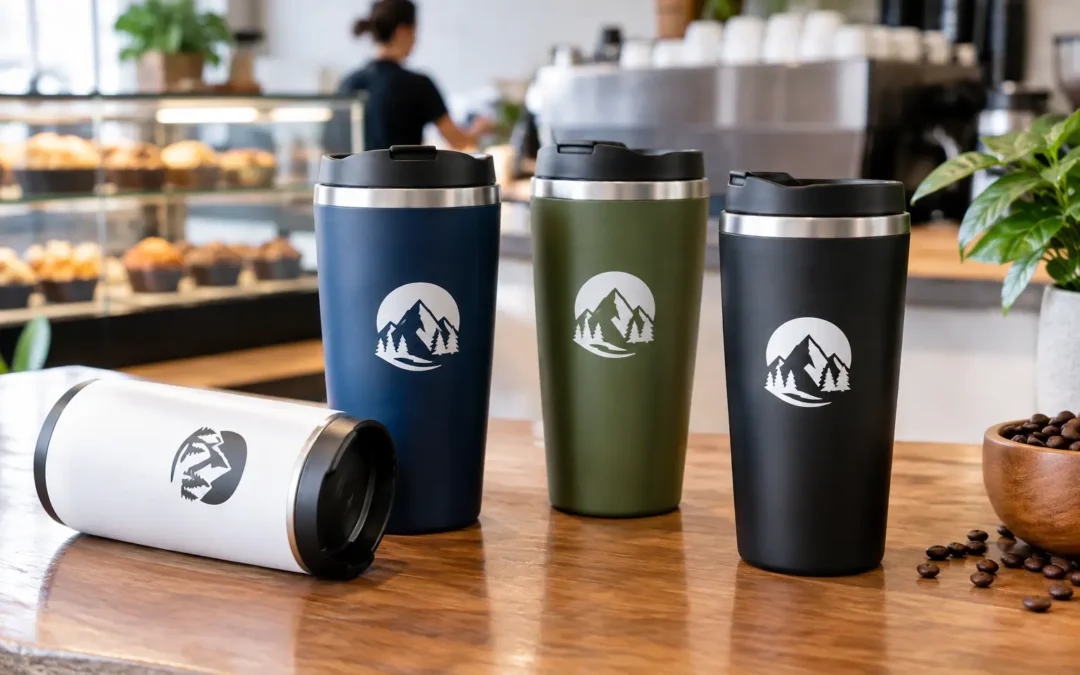
A reusable mug that leaks in a customer’s bag, loses heat before the train arrives or obscures the cafe logo is not a useful promotional product. Bulk travel mugs for cafes need to do more than look good on a counter. They need to suit real coffee service, survive daily use and put your brand in front of customers long after they leave the shop.
For cafe groups, independent operators, roasters and venue managers, the best choice comes down to matching the mug to its job. A premium insulated tumbler may be right for retail sale or a loyalty reward, while a lighter reusable cup can make better sense for a high-volume campaign. Getting that decision right early protects your budget, your timeline and your presentation.
Start with the purpose of the mug
Before selecting colours or branding methods, decide how customers will receive and use the product. This affects the material, capacity, lid style and price point far more than most buyers expect.
Retail merchandise needs a higher perceived value. Double-wall stainless steel mugs are a strong fit here because they offer insulation, a substantial feel and a long service life. They work well for cafes with an established retail shelf, premium coffee subscriptions or branded gift packs. The higher unit cost can be justified when the mug supports a retail margin or reinforces a quality-led brand position.
Giveaways and promotional campaigns often call for a more accessible option. Reusable polypropylene or plastic cups can be supplied in larger quantities and offer a practical alternative for opening events, local sponsorships, new-location launches and customer loyalty promotions. They are lighter to transport and easier to distribute, but they will not deliver the same heat retention or premium feel as stainless steel.
Staff and corporate orders sit somewhere in between. A practical travel mug branded for a client, office tenant or local business partnership can create ongoing visibility without needing retail-grade packaging. In these orders, reliable lid performance and an easy-to-read logo usually matter more than extra features.
Choosing bulk travel mugs for cafes by material
Material is not simply a style choice. It determines insulation, durability, branding options and the customer’s experience when carrying a hot drink.
Stainless steel for premium retention
Double-wall stainless steel is the preferred option when heat retention and durability are priorities. It is suited to commuters, outdoor events, corporate gifting and cafes that want their reusable range to feel like a genuine product rather than a short-term giveaway. Powder-coated finishes provide a modern look and create a good surface for printed branding, while laser engraving can give a refined, permanent result on selected models.
The trade-off is cost. Stainless steel mugs generally carry a higher unit price and may require a larger investment if you are stocking multiple colours or capacities. They are best used where the perceived value supports the spend.
Plastic and polypropylene for volume campaigns
Reusable plastic travel cups are economical, lightweight and well suited to large promotional quantities. They can be a sensible option for cafes running a reusable-cup incentive, offering a first-purchase bonus or supplying branded drinkware for a festival stall. Many styles are dishwasher safe, though care instructions should always be matched to the specific product and print finish.
These cups offer less insulation than double-wall steel, and they can show wear sooner. For a campaign designed around reach and unit pricing, that may be entirely acceptable. For a premium retail product, it may not meet customer expectations.
Ceramic and glass for a different experience
Ceramic and glass cups can suit cafes with a design-led, artisan or sustainability-focused offer. They provide a familiar drinking experience and can look excellent with a clean, simple brand mark. However, they are heavier, more breakable and less practical for some takeaway settings. Consider them where the audience is likely to value the material and handle it carefully, rather than as a default choice for every bulk order.
Capacity, lids and drinking comfort matter
A travel mug should work with the drink sizes already sold in your cafe. If your takeaway menu is built around 8 oz and 12 oz coffees, a 350 ml to 400 ml mug is often a practical starting point. Larger capacities can appeal to customers buying tea, iced drinks or long blacks, but an oversized mug can be inconvenient under espresso machine group heads or in standard cup holders.
Lid design is equally important. A splash-resistant slide lid is useful for walking between meetings or driving, while a fully sealed lid may suit commuters and people carrying drinks in a bag. No lid should be represented as leak-proof unless the product specification confirms it. Setting the right expectation protects customer satisfaction and reduces avoidable complaints.
Also consider the drinking opening. Some people prefer a wide sip opening that feels closer to a takeaway cup. Others value a narrower opening that helps control hot drinks while moving. If possible, request a product sample before committing to a substantial order. A quick handling test by baristas and front-of-house staff can reveal issues that a product image cannot.
Make the branding clear, durable and appropriate
A travel mug is a moving piece of cafe signage. The logo must remain legible when a customer is holding it, placing it in a car cup holder or photographing it at a picnic. That normally means keeping artwork simple and giving the mark enough space to be recognised at a glance.
Screen printing is a cost-effective choice for bold one-colour or limited-colour artwork, particularly on high-volume orders. It suits logos, short campaign messages and uncomplicated line graphics. Pad printing can be useful for smaller or curved print areas, depending on the mug design.
Laser engraving is often selected for stainless steel products where a permanent, upmarket finish is required. It does not reproduce every colour in a brand palette, but it can produce a sharp, professional result that handles everyday use well. Full-colour digital print can be suitable for more detailed artwork, although the available print area and finish will vary by product.
Provide vector artwork wherever possible, ideally in an editable format with colours clearly nominated. If the logo includes fine text, gradients or small detail, have the artwork checked before production. A strong design on screen can become unreadable on a curved mug.
Plan the order around service and campaign dates
Cafe orders are frequently tied to an opening, local event, seasonal promotion or supplier activation. The date that matters is not the date the order is placed. It is the date the finished mugs need to be delivered, checked and ready to hand out or sell.
Allow time for product selection, artwork preparation, proof approval, production and freight. Custom branding is a production process, so changes after approval can affect timing and cost. If you need mugs for a major event, confirm the required in-hand date first and work backwards.
Order quantities should include a sensible buffer. Extra units can cover staff allocations, damaged stock, campaign extensions and late opportunities with local partners. Reordering a small quantity later may be less efficient than building a modest contingency into the first production run.
Packaging deserves consideration too. Bulk-packed mugs are practical for stockroom storage and campaign distribution. Individual boxes may be worthwhile for retail, corporate gifts or premium membership packs. The right packaging depends on how the product will be handed over, not just how it arrives at your premises.
Keep the offer commercially workable
A branded mug performs best when it is part of a clear cafe offer. Some operators sell it as a retail item, while others offer a drink discount for customers who bring it back. A launch promotion might bundle the mug with the first coffee, or reward loyalty members after a set number of purchases.
The financial model depends on your customer base. Deep discounts can encourage adoption, but they can also erode margin if the mug is too expensive for the offer. For premium stainless steel, a retail or partly subsidised model may be more sustainable. For a lower-cost reusable cup, a broader giveaway can create faster brand exposure.
ABC2000 can assist with product selection, branding application and the production planning required for commercial bulk orders. The most efficient result usually comes from confirming the intended use, quantity, artwork and required delivery date before a product is locked in.
Choose a mug your customers will genuinely want to carry. When the material, lid, branding and campaign offer all match, it becomes more than a takeaway vessel – it becomes a practical reminder of where they want to buy their next coffee.