
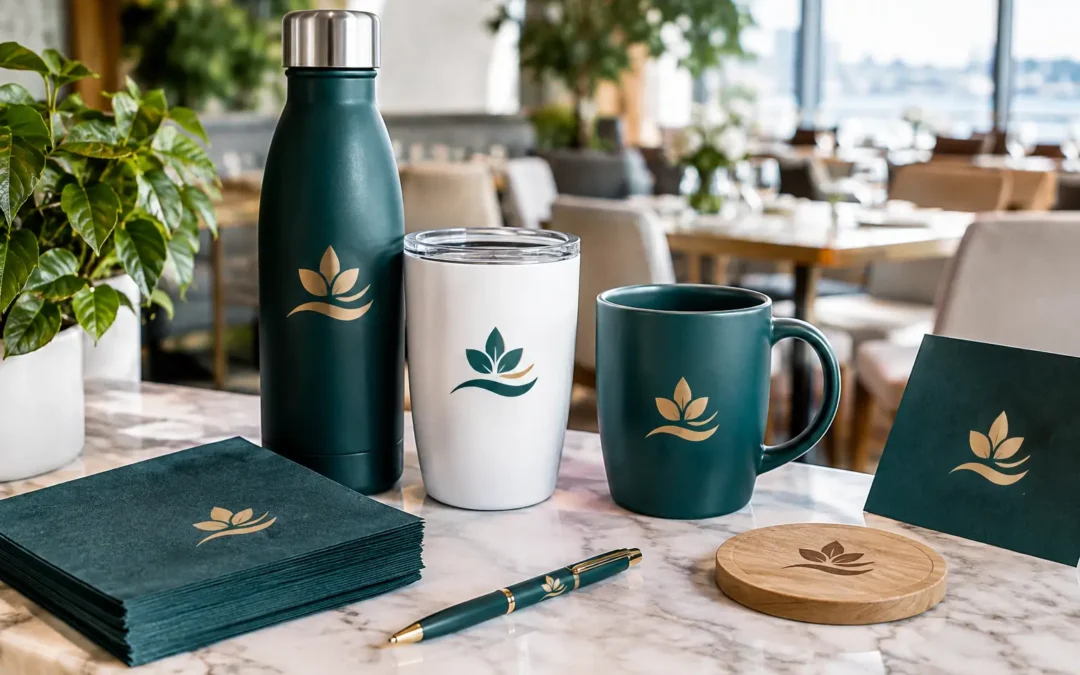
A branded pint glass behind the bar, a takeaway cup in a customer’s hand and clear point-of-sale signage at the counter all do different jobs. Together, they make a venue easier to recognise and more professional to experience. This hospitality branded supplies guide is designed for Australian venues, clubs, breweries, caterers and event operators buying practical custom products in bulk.
The right supply program is not about putting a logo on every available surface. It is about selecting items that suit service conditions, reflect the standard of the venue and can be reordered without unnecessary changes to artwork, specifications or pricing. For hospitality buyers, consistency is often as valuable as the initial impression.
Start With How the Product Will Be Used
Hospitality supplies need to work hard. A glass may be washed hundreds of times, a coaster may sit under condensation all night, and a menu holder may be handled by staff during every shift. Before choosing a product, consider who uses it, how often it is handled, where it is stored and how long it needs to last.
Front-of-house drinkware is one of the most visible choices. Custom beer glasses, wine glasses, cocktail vessels, mugs and reusable cups keep the brand present during service rather than only at the point of purchase. For breweries and pubs, branded glassware can also support specific serves, tasting paddles, seasonal releases and merchandise sales.
Not every venue needs premium glassware across every service area. A busy outdoor event, for example, may be better served by durable branded reusable cups. A restaurant with a considered beverage program may place more value on etched glassware with a refined finish. The correct option depends on breakage risk, washing conditions, service style and the impression the venue wants to make.
Back-of-house and operational items deserve equal consideration. Branded aprons, staff uniforms, bar runners, order pads, table numbers, loyalty cards and display materials can improve consistency without becoming decorative clutter. The best products make a routine task easier while carrying the brand clearly.
Build a Hospitality Branded Supplies Guide Around Priorities
Procurement becomes simpler when supplies are grouped by their role in the customer journey. Start with the items customers see and use most often, then add products that support campaigns, staff presentation and venue operations.
For many venues, the core range includes branded drinkware, coasters, napkins, takeaway packaging, menus, counter displays and staff apparel. Event-focused businesses may add wristbands, lanyards, ticket holders, banners, marquees, promotional giveaways and sponsor merchandise. Clubs and function venues often benefit from a repeatable package that covers bar service, member promotions and event signage.
A practical buying order is to establish essential service items first, then campaign items, then optional merchandise. This protects the budget from being absorbed by novelty products while essential branded stock is still needed. It also makes approval easier when several stakeholders are involved.
Choose Products That Match the Venue Standard
Price matters, but the lowest unit cost can be poor value if a product looks unsuitable after limited use. Thin or incorrectly specified drinkware may not suit a high-turnover bar. A printed item with insufficient durability may need replacing well before the next campaign. Conversely, premium finishes are not necessary for every application.
Consider the venue’s service model. A cellar door or boutique hotel may choose elegant laser-etched glassware because the presentation supports a higher-value experience. A festival operator may prefer high-volume printed cups and practical signage that are easy to distribute, collect and reorder. Both are commercial decisions, not simply design preferences.
It is also worth standardising products where possible. Using a consistent family of glassware, apparel colours and display materials can create a stronger visual identity than purchasing different styles for each activation. Standardisation also reduces artwork changes and simplifies future orders.
Select the Right Branding Method
The product and decoration method must be specified together. A logo that looks excellent on a flat paper item may need adjustment for a curved glass, a textured apron or a small promotional accessory. Providing usable artwork early helps avoid delays and ensures the finished result is appropriate for the item.
Printing is often suited to coloured designs, promotional messages and larger branding areas. It can be an effective choice for reusable cups, bar runners, apparel, packaging and event materials. The available print area, number of colours and product surface will affect the final result and cost.
Laser etching is commonly selected for glassware and selected metal products where a permanent, refined mark is required. It is particularly effective for venues wanting a more understated presentation, although it does not reproduce full-colour artwork. For a brewery logo with fine detail, the artwork may need to be simplified so smaller elements remain clear.
Screen printing, digital print, embroidery and other decoration options each have a place. The practical question is not which method is best in general, but which method will give the required appearance and durability on that specific product. An experienced supplier should flag issues such as fine text, low-contrast colours, uneven print surfaces and artwork that sits too close to the edge of a print area.
Keep Artwork Consistent Across Products
Venue branding often involves several logo versions, sponsor lock-ups, event dates and promotions. Without clear control, a bulk order can quickly become inconsistent. Use approved artwork files, set a preferred logo position for each product type and keep brand colours documented.
For repeat supply, retain the final production artwork and product specification. This should cover the item code or description, colour, decoration method, print location and any packaging requirements. When a venue needs another run before a busy period, this record removes guesswork.
If the product is co-branded for an event or supplier promotion, allow space for each logo to be legible. Trying to fit too many marks on a small coaster or glass can weaken the overall presentation. In many cases, a primary venue logo on the product and supporting sponsor recognition on signage is the cleaner approach.
Plan Around Quantity, Lead Time and Storage
Bulk buying produces better unit pricing, but only if the quantity is realistic. Review past consumption, event attendance, breakage rates and seasonal demand before setting order numbers. A bar replacing glassware before summer will have different requirements from a corporate caterer supplying a single annual conference.
Lead times should be treated as part of the product specification. Custom production requires artwork approval, stock confirmation, branding, quality checks and freight planning. Products sourced specifically for a project may require more time than standard local stock. If an event date is fixed, work back from the required delivery date and build in time for approval changes.
Australian venues should also consider where stock will be held. Ordering a large quantity may deliver a strong unit cost, but only if there is dry, secure storage and a clear stock rotation process. For multi-site operators, staged delivery or fulfilment may be more practical than sending all stock to one location.
Make Reordering Part of the First Order
The first order should create a system for the next one. This is particularly useful for venues with frequent functions, recurring festivals, seasonal drinks programs or multiple locations. Agreeing product specifications and decoration details upfront reduces the time spent re-explaining requirements later.
Ask practical questions before approval: Is the item suitable for commercial washing? What is the expected production timeframe after artwork sign-off? Is there a minimum order quantity? Can the same design be reproduced on related products? Are cartons suitable for venue storage and receiving? These details affect operational cost just as much as the quoted unit price.
ABC2000 supports hospitality buyers with bulk custom drinkware, branded glassware, event merchandise, printing and display materials, helping keep product selection and branding requirements under one procurement process. For venues managing several items at once, that coordination can be the difference between a controlled rollout and a last-minute patchwork of supplies.
A well-planned branded supply range should feel natural in service: useful to staff, clear to customers and straightforward to reorder. Start with the items your customers touch most, specify them properly, and give your team enough lead time to get every detail right.