
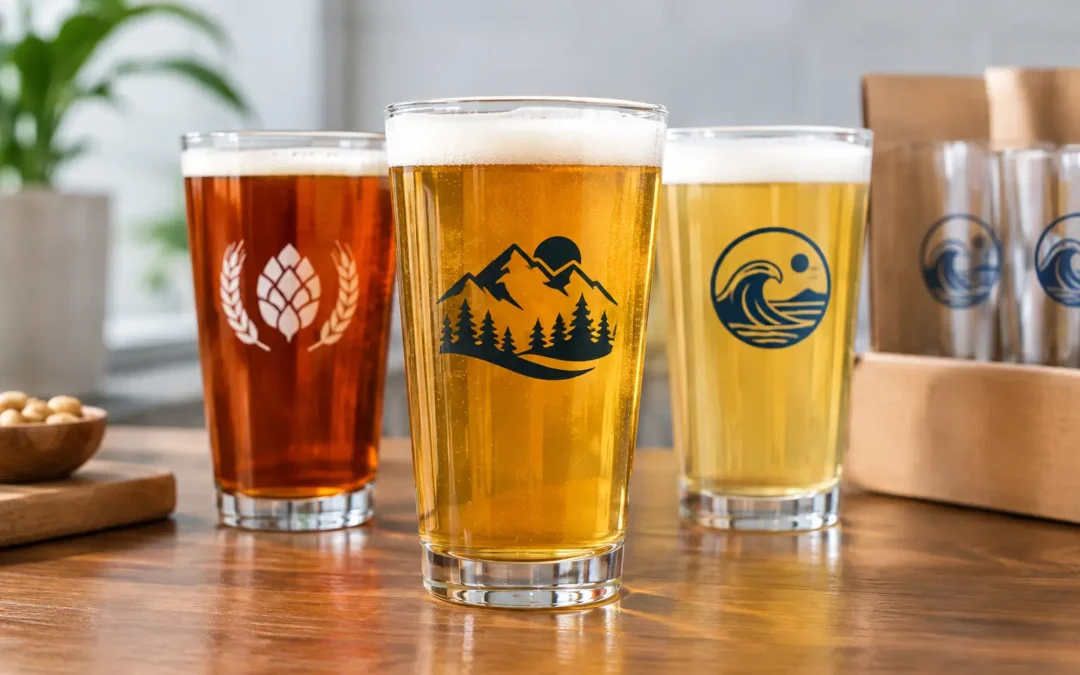
A pint glass has a hard job in a busy venue. It needs to feel right in the hand, survive regular washing, present beer properly and carry your branding clearly from the first pour to last drinks. This custom pint glass review looks at what Australian bulk buyers should assess before approving artwork or placing a volume order.
For breweries, pubs, clubs, corporate events and promotional campaigns, a printed pint is not simply a giveaway. It is a working piece of branded equipment. The lowest unit price can look attractive on a quote, but poor print coverage, inconsistent glass quality or an unrealistic production schedule can quickly cost more than the initial saving.
Start with the glass, not the logo
A good custom pint glass begins with the base product. Traditional pint styling is familiar, practical and well suited to beer service, but not every glass sold as a pint is identical. Shape, wall thickness, rim finish, weight and stated capacity all influence how it performs in hospitality and how customers perceive your brand.
For Australian venues, clarify the capacity required before selecting a style. A full pint is commonly associated with 570 mL, while a schooner is generally 425 mL. If the glass will be used for measured beer sales, confirm the relevant capacity and compliance requirements with your venue and supplier rather than relying on a product name alone. A promotional glass for sampling, staff gifts or a launch activation may allow more flexibility than a glass used across a licensed bar.
The classic nonic-style pint, with its subtle bulge near the top, remains popular because it is easy to grip and stack. Straight-sided options create a clean, modern print area. Tapered glasses can feel refined, although the usable branding space narrows towards the base. There is no single best shape. A high-turnover pub may favour a familiar, sturdy format, while a craft brewery may choose a more distinctive vessel that supports its beer presentation and visual identity.
Weight is another practical consideration. Heavier glass can feel premium and stable, particularly for table service and corporate hospitality. It also adds freight weight and may not be the right choice for a large outdoor event where staff are clearing thousands of glasses. Lighter options are easier to handle in volume, provided they still feel substantial enough for the intended setting.
Custom pint glass review: branding methods that hold up
The decoration method matters as much as the artwork itself. A logo that looks sharp in a digital proof can disappoint on glass if fine detail, small reverse text or colour transitions are not suited to the print process.
Screen printing is a strong option for bold logos, solid brand colours and repeat venue use. It offers clear coverage and can work well across larger print areas, especially when the design has been prepared with glass decoration in mind. Exact colour matching should be discussed early, particularly where a brewery, franchise or national campaign works to established brand guidelines.
Laser etching creates a permanent, understated finish by marking the glass surface. It suits single-colour artwork, names, crests and designs where a premium tone is more important than bright colour. The result is generally durable, but it will not reproduce a multi-colour logo in the way printed decoration can. It also presents differently on clear, frosted and coated glass, so a pre-production sample or visual proof is worthwhile.
For very small marks or designs placed in tight areas, other decoration approaches may be appropriate. The practical choice depends on the artwork, glass shape, order quantity and expected wash cycle. Buyers should be wary of treating all branding methods as interchangeable. A detailed illustration may need simplifying, while a large solid print may need adjustment to avoid an uneven finish or unnecessary production risk.
Artwork setup is where experienced supplier support saves time. Supply clean vector artwork where possible, identify required colours and nominate the preferred print position. A good proof should show the decoration size, orientation and placement on the actual glass shape, not just a logo floating on a plain page.
Durability is a venue issue, not a minor detail
If custom pints are going behind a bar, dishwasher performance should be part of the buying decision. Hospitality glassware faces commercial washers, heat, chemicals, stacking, knocks on benchtops and rapid handling during service. A print intended for a one-night launch event has a different durability expectation from a branded glass used every weekend for years.
Ask how the decoration is applied and what care guidance is recommended. Printed glassware can be highly effective for hospitality use, but durability depends on the decoration system, curing process and washing conditions. Aggressive chemical use, abrasive handling and poorly maintained equipment can affect any branded item over time.
It also pays to consider the base and rim. A clean rim supports a better drinking experience, while a stable base reduces the chance of tipping on crowded tables. These details are difficult to judge from a thumbnail image alone. For a significant venue rollout, requesting a sample before committing to a large production run is a sensible operational step.
Bulk value is more than the unit price
A useful custom pint glass review should compare like with like. A quote may include different glass weights, print sizes, decoration colours, setup requirements, carton quantities or delivery assumptions. Looking only at the per-unit figure can lead to an inaccurate comparison.
The strongest value usually comes from matching the product specification to its real job. For example, a club ordering branded pints for ongoing bar service may get better long-term value from a dependable standard glass with durable decoration than from an elaborate design that stretches the budget. A premium spirits launch, on the other hand, may justify heavier glass and laser etching because the event experience is central to the campaign.
Before approval, check these commercial details together:
- the glass capacity, shape and approximate weight;
- decoration method, number of colours and maximum print area;
- artwork setup, proofing and any required amendments;
- minimum order quantity, carton packing and allowance for breakages; and
- production lead time, freight timing and delivery location.
Ordering a small contingency is often worthwhile. Glassware can break in transit, during setup or through normal venue use. Reordering a handful of replacement pieces is usually less efficient than including a sensible overage in the original bulk order.
Production timing needs a realistic plan
Custom glassware is not a stock item once branding is involved. The process includes artwork checking, proof approval, product allocation, decoration, quality checking, packing and freight. Each stage needs time, and the final deadline is only as reliable as the earliest approval.
Event organisers should work backwards from the date the glasses need to be on site, not the date they would ideally like to place an order. Allow time for internal brand sign-off and for any revisions after the artwork proof is received. If delivery is going to a regional venue, festival site or multiple locations, build in additional contingency.
Rush jobs can sometimes be possible, but they reduce product and decoration flexibility. The best result generally comes from choosing a suitable in-stock glass early, finalising print-ready artwork promptly and confirming delivery requirements before production begins. For repeat venue programs, retaining approved artwork and a clear product specification also makes future orders quicker to manage.
When a custom pint is the right choice
Custom pint glasses work particularly well where the item will be used repeatedly in public. A branded glass at a brewery taproom, sporting club or pub puts the logo in front of customers throughout service without feeling like advertising. At corporate functions and trade events, it can also lift the perceived quality of the bar offering compared with disposable drinkware.
They are not always the right answer. If breakage risk is high, event guests are moving between areas, or the budget is built around one-use service, branded reusable plastic drinkware may be more practical. If the drink is primarily wine, cocktails or tasting portions, choosing a vessel designed for that serve will usually present better than forcing every beverage into a pint.
For businesses buying at volume, the right custom pint glass is the one that fits service conditions, brand standards and delivery timing without creating unnecessary complexity. ABC2000 can help buyers align the glass style, decoration method and bulk order requirements early, so the finished product is ready to work as hard as the venue or campaign does.