
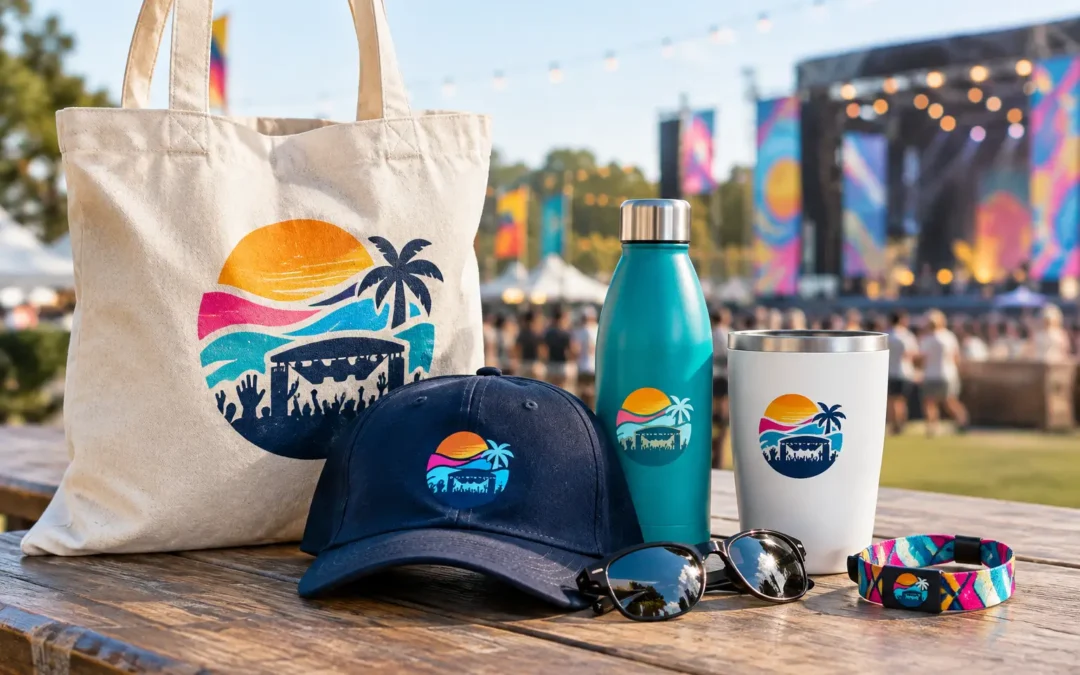
A festival can have a strong logo and still feel poorly branded once gates open. The festival branding examples that make a commercial difference are the ones guests see while finding their way in, ordering a drink, meeting friends and heading home with something worth keeping. For organisers, venues and sponsors, the aim is not to put a logo on every surface. It is to create a consistent, useful brand presence that works under real event conditions.
The best approach balances visual impact with production practicalities: quantities, lead times, artwork, crowd flow, weather and how each item will be used. Below are 10 practical examples that suit Australian festivals, community events, food and beverage activations, and large-scale ticketed events.
Festival branding examples with a practical purpose
1. Entry branding that sets the standard
The entry zone is where people decide whether an event feels organised, premium or confusing. Branded archways, fence mesh, corflute boards, flags and directional signs establish the festival identity before guests reach the first stage or bar.
Keep the entry message simple. A festival logo, key sponsor mark, gate number and clear directional wording are more useful than a busy wall of partner logos. For multi-day events, durable printed signage is worth prioritising because it needs to look presentable after repeated foot traffic, weather exposure and pack-down activity.
2. Reusable branded cups at every bar
Custom drinkware is one of the most visible forms of festival branding because it remains in the guest’s hand for much of the day. Printed reusable cups can carry the main festival identity, a sponsor logo, bar location or a limited-edition artwork that encourages people to retain them.
This option works especially well where organisers use a cup-deposit system or want to reduce single-use packaging. The trade-off is operational: cup size, print area, washing arrangements and stock control all need to be confirmed well before the event. A design that looks excellent on a screen may be less effective once wrapped around a tapered cup, so artwork should be supplied and approved using the relevant product template.
3. Branded glassware for premium zones
VIP lounges, brewery areas, tasting sessions and corporate hospitality sections need a more considered presentation than a standard service bar. Branded beer glasses, wine glasses, cocktail glassware and tasting paddles give these areas a distinct, higher-value finish while keeping the festival identity in view.
Laser etching is often a practical choice for glassware used across multiple events or hospitality sessions, as the branding is permanent and refined. Printed options can provide stronger colour, but suitability depends on the glass type, artwork and intended wash cycle. For high-volume service, organisers should also consider breakage rates, storage and whether a glass-free policy applies outside controlled areas.
4. Staff uniforms that are easy to identify
Festival staff are part of the customer experience. Guests need to quickly identify security, first aid, bar staff, crew, volunteers and event management, particularly when crowds are large or light is limited.
Branded polos, T-shirts, caps, hi-vis vests and lanyards make roles clearer while presenting a coordinated image. Rather than placing the same design on every garment, use colour coding by team and apply the festival logo consistently. A bright crew shirt is useful, but a dark hospitality polo may better suit bar staff who are handling drinks and food throughout a long shift.
5. Lanyards and passes that stay visible all weekend
Custom lanyards are a practical festival branding example because they perform an access-control function while delivering repeated exposure. They are used by crew, suppliers, media, performers and VIP guests, often across several days.
The lanyard should include more than a logo. Consider a repeating event name, sponsor acknowledgement, security wording or colour that aligns with pass categories. Print quality matters, particularly on small text. It is also worth deciding early whether the lanyard needs a safety breakaway, detachable buckle or durable clip to suit its use.
6. Sponsor activations with merchandise people want
A sponsor tent covered in logos may meet contractual requirements, but it rarely creates a memorable interaction. The stronger model is to combine simple branded display material with a useful giveaway, such as a water bottle, stubby cooler, tote bag, fan, cap or mobile accessory.
The product should match the audience and event environment. At a summer music festival, a branded water bottle or reusable cup can be genuinely useful. At a regional food and wine event, glassware, cooler bags or quality tote bags may have more relevance. Cheap giveaways can create volume, but they can also become rubbish by lunchtime. Choosing fewer, more practical items can leave a better impression and reduce waste.
7. Branded hydration stations
Hydration points are high-traffic locations, particularly at outdoor events. Branding the station itself with banners, counter wraps or signage gives the festival useful visual consistency, while refillable bottles and cups extend that branding beyond the site.
This is a good opportunity for a sponsor message, provided the signage still clearly communicates its primary job: where guests can fill water. High contrast, legible text and logical placement matter more than elaborate graphics. If branded bottles are included, plan quantities around capacity, weather forecasts and whether attendees can bring their own containers.
8. Market and food vendor presentation
Food vendors, retailers and market stalls can make a festival look fragmented when every counter uses different signage, table coverings and queue systems. A consistent base layer, such as branded stall headers, tablecloths, menu-board frames or vendor credentials, brings the site together without removing each business’s own identity.
For organisers, this is often a more manageable investment than trying to fully decorate every outlet. Give vendors a simple artwork and display specification early, including logo sizing, approved colours and placement rules. It protects the festival image and avoids last-minute visual clutter around busy service areas.
9. Wayfinding that carries the brand without slowing people down
Wayfinding is not glamorous, but it can determine whether guests perceive an event as well run. Stage names, bars, toilets, exits, accessibility routes and meeting points should be easy to find at a glance.
Use the festival colour palette, type style and graphic elements to make signs recognisable, then let function lead. Directional arrows need clear contrast and enough scale to be read from a distance. Branded flags, A-frames, fence banners and large-format boards all have a role, but the right format depends on sightlines, crowd density and wind exposure.
10. Take-home merchandise that extends the event
The final and often most valuable branding moment happens after the gates close. Event T-shirts, caps, tote bags, drink bottles, keyrings and commemorative glassware can turn a one-day experience into ongoing visibility for the festival or sponsoring brand.
A good merchandise range does not need dozens of product lines. A small collection with clear audience appeal is easier to order, display and replenish. Consider a low-cost impulse item, a functional mid-range product and one premium keepsake. For recurring events, retaining a recognisable core design while changing the year or featured artwork helps build collectability.
Making branded festival products work at volume
The product is only one part of the decision. Bulk festival orders need enough lead time for product selection, stock confirmation, artwork preparation, proof approval, branding application and delivery. Imported or highly specialised products may offer broader options, but they can require longer planning than locally held stock.
Start with the products that affect operations first: cups, staff uniforms, lanyards, passes, signage and barware. These items are difficult to substitute at the last minute. Promotional merchandise can then be scaled according to sponsorship commitments, ticket numbers and budget.
Artwork should be prepared for the branding method, not simply copied from a website or social media file. Fine lines, tiny wording and subtle colour gradients may not reproduce well on every product. A practical supplier will advise on print positions, decoration limits and the most suitable method, whether that is screen printing, pad printing, digital print, embroidery or laser etching.
For large festivals, it is also sensible to order a contingency quantity. Extra cups, staff shirts or lanyards can save significant stress when attendance grows, crew numbers change or stock is damaged during bump-in. The exact allowance depends on the item and event format, but planning for real-world variation is usually more cost-effective than arranging urgent replacements.
A well-branded festival should feel coordinated rather than over-decorated. Choose the products guests and staff will actually use, make every sign do a clear job, and allow enough time for quality production. That is how branding earns its place in the event budget long after the final set finishes.